Bolivia – History, Culture, Sports, Geography and Fascinating Facts
Explore Bolivia’s history, culture, sports, geography, economy and key facts. Learn what makes this diverse South American nation unique and fascinating.
Bolivia
Bolivia is one of the most unique and culturally rich countries in South America. Known for its breathtaking mountains, indigenous heritage, colorful traditions, and diverse landscapes, Bolivia offers a fascinating blend of ancient history and modern development. Despite being landlocked, the country plays an important role in the cultural and historical identity of South America. In this article, we explore Bolivia’s history, culture, sports, geography, economy, and other important facts that make this nation special.
Table of Contents
Introduction to Bolivia
Bolivia is located in central South America and shares borders with Brazil, Paraguay, Argentina, Chile, and Peru. The country covers an area of approximately 1.1 million square kilometers, making it one of the largest nations in South America.
The constitutional capital of Bolivia is Sucre, while La Paz serves as the seat of government and is recognized as the world’s highest administrative capital city. Bolivia has a population of around 12 million people and is known for its remarkable ethnic and cultural diversity.
Spanish is the most widely spoken language, but many indigenous languages, including Quechua, Aymara, and Guaraní, are also officially recognized.
History of Bolivia
Bolivia’s history dates back thousands of years. Long before European arrival, the region was home to advanced indigenous civilizations. One of the most important ancient cultures was the Tiwanaku civilization, which flourished near Lake Titicaca.
During the 15th century, much of present-day Bolivia became part of the Inca Empire. However, in the 16th century, Spanish explorers arrived and colonized the region. The discovery of rich silver deposits in Potosí transformed Bolivia into one of Spain’s most valuable colonial territories.
The struggle for independence gained momentum in the early 19th century. After years of conflict, Bolivia achieved independence from Spain on August 6, 1825. The country was named after Simón Bolívar, one of the most influential leaders in South America’s independence movement.
Since independence, Bolivia has experienced periods of political instability, economic challenges, and social reforms. In recent decades, the country has focused on strengthening indigenous rights and promoting social development.
Geography and Natural Features
Bolivia is famous for its diverse geography. The country includes high mountain ranges, fertile valleys, tropical forests, and vast plains.
Some of Bolivia’s most remarkable geographical features include:
- The Andes Mountains – Dominating western Bolivia with stunning peaks and valleys.
- Lake Titicaca – One of the world’s highest navigable lakes, shared with Peru.
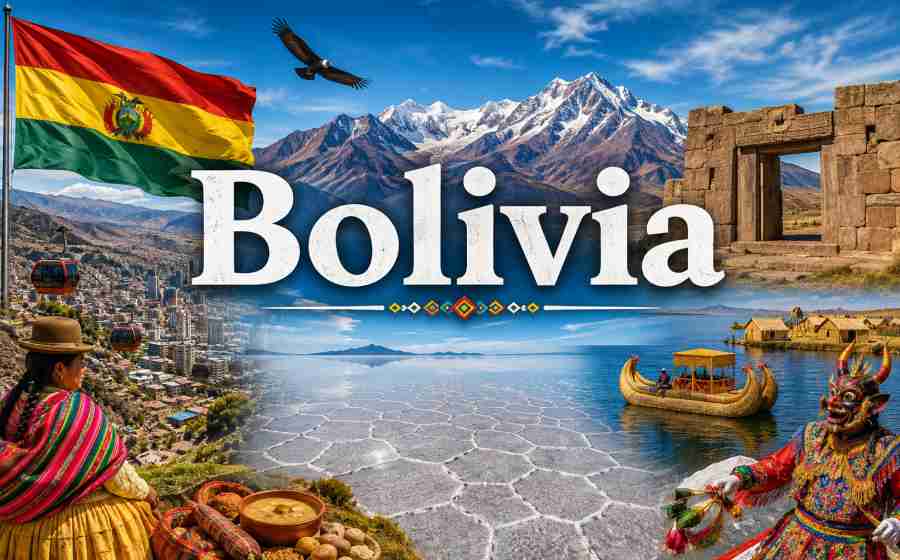
- Salar de Uyuni – The largest salt flat on Earth and one of Bolivia’s most famous tourist attractions.
- Amazon Rainforest – Covering parts of northern Bolivia and supporting rich biodiversity.
Bolivia’s varied landscapes contribute to a wide range of climates, from cold mountain regions to warm tropical zones.
Culture of Bolivia
Bolivian culture reflects a rich blend of indigenous traditions and Spanish influences. Indigenous communities play a major role in preserving ancient customs, languages, and celebrations.
Traditional Clothing
Many indigenous people continue to wear traditional clothing. Colorful skirts, shawls, embroidered garments, and distinctive hats are common in many regions.
Music and Dance
Music is an important part of Bolivian life. Traditional instruments such as panpipes, drums, and charangos are widely used. Popular dances include:
- Diablada
- Morenada
- Caporales
- Tinku
These dances are often performed during festivals and religious celebrations.
Festivals
Bolivia hosts numerous cultural festivals throughout the year. The Carnival of Oruro is among the most famous and attracts visitors from around the world. It features elaborate costumes, traditional music, and spectacular dance performances.
Food and Cuisine
Bolivian cuisine varies by region and reflects the country’s diverse geography.
Popular dishes include:
- Salteñas – Baked pastries filled with meat, vegetables, and sauce.
- Pique Macho – A hearty dish made with beef, sausage, potatoes, and vegetables.
- Sopa de Maní – Traditional peanut soup.
- Silpancho – Breaded meat served with rice, potatoes, and eggs.
Potatoes, corn, quinoa, and beans are common ingredients in many Bolivian meals.
Sports in Bolivia
Football (soccer) is the most popular sport in Bolivia. The national football team has participated in several international competitions, including the FIFA World Cup.
Major football clubs enjoy strong support from fans across the country. Matches played in high-altitude cities such as La Paz often attract international attention due to the unique playing conditions.
Besides football, other popular sports include:
- Volleyball
- Basketball
- Cycling
- Athletics
- Mountaineering
Bolivia’s mountainous terrain also makes adventure sports and trekking increasingly popular among locals and tourists.
Economy of Bolivia
Bolivia’s economy is based on a combination of natural resources, agriculture, manufacturing, and services.
Key economic sectors include:
Mining
Mining has long been a major contributor to Bolivia’s economy. The country possesses significant reserves of:
- Tin
- Silver
- Zinc
- Gold
- Lithium
Bolivia’s lithium reserves are among the largest in the world and are increasingly important in the production of rechargeable batteries.
Agriculture
Agriculture supports many rural communities. Major crops include:
- Soybeans
- Corn
- Potatoes
- Sugarcane
- Quinoa
Tourism
Tourism continues to grow as visitors come to experience Bolivia’s unique landscapes, historical sites, and indigenous culture.
Education and Society
Bolivia has made notable progress in improving literacy and educational access. The government has invested in educational programs and infrastructure, particularly in rural areas.
The country’s population is one of the most indigenous in Latin America, and cultural diversity remains a defining characteristic of Bolivian society.
Interesting Facts About Bolivia
- Bolivia is named after independence leader Simón Bolívar.
- La Paz is the highest administrative capital city in the world.
- Salar de Uyuni is the largest salt flat on Earth.
- Bolivia recognizes multiple official languages.
- Lake Titicaca is among the world’s highest navigable lakes.
- The country has one of the largest indigenous populations in South America.
- Bolivia is landlocked but once had a coastline on the Pacific Ocean.
- It holds some of the world’s largest lithium reserves.
- The Carnival of Oruro is recognized for its cultural significance.
- Bolivia’s geography ranges from snowy mountains to tropical rainforests.
Summary
Bolivia is a nation rich in history, cultural traditions, and natural beauty. From the ancient civilizations of the Andes to the modern cities of today, Bolivia offers a unique blend of heritage and progress. Its colorful festivals, diverse landscapes, strong indigenous identity, and growing economy make it one of South America’s most fascinating countries. Understanding Bolivia helps us appreciate the remarkable diversity and cultural richness that exist across the world.
Also Check: General Knowledge