Earth – Formation, Continents, Environment, Oceans & Key Facts
Explore complete GK on Earth – its formation, solar system position, continents, oceans, environment, population, and important facts in one detailed guide.
Earth – The Living Planet of Our Solar System
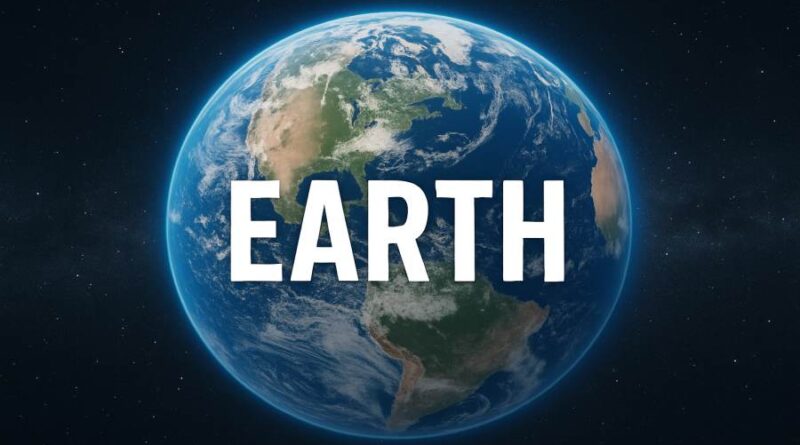
Earth is our home and the only known planet that supports life. From vast oceans and towering mountains to diverse climates and millions of living species, Earth is a dynamic and complex planet. Understanding Earth is an essential part of general knowledge, as it helps us learn about our origins, environment, and future.
This article covers everything important about Earth – its formation, place in the solar system, continents, oceans, population, environment, and key facts – in a clear and organized way.
Table of Contents
Formation of Earth
Earth was formed about 4.6 billion years ago from a massive cloud of dust and gas known as the solar nebula. Due to gravity, particles collided and stuck together, gradually forming larger bodies called planetesimals. Over millions of years, these bodies merged to create Earth.
In its early stage, Earth was extremely hot. As it cooled, heavier elements like iron and nickel sank to form the core, while lighter materials formed the mantle and crust. Volcanic activity released gases that formed the early atmosphere, and water vapor eventually condensed to create oceans.
Earth’s Place in the Solar System
Earth is the third planet in our solar system, positioned between the hot planet Venus and the red planet Mars. It is part of the inner rocky planets, also called terrestrial planets.
Key facts about Earth in the solar system:
- Average distance from the Sun: 149.6 million km
- Time to complete one orbit (year): 365.25 days
- Time to rotate on its axis (day): 24 hours
- Shape: Oblate spheroid
- Natural satellite: The Moon
Earth’s perfect distance from the Sun lies in the habitable zone, allowing liquid water to exist, a key factor for life.
Structure of the Earth
Earth has three main layers:
1. Crust
- The outermost layer
- Contains continents and ocean floors
- Thin compared to other layers
2. Mantle
- Lies beneath the crust
- Semi-molten and very hot
- Responsible for volcanic activity and tectonic movements
3. Core
- Divided into inner and outer core
- Composed mainly of iron and nickel
- Generates Earth’s magnetic field
Continents of the World
Earth has seven continents, each unique in size, climate, and culture.
- Asia – Largest and most populous
- Africa – Known for deserts and wildlife
- North America – Diverse climate and landscapes
- South America – Home to the Amazon rainforest
- Antarctica – Coldest continent, covered with ice
- Europe – Rich in history and culture
- Australia – Smallest continent and largest island
Oceans and Water on Earth
About 71% of Earth’s surface is covered by water, making it the “Blue Planet.”
Five Major Oceans
- Pacific Ocean – Largest and deepest
- Atlantic Ocean – Second largest
- Indian Ocean – Warmest ocean
- Southern Ocean – Surrounds Antarctica
- Arctic Ocean – Smallest and shallowest
Water is essential for life, climate regulation, and the global ecosystem. Freshwater is available in rivers, lakes, glaciers, and beneath the Earth’s surface as groundwater.
Atmosphere and Climate
Earth’s atmosphere protects life and regulates temperature.
Main Layers of the Atmosphere
- Troposphere – Weather occurs here
- Stratosphere – Contains the ozone layer
- Mesosphere
- Thermosphere
- Exosphere
The atmosphere is made up of:
- Nitrogen (78%)
- Oxygen (21%)
- Other gases (1%)
Earth experiences different climate zones, tropical, temperate, and polar, due to its tilted axis and rotation.
Environment and Biodiversity
Earth supports millions of species, making it incredibly biodiverse. Forests, oceans, grasslands, and deserts form complex ecosystems.
Major Environmental Issues
- Climate change
- Global warming
- Deforestation
- Pollution
- Loss of biodiversity
Protecting the environment is crucial for sustainable life on Earth.
Area and Surface Features
- Total surface area: 510 million sq km
- Land area: 29%
- Water area: 71%
Earth’s surface includes:
- Mountains
- Plateaus
- Plains
- Valleys
- Rivers and deserts
The Himalayas are the youngest mountain range, while Mount Everest is the highest peak.
Population of Earth
As of today, Earth’s population has crossed 8 billion people.
Population Distribution:
- Asia: Highest population
- Africa: Fastest-growing population
- Urban population increasing rapidly
Humans have created civilizations, technology, and cultures, but population growth also creates challenges like resource depletion and pollution.
Rotation, Revolution, and Seasons
- Rotation causes day and night
- Revolution causes seasons
- Earth’s axis is tilted at 23.5°, leading to seasonal changes
Why Earth is Unique
Earth is special because:
- It has liquid water
- It supports life
- It has a protective atmosphere
- It maintains a stable climate
No other planet discovered so far has all these life-supporting conditions together.
Important GK Facts About Earth
- Earth is the densest planet in the solar system
- The Moon stabilizes Earth’s rotation
- Earth’s magnetic field protects us from solar radiation
- More than 70% of oxygen comes from oceans
Summary
Earth is not just a planet, it is a living system that supports life in countless forms. From its formation billions of years ago to its current environmental challenges, Earth teaches us the importance of balance and responsibility. Understanding Earth through general knowledge helps us appreciate our planet and motivates us to protect it for future generations.
Also Check: General Knowledge