
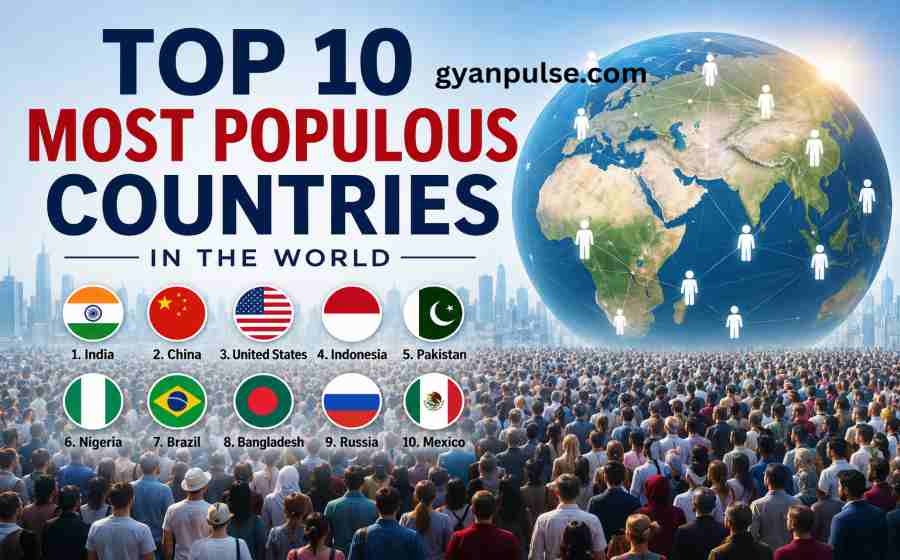
Top 10 Most Populous Countries in the World – Name with Population
Discover the Top 10 Most Populous Countries in the World. Explore updated figures, key facts and global population trends that shape our world today.
Top 10 Most Populous Countries in the World
Population is one of the most important aspects that define a country’s identity. It affects everything from economic growth and cultural diversity to resources, governance, and global influence. In 2025, the world population has crossed 8 billion, and a few countries contribute significantly to this number. Here’s a look at the Top 10 most populous countries in the world in.
Table of Contents
List of Most Populous Countries
1. India
- Population (2025 estimate): 1.43 billion+
In 2023, India surpassed China to become the world’s most populous country, marking a historic demographic shift. It is known for its cultural diversity, fast-growing economy, and young demographic. Despite population challenges, India’s large workforce is a global strength.
2. China
- Population (2025 estimate): 1.41 billion+
China was the most populous country for centuries but has seen population decline in recent years due to low birth rates. China now stands as the second-most populous country, but it continues to hold immense economic and political power worldwide.
3. United States
- Population (2025 estimate): 340 million+
The United States ranks third in the world by population, with steady growth fueled by both births and immigration. With high immigration levels, it continues to maintain steady population growth compared to other developed nations.
4. Indonesia
- Population (2025 estimate): 280 million+
Indonesia is the biggest nation in Southeast Asia, both in size and in population, spread across thousands of islands. Spread across more than 17,000 islands, it is also the world’s largest Muslim-majority country.
5. Pakistan
- Population (2025 estimate): 245 million+
Pakistan’s population has grown rapidly in recent decades. With a majority of young citizens, the country faces both opportunities and challenges in education, employment, and infrastructure.
6. Nigeria
- Population (2025 estimate): 230 million+
Nigeria is the most populous country in Africa and one of the fastest-growing populations in the world. By 2050, Nigeria’s population is expected to grow so much that it could overtake the United States.
7. Brazil
- Population (2025 estimate): 215 million+
Brazil, the biggest country in South America, also ranks seventh in the world by population. It is known for its Amazon rainforest, rich culture, and diverse heritage.
8. Bangladesh
- Population (2025 estimate): 175 million+
Despite its small land area, Bangladesh has one of the highest population densities in the world. Its population continues to rise, creating both economic opportunities and resource management challenges.
9. Russia
- Population (2025 estimate): 143 million+
Russia covers the most land in the world, yet it only stands ninth when it comes to population. In recent years, it has faced declining birth rates and population shrinkage.
10. Mexico
- Population (2025 estimate): 130 million+
Mexico is home to the world’s biggest Spanish-speaking population. Its strategic location and growing economy make it an important part of global demographics.
Global Population Trends and Their Impact
The population patterns of the world’s most populous countries reveal how demographics influence the future of humanity. Nations with rapidly growing populations often experience increased demand for food, housing, education, healthcare, and employment opportunities. At the same time, countries facing declining birth rates may struggle with aging populations and workforce shortages.
These demographic changes directly affect economic development, technological progress, urbanization, and international relations. Understanding global population trends helps governments and societies prepare for future challenges while creating better policies for sustainable growth and resource management.
Importance of Population in Global Development
Population plays a major role in shaping a country’s economic strength, cultural influence, and social structure. Highly populated nations contribute significantly to global trade, innovation, and workforce availability. However, managing a large population also requires proper planning in areas such as transportation, education, healthcare, and environmental protection.
Countries with balanced population growth often achieve better development and stability. As the world continues to evolve, population trends will remain an important factor in determining the future of economies, technology, and global cooperation among nations.
Summary
The world’s population is unevenly distributed, with just 10 countries accounting for more than half of the global population. While countries like India and Nigeria continue to grow rapidly, others like China and Russia face population decline. Understanding these shifts helps us grasp future global economic, social, and political trends.
Also Check: General Knowledge