
Seven Wonders of the World – History, Facts and Significance
Discover the Seven Wonders of the World – their history, unique architecture and cultural significance. Learn why these iconic monuments are admired worldwide.
Seven Wonders of the World
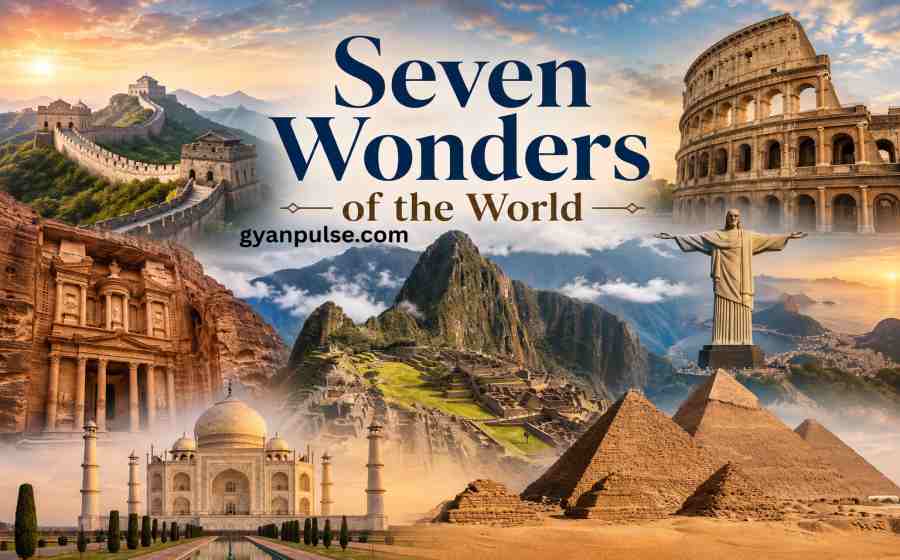
The Seven Wonders of the World represent mankind’s greatest achievements in architecture, culture, and history. These iconic monuments are not just visually stunning but also symbols of heritage, creativity, and timeless beauty. Over the years, the list of wonders has evolved. The original wonders, known as the Ancient Seven Wonders, mostly no longer exist. In 2007, a global poll by the New7Wonders Foundation selected a new list, which is widely recognized today. Let’s explore the New Seven Wonders of the World and why they continue to inspire millions.
Table of Contents
List of Seven Wonders
1. Great Wall of China – China
Stretching over 21,000 km, the Great Wall is the world’s longest man-made structure. The Great Wall of China, built from the 7th century BC to the 16th century AD, was designed to safeguard Chinese kingdoms from enemy invasions. Today, it symbolizes strength, perseverance, and unity.
Quick Fact: Contrary to myth, the wall is not visible from space with the naked eye.
2. Petra – Jordan
Known as the “Rose City” due to its pink sandstone cliffs, Petra was the capital of the Nabataean Kingdom around 300 BC. The most famous structure, Al-Khazneh (The Treasury), is carved entirely into rock.
Quick Fact: Petra remained hidden from the Western world for many centuries, until its rediscovery in 1812.
3. Christ the Redeemer – Brazil
Towering over Rio de Janeiro, this 30-meter tall statue of Jesus Christ is one of the most famous landmarks in the world. Completed in 1931, it represents peace and faith.
Quick Fact: The statue’s arms span 28 meters, representing a welcoming embrace for all of humanity.
4. Machu Picchu – Peru
Nestled high in the Andes Mountains, Machu Picchu is a 15th-century Incan citadel that still stands as a wonder of ancient engineering. Known as the “Lost City of the Incas,” it features temples, terraces, and palaces made from precisely cut stones.
Quick Fact: Machu Picchu was never discovered by Spanish conquerors, which preserved its beauty.
5. Chichen Itza – Mexico
One of the greatest Mayan cities, Chichen Itza is famous for its pyramid El Castillo (Temple of Kukulcán). Built around the 9th–12th centuries, it was a major center for politics, religion, and trade.
Quick Fact: During the equinox, the pyramid creates a shadow that looks like a serpent crawling down its steps.
6. Roman Colosseum – Italy
Located in Rome, this amphitheater could hold up to 50,000 spectators. Built in AD 80, it hosted gladiatorial contests, public spectacles, and plays. It remains a symbol of Roman engineering and culture.
Quick Fact: Earthquakes and stone robbers have damaged the Colosseum, but it still attracts millions of visitors yearly.
7. Taj Mahal – India
Built in Agra by Mughal Emperor Shah Jahan in memory of his wife Mumtaz Mahal, the Taj Mahal is a symbol of eternal love. Finished in 1648, the Taj Mahal’s white marble glows in changing shades at sunrise, sunset, and even under the moonlight.
Quick Fact: The Taj Mahal is also a UNESCO World Heritage Site and one of the most visited monuments in the world.
Cultural Importance of the Seven Wonders
The Seven Wonders of the World are more than famous tourist attractions; they are powerful symbols of human imagination, dedication, and cultural identity. From the ancient stonework of Machu Picchu to the timeless beauty of the Taj Mahal, each wonder reflects the values and achievements of the civilization that created it. These monuments connect modern generations with the past and remind the world of the importance of preserving history, art, and architectural heritage for the future.
Summary
The Seven Wonders of the World are not just architectural marvels but also windows into human history, culture, and creativity. Each wonder tells a story of civilizations, innovation, and artistry that continue to inspire people across the globe. Visiting even one of them is a lifetime experience, and together, they represent the rich heritage of humanity.
Also Check: General Knowledge