Monaco – History, Tourism and Key Facts
Discover Monaco’s fascinating history, rich culture, famous landmarks, sports, geography, royal family and key facts about this tiny European principality.
Monaco
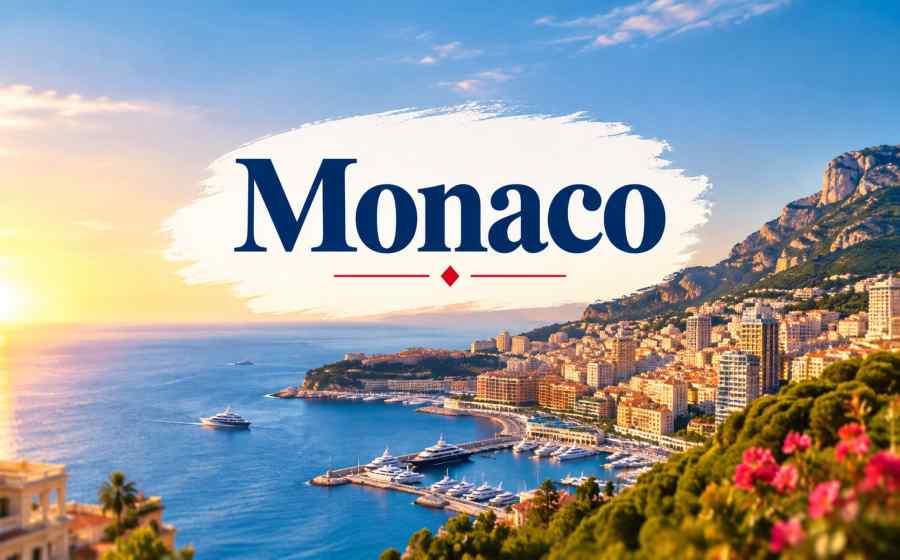
Monaco is one of the world’s smallest countries, yet it has an international reputation far greater than its size. Located on the French Riviera along the Mediterranean Sea, this independent principality is famous for its royal family, luxurious lifestyle, beautiful coastline, historic architecture, casinos and the iconic Monaco Grand Prix. Despite covering only about 2.1 square kilometres, Monaco attracts visitors, sports fans and tourists from around the world. Monaco’s tourism authority lists more than 700 years of rule by the Grimaldi family as one of the principality’s defining features.
Known officially as the Principality of Monaco, the country is surrounded on three sides by France and faces the Mediterranean Sea. Its compact territory includes well-known areas such as Monaco-Ville, Monte Carlo, La Condamine and Fontvieille.
Table of Contents
History of Monaco
The history of Monaco goes back many centuries. The strategic rocky coastline attracted different Mediterranean peoples, including the Greeks and Romans. During the medieval period, the area became connected with the Republic of Genoa.
A major turning point came in 1297, when Francesco Grimaldi, traditionally known as Francesco il Malizia, seized control of the fortress on the Rock of Monaco. This event became an important foundation of the Grimaldi dynasty.
Over the centuries, Monaco experienced periods of political change and developed relationships with larger European powers. The Grimaldi family gradually established a lasting ruling dynasty. The principality’s location between the sea and the surrounding French territory also made diplomacy an important part of its history.
Monaco’s modern development accelerated during the 19th century. The opening of the famous Monte Carlo Casino in 1863 helped transform the principality into an international destination for wealthy visitors. The development of tourism, hotels and transportation further strengthened Monaco’s economy and global reputation.
The principality continues to be ruled by the Grimaldi dynasty. Prince Albert II became the reigning prince in 2005 and is the 14th reigning prince of Monaco according to Monaco’s tourism authority.
Geography and Location
Monaco lies on the Mediterranean coast of Western Europe, close to the French-Italian border. It is surrounded by France except for its Mediterranean coastline.
With an area of approximately 2.1 square kilometres, Monaco is the world’s second-smallest sovereign state after Vatican City. Its small territory is characterized by steep slopes, dense urban development and limited flat land.
The Mediterranean climate provides mild winters and warm, sunny summers. The coastline and elevated areas offer impressive views of the Mediterranean Sea.
Culture of Monaco
Monaco’s culture reflects a combination of Mediterranean, French and Italian influences, together with its own Monegasque traditions. French is the official language, while Monegasque is the traditional local language. Italian and English are also widely encountered because of Monaco’s international population and tourism industry.
Monegasque traditions remain an important part of local identity. Traditional food, music, religious celebrations and national events contribute to the principality’s cultural character.
The National Day of Monaco, celebrated on November 19, is an important annual occasion. Public celebrations, ceremonies and decorations can be seen throughout the principality.
Monaco also has a strong artistic and cultural scene. Museums, galleries, theaters and cultural institutions contribute to its international appeal. The Oceanographic Museum of Monaco, founded in 1910, is particularly well known for its marine collections and scientific work.
Monte Carlo and Famous Landmarks
Monte Carlo is perhaps Monaco’s most internationally recognized district. It is associated with luxury hotels, elegant architecture, shopping and the famous Casino de Monte-Carlo.
The Prince’s Palace of Monaco, located in Monaco-Ville, is another major landmark. It has served as the official residence of the Grimaldi family for centuries and overlooks the Mediterranean.
The Oceanographic Museum, the Cathedral of Monaco and the historic streets of Monaco-Ville are also major attractions. Monaco Cathedral is particularly significant because it is connected with the Grimaldi family and was the wedding venue of Prince Rainier III and American actress Grace Kelly in 1956.
Sports in Monaco
Sport plays a major role in Monaco’s international identity. The country’s most famous sporting event is the Monaco Grand Prix.
The first Monaco Grand Prix took place in 1929, before the Formula 1 World Championship was established. Monaco then appeared on the inaugural Formula 1 championship calendar in 1950 and has remained a famous part of the sport’s history. The modern Circuit de Monaco is approximately 3.337 kilometres long and features 78 laps for the Grand Prix.
The race is held on public streets around Monte Carlo and La Condamine. Its narrow layout, sharp corners, tunnel and limited overtaking opportunities make it one of the most recognizable circuits in motorsport.
The Monaco Grand Prix is also associated with legendary drivers such as Ayrton Senna, Graham Hill, Michael Schumacher and Lewis Hamilton. In 2024, Charles Leclerc became the first Monegasque driver to win the Formula 1 Monaco Grand Prix. Formula 1 has an agreement to continue racing in Monaco through 2031.
Football is another popular sport in Monaco. AS Monaco FC is the principality’s best-known football club and competes in the French football league system.
Economy of Monaco
Monaco has a highly developed and internationally connected economy. Tourism, financial services, real estate, hospitality, entertainment and luxury-related businesses are important parts of its economic life.
The Monte Carlo Casino has historically played an important role in Monaco’s international image and tourism industry. The principality is also known for luxury hotels, restaurants, yachts and high-end shopping.
Because of its small territory and large international population, Monaco has one of the most densely developed urban environments in the world.
Key Facts About Monaco
- Official Name: Principality of Monaco
- Capital: Monaco
- Location: Mediterranean coast of Western Europe
- Area: Approximately 2.1 square kilometres
- Official Language: French
- Traditional Local Language: Monegasque
- Currency: Euro (€)
- Government: Constitutional monarchy
- Reigning Prince: Prince Albert II
- Ruling Dynasty: Grimaldi
- Famous District: Monte Carlo
- Famous Landmark: Prince’s Palace
- Famous Sporting Event: Monaco Grand Prix
- First Monaco Grand Prix: 1929
- Formula 1 Debut: 1950
- Famous Football Club: AS Monaco
- Coastline: Mediterranean Sea
- Neighbouring Country: France
Interesting Facts About Monaco
- Monaco is the second-smallest sovereign state in the world, after Vatican City.
- The Grimaldi family has ruled Monaco for more than seven centuries.
- Monaco is famous for its luxury tourism, casinos and Mediterranean scenery.
- The Monaco Grand Prix is one of the most historic events in Formula 1.
- The Circuit de Monaco uses ordinary city streets during race events.
- Monte Carlo is one of the most recognizable names associated with Monaco.
- The Oceanographic Museum is one of Monaco’s best-known cultural and scientific attractions.
- Monaco has a very small land area but a highly developed urban environment.
- Prince Albert II became Monaco’s reigning prince in 2005.
- Charles Leclerc became the first Monegasque Formula 1 driver to win the Monaco Grand Prix in 2024.
Summary
Monaco is a remarkable country where history, royal traditions, Mediterranean culture, luxury tourism and international sport come together within a remarkably small territory. From the centuries-old Grimaldi dynasty and the historic Prince’s Palace to Monte Carlo’s famous attractions and the thrilling Monaco Grand Prix, the principality has developed a distinctive identity recognized around the world.
Its small size makes Monaco geographically unusual, while its history, culture, landmarks and sporting traditions give it global importance. Monaco is an especially interesting example of how a tiny sovereign state can have a significant place in European history and international culture.
Also Check: General Knowledge