
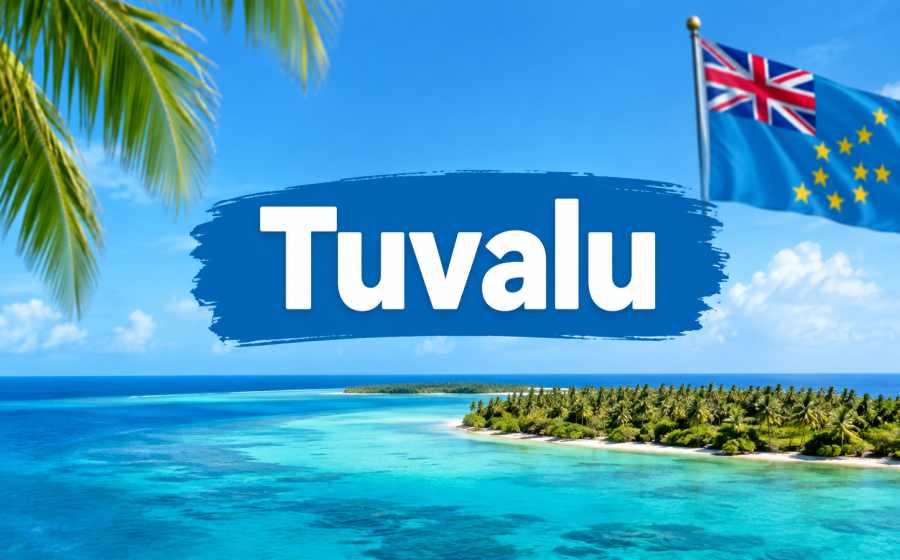
Tuvalu – History, Culture, Sports and Key Facts
Discover Tuvalu’s history, culture, sports, geography, economy and key facts, including Funafuti, traditions, independence and climate challenges.
Tuvalu
Tuvalu is a small island country in the Pacific Ocean, known for its beautiful atolls, traditional Polynesian culture, peaceful communities, and unique geographical setting. Although it is one of the world’s smallest and least-populated countries, Tuvalu has an interesting history and a strong cultural identity. Its remote location and low-lying islands also make it an important country in discussions about climate change and rising sea levels.
Table of Contents
Where is Tuvalu Located?
Tuvalu is located in the central Pacific Ocean, approximately halfway between Hawaii and Australia. It consists of nine islands, including six atolls and three reef islands. The country has a very small land area, while its surrounding ocean territory is considerably larger.
The capital and largest population center is Funafuti, an atoll that serves as the administrative and economic center of the country. Because most of Tuvalu’s land lies only a few meters above sea level, its geography is particularly vulnerable to coastal flooding and other effects associated with climate change.
Tuvalu has a tropical climate, with warm temperatures throughout the year. Its remote island environment has shaped the lifestyle, traditions, economy, and culture of its people.
History of Tuvalu
The islands of Tuvalu were settled by Polynesian peoples many centuries ago. Different islands developed their own communities and traditions while maintaining strong cultural connections with other Pacific societies.
European explorers began visiting the region during the 16th century, although regular outside contact increased much later. During the 19th century, the islands experienced contact with traders, missionaries, and other foreign visitors. Christianity eventually became an important part of Tuvaluan society.
In the late 19th century, the islands became associated with the British Empire. They were administered together with the nearby Gilbert Islands as part of the Gilbert and Ellice Islands Colony.
During the 20th century, political and cultural differences between the Gilbert Islands and Ellice Islands became increasingly significant. In 1975, the Ellice Islands separated from the colony and adopted the name Tuvalu.
Tuvalu gained independence from the United Kingdom on 1 October 1978. Since independence, it has remained a sovereign island nation and a member of the Commonwealth.
Culture and Traditions of Tuvalu
Tuvalu has a rich Polynesian cultural heritage. Family, community cooperation, traditional customs, music, dance, and religion play important roles in everyday life.
One of the most recognizable aspects of Tuvaluan culture is traditional dance. Community performances often feature coordinated movements, singing, colorful clothing, and rhythmic music. Traditional celebrations can bring together large groups of people and are important occasions for strengthening community relationships.
The fatele, a traditional form of song and dance, is an important part of Tuvalu’s cultural heritage. It is commonly performed during celebrations and special events.
Traditional handicrafts also remain significant. Islanders create various items using locally available materials such as pandanus leaves and coconut products. Fishing, farming, and skills associated with life on small islands have traditionally been important to local communities.
Christianity is widespread in Tuvalu, particularly through the Ekalesia Kelisiano Tuvalu, or Church of Tuvalu. Religious and community activities are closely connected in many parts of the country.
Language of Tuvalu
The main languages spoken in Tuvalu are Tuvaluan and English. Tuvaluan is a Polynesian language and an important symbol of national identity. English is also used in government, education, and other official contexts.
The preservation of the Tuvaluan language and traditional customs is especially important because the country’s small population and isolated geography make cultural continuity a significant national concern.
Sports in Tuvalu
Sports are an important part of community life in Tuvalu. Football, athletics, volleyball, and weightlifting are among the sports enjoyed by Tuvaluans.
Tuvalu participates in international sporting competitions despite its small population. The country has competed in the Olympic Games, particularly in athletics and other events.
Football has also gained popularity, and Tuvalu has participated in regional Pacific football competitions. Athletics remains especially significant because Tuvaluan athletes have represented the country on the international stage.
The country’s participation in international sports provides an opportunity to promote Tuvalu globally and gives young people opportunities to develop athletic skills.
Economy of Tuvalu
Tuvalu has a small economy influenced by its remote location and limited land resources. Fishing, public services, agriculture, overseas employment, remittances, and international assistance are important parts of the economy.
Coconut products and subsistence agriculture have traditionally contributed to local livelihoods. Fishing is also important because Tuvalu possesses a large maritime area.
One unusual source of international revenue is Tuvalu’s internet country-code domain, .tv. The domain has commercial value because the abbreviation “TV” is widely associated with television. Licensing arrangements connected with the domain have provided revenue for Tuvalu.
Tuvalu and Climate Change
Tuvalu is frequently mentioned in global discussions about climate change because its islands are extremely low-lying. Rising sea levels, coastal erosion, saltwater intrusion, changing weather patterns, and stronger extreme weather events can create serious challenges for island communities.
The issue is particularly important because Tuvalu contributes only a tiny amount to global greenhouse-gas emissions, yet it can experience significant consequences from global environmental changes.
The government of Tuvalu has therefore advocated for stronger international action on climate change and greater protection for vulnerable island nations.
Funafuti – The Capital of Tuvalu
Funafuti is the capital and most populated atoll of Tuvalu. It contains government offices, important public facilities, residential areas, and the country’s main airport.
The Funafuti Conservation Area is one of the notable natural attractions in the country. Its marine environment contains coral reefs, lagoons, and islands that support a variety of marine life.
Life in Funafuti combines traditional island culture with modern facilities. Because land is limited, communities live within a relatively small area surrounded by the Pacific Ocean.
Important Key Facts About Tuvalu
- Official name: Tuvalu
- Capital: Funafuti
- Region: Pacific Ocean / Oceania
- Independence: 1 October 1978
- Official languages: Tuvaluan and English
- Currency: Australian dollar
- Government: Parliamentary democracy and constitutional monarchy
- Main cultural group: Polynesian
- Number of islands: 9
- Internet country-code domain: .tv
- Major sports: Football, athletics, volleyball and weightlifting
- Main economic activities: Fishing, services, agriculture, remittances and international assistance
- Major environmental concern: Sea-level rise and climate change
Why is Tuvalu Important?
Tuvalu may be geographically small, but it has considerable importance in the Pacific region and in international environmental discussions. Its culture demonstrates the rich heritage of Polynesian island communities, while its international climate advocacy highlights the challenges faced by low-lying nations.
The country also shows how a small island state can maintain its identity and participate in international organizations and sporting events despite having limited land and population.
Summary
Tuvalu is a fascinating Pacific island nation with a distinctive history, rich Polynesian culture, active sporting traditions, and a unique geographical identity. From its traditional fatele performances and island communities to the capital of Funafuti and its participation in international affairs, Tuvalu offers many interesting facts for students and general knowledge readers.
Its experience also provides an important lesson about the global impact of environmental change. Although Tuvalu is one of the smallest countries in the world, its voice in international climate discussions demonstrates that geographical size does not determine global significance. Learning about Tuvalu helps us better understand Pacific geography, Polynesian culture, international affairs, sports, and the challenges faced by vulnerable island nations.
Also Check: General Knowledge