Nauru – History, Culture, Sports, Geography and Key Facts About the Island Nation
Discover Nauru’s history, culture, geography, sports, economy and fascinating facts. Learn about this tiny Pacific island nation and its unique identity.
Nauru
Nauru is one of the smallest countries in the world and a fascinating island nation located in the central Pacific Ocean. Despite its limited land area, Nauru has a distinctive history, culture and national identity. The country is especially known for its phosphate resources, tropical surroundings and unusual geographical characteristics.
Officially called the Republic of Nauru, the country is a raised coral island surrounded by the Pacific Ocean. It has no official capital city, although Yaren District is commonly regarded as the de facto centre of government. Nauru is also one of the world’s least-populous independent countries. From its traditional island society to its colonial past and independence, Nauru has experienced major changes over the years.
Table of Contents
Geography of Nauru
Nauru is situated in Micronesia, a region of the Pacific Ocean. It lies northeast of Australia and relatively close to other Pacific island countries. The island has a total land area of only about 21 square kilometres, making it the third-smallest country in the world by land area, after Vatican City and Monaco.
Nauru is roughly oval-shaped and is surrounded by a coral reef. Unlike many Pacific islands, it does not have a significant natural harbour. The island’s highest point is Command Ridge, which rises to approximately 71 metres above sea level.
Nauru has a tropical climate with warm temperatures throughout the year. Rainfall can vary considerably, and the country is vulnerable to environmental challenges, including drought and the effects of climate change.
History of Nauru
Nauru was inhabited by Pacific island communities for centuries before European contact. Traditional Nauruan society consisted of several clans and had its own social structures, customs and cultural practices.
European explorers encountered the island in the late 18th century. During the 19th century, Nauru became increasingly connected with European powers. Germany took control of the island in 1888, incorporating it into the German colonial empire.
A major turning point in Nauru’s history came with the discovery of large deposits of phosphate. Commercial phosphate mining began in the early 20th century. The resource became the foundation of the island’s economy for many decades.
During World War I, Nauru came under Australian administration as part of a mandate arrangement involving Australia, New Zealand and the United Kingdom. During World War II, Japanese forces occupied Nauru from 1942 until the end of the war. Many Nauruans suffered greatly during this period.
After World War II, Nauru continued under international administration. The country eventually achieved independence on 31 January 1968, becoming a sovereign republic.
Government and National Identity
Nauru is a republic with a parliamentary system. The country’s president serves as both head of state and head of government. The Parliament of Nauru is responsible for making laws and consists of elected representatives.
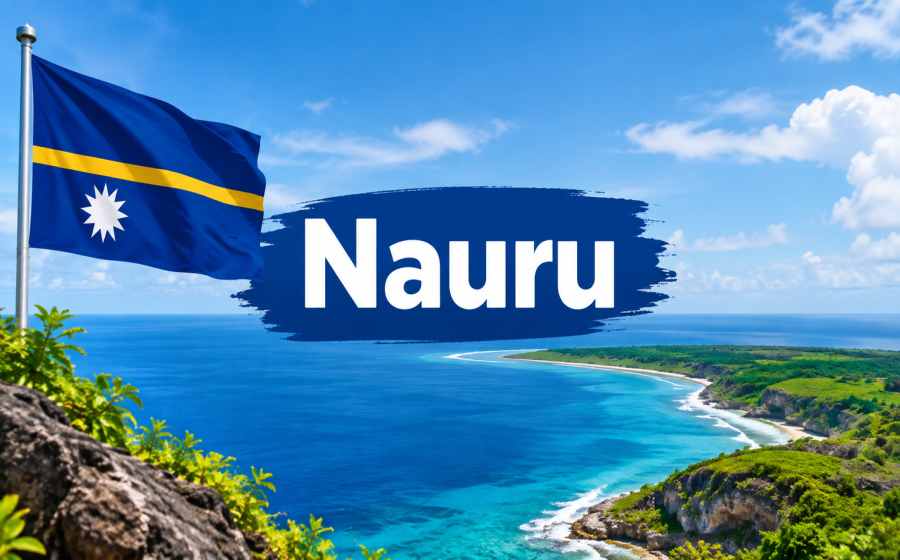
Nauru’s national flag has a distinctive design. It features a blue background representing the Pacific Ocean, a narrow yellow horizontal line symbolizing the Equator, and a white twelve-pointed star. The twelve points represent the traditional twelve tribes of Nauru.
The country’s national identity is strongly connected to its island heritage, Pacific traditions and history.
Culture and Traditions
Nauruan culture reflects the country’s Pacific island heritage. Traditional customs, family relationships, music, dancing and community activities have played important roles in Nauruan society.
Nauruan is the country’s main indigenous language, while English is also widely used, particularly in government, education and business.
Christianity has a significant presence in Nauru, with various Christian denominations represented among the population. Traditional cultural practices continue to contribute to the country’s identity despite the influence of modern life.
Nauruan cuisine includes seafood, coconut and other foods commonly associated with Pacific island communities. Fish has traditionally been an important part of the local diet because of the country’s location in the Pacific Ocean.
Sports in Nauru
Sports are an important part of community life in Nauru. Australian rules football is particularly popular and has a strong following on the island. Nauru has produced athletes who have represented the country internationally in this sport.
Weightlifting is another sport for which Nauru has gained international recognition. Despite its small population, the country has competed in international weightlifting events and produced notable athletes.
Nauru has also participated in the Olympic Games. The country made its Olympic debut at the 1996 Atlanta Olympics. Since then, Nauruan athletes have competed in sports including weightlifting, athletics and judo.
Participation in international sports provides Nauru with an opportunity to showcase its national identity on the world stage.
Economy of Nauru
For much of the 20th century, Nauru’s economy depended heavily on phosphate mining. The country’s phosphate deposits generated substantial revenue and once gave Nauru one of the world’s highest levels of income per person.
However, extensive mining greatly affected the island’s environment and reduced its economically recoverable phosphate resources. As phosphate production declined, Nauru faced significant economic difficulties.
Today, the country relies on a combination of government revenue, fisheries-related activities, services, external assistance and other sources. Economic diversification remains an important challenge for Nauru.
Environment and Challenges
Nauru’s small size makes environmental management particularly important. Decades of phosphate mining damaged large portions of the island’s landscape. Rehabilitation of mined areas has therefore become an important national concern.
The country is also highly vulnerable to sea-level rise and climate change. As a low-lying Pacific island nation, changes in ocean conditions and extreme weather can have serious consequences for infrastructure, freshwater supplies and daily life.
Protecting the coastal environment and developing sustainable economic opportunities are important priorities for Nauru’s future.
Kay Facts About Nauru
Here are some fascinating facts about Nauru:
- Nauru is one of the world’s smallest independent countries by land area.
- It is located in the central Pacific Ocean.
- Nauru has no official capital city.
- Yaren is commonly considered the country’s de facto administrative centre.
- The country became independent on 31 January 1968.
- Phosphate mining played a major role in Nauru’s modern economic history.
- Nauru’s flag contains a twelve-pointed star representing its traditional twelve tribes.
- Australian rules football is one of the country’s most popular sports.
- Nauru has competed in the Olympic Games since 1996.
- Weightlifting is one of Nauru’s best-known international sports.
- The island has a tropical climate.
- Nauru is surrounded by a coral reef.
- Command Ridge is the highest point on the island.
- Nauruan and English are widely used languages in the country.
Summary
Nauru may be tiny in size, but its history and identity are remarkably significant. From its traditional Pacific heritage and colonial history to the rise and decline of phosphate mining, the country has experienced dramatic changes. Its participation in international sports, distinctive culture and environmental challenges make it an interesting country to study.
Learning about Nauru provides valuable knowledge about Pacific geography, island nations, colonial history, natural resources and the challenges faced by small developing countries.
Also Check: General Knowledge