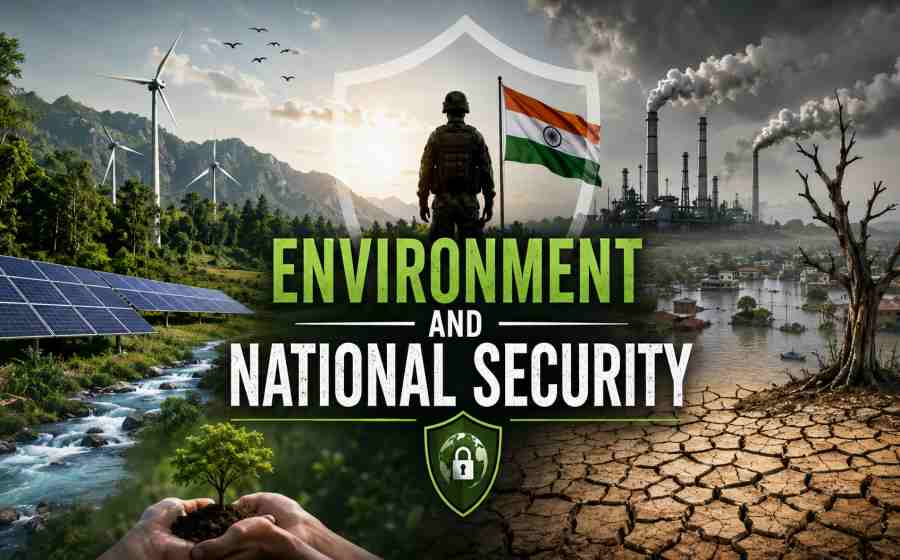
Environment and National Security – How Nature Impacts a Nation’s Safety
Learn how environment and national security are connected through climate change, water scarcity, disasters, food security and global conflicts.
Environment and National Security
The environment and national security are deeply connected in the modern world. Earlier, national security mainly focused on military strength, borders, and defense systems. However, today environmental problems such as climate change, water scarcity, pollution, deforestation and natural disasters are becoming major threats to a nation’s stability and safety. Countries around the world are now realizing that protecting the environment is also important for protecting the nation.
Environmental challenges can create economic crises, food shortages, migration problems, health emergencies, and conflicts over natural resources. These issues can weaken a country from within and create tension between nations. Therefore, environmental protection is no longer only a social or scientific concern; it has become an important part of national security policy.
Table of Contents
Meaning of National Security
National security refers to the protection of a country’s citizens, economy, resources, and sovereignty from internal and external threats. Traditionally, security threats included wars, terrorism, and border disputes. Today, environmental risks are also considered security threats because they can disturb peace, development, and public safety.
For example, if a country faces severe drought, lack of water can affect agriculture and industries, leading to unemployment and social unrest. Similarly, rising sea levels can force people to leave coastal areas, creating migration pressures and economic instability.
Climate Change as a Security Threat
Climate change is one of the biggest environmental threats to global security. Rising temperatures, melting glaciers, heatwaves, floods, and cyclones are affecting countries across the world. These environmental changes can damage infrastructure, reduce agricultural production, and increase poverty.
In countries that depend heavily on farming, unpredictable weather can destroy crops and reduce food supply. Food shortages may lead to protests, riots, or even conflicts. Climate change can also increase competition over natural resources like water and fertile land.
Many security experts believe that climate change acts as a “threat multiplier” because it worsens existing social and economic problems. Poor and developing countries are often more vulnerable because they may lack the resources to manage environmental disasters effectively.
Water Scarcity and Conflicts
Water is one of the most essential natural resources for human survival. Rapid population growth, pollution, and climate change are reducing freshwater availability in many regions. When water becomes scarce, conflicts can arise between communities, states, or even countries.
Several rivers in the world are shared by multiple nations. Disagreements over river water distribution can create diplomatic tensions. In agriculture-based economies, water shortages can directly affect food production and livelihoods.
In India, water scarcity has become a major concern in many states. Groundwater depletion, irregular rainfall, and pollution of rivers are increasing pressure on water resources. Ensuring proper water management is therefore important not only for development but also for maintaining social stability and national security.
Natural Disasters and National Stability
Natural disasters such as earthquakes, floods, cyclones, wildfires, and landslides can severely impact national security. These disasters destroy homes, roads, communication systems, and public infrastructure. Governments may face huge financial burdens during rescue and recovery operations.
Frequent disasters can slow economic growth and increase poverty. They may also weaken public confidence in government institutions if relief efforts are ineffective. In some cases, disasters can create political instability and social unrest.
India frequently experiences floods, cyclones, and heatwaves. Coastal regions are especially vulnerable to rising sea levels and powerful storms. Strengthening disaster management systems and improving environmental planning are important steps toward national resilience.
Environmental Degradation and Health Risks
Environmental pollution creates serious health problems that can affect a country’s workforce and economy. Air pollution, contaminated water, and improper waste disposal increase the spread of diseases. Large-scale health crises can place pressure on healthcare systems and reduce productivity.
For example, poor air quality in major cities can lead to respiratory diseases and other long-term health issues. During pandemics or disease outbreaks, weak environmental conditions can worsen public health emergencies.
Healthy citizens are essential for a strong economy and stable nation. Therefore, environmental protection and public health are closely linked to national security.
Migration and Social Tensions
Environmental changes often force people to leave their homes. Floods, droughts, desertification, and rising sea levels can make certain regions uninhabitable. Such environmental migration can create pressure on cities and neighboring regions.
Large-scale migration may lead to unemployment, housing shortages, and social tensions. In some situations, competition over limited resources can increase conflicts between communities. Governments must prepare proper policies to manage environmental migration and support affected populations.
Role of Governments and International Cooperation
Environmental problems do not stop at national borders. Climate change, pollution, and resource depletion are global challenges that require international cooperation. Countries must work together to reduce carbon emissions, protect forests, conserve water resources, and promote sustainable development.
Governments should also invest in renewable energy, disaster preparedness, environmental education, and green technologies. Strong environmental laws and effective implementation can reduce risks and improve national resilience.
India has taken several initiatives to promote renewable energy, afforestation, and climate action. Programs related to solar energy, clean rivers, and sustainable development are important steps toward environmental security.
Importance of Sustainable Development
Sustainable development means meeting present needs without harming the ability of future generations to meet their own needs. A nation that uses natural resources responsibly can maintain long-term economic growth and social stability.
Protecting forests, conserving biodiversity, reducing pollution, and promoting clean energy are important for sustainable development. Environmentally responsible policies can reduce security risks and create a healthier future for citizens.
Summary
Environment and national security are closely connected in today’s world. Climate change, water scarcity, natural disasters, pollution, and environmental migration can all threaten a nation’s peace and stability. Protecting the environment is not only about saving nature, it is also about protecting people, economies, and future generations.
Governments, organizations, and citizens must work together to address environmental challenges through sustainable development and responsible resource management. A secure environment leads to a secure nation. Therefore, environmental protection should be treated as an essential part of national security planning in every country.
Also Check: Environment