India: History, Culture, Geography, Sports and Everything about the Incredible nation
Learn what makes India unique – from its vast area, population, and rich history to diverse culture, sports achievements, and neighbouring countries.
India – The land of Diversity and Heritage
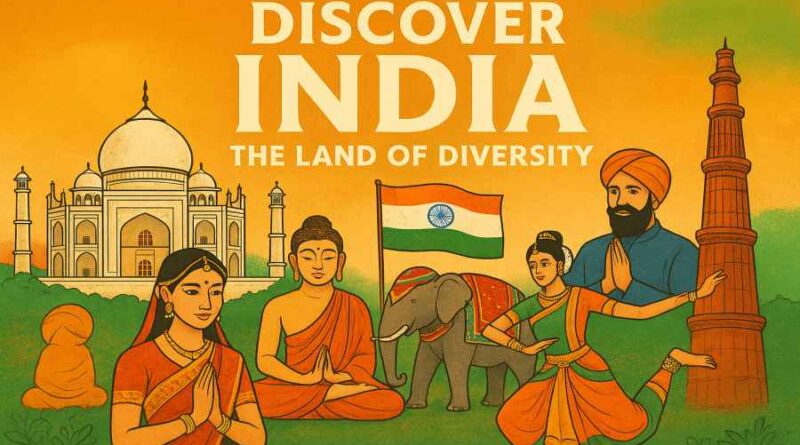
India, officially known as the Republic of India, is one of the oldest civilizations in the world with a rich and varied heritage. It is a country of unity in diversity where people of different cultures, religions, and languages coexist peacefully. Located in South Asia, India is the seventh-largest country in the world by area and the most populous nation.
Table of Contents
Geographical Area and Location
India covers an area of approximately 3.287 million square kilometers, stretching from the Himalayas in the north to the Indian Ocean in the south. It shares land borders with Pakistan, China, Nepal, Bhutan, Bangladesh, and Myanmar, and maritime boundaries with Sri Lanka and Maldives.
India’s geography ranges from the snowy peaks of the Himalayas to the tropical rainforests of the south. The Thar Desert in Rajasthan and the Sundarbans delta in West Bengal highlight the country’s diverse natural landscape.
Population and Demographics
As of 2025, India’s population is estimated at over 1.43 billion people, making it the most populous country in the world, surpassing China. The population is a blend of multiple ethnic groups, languages, and religions.
India recognizes 22 official languages, with Hindi and English being the most widely spoken. The major religions practiced include Hinduism, Islam, Christianity, Sikhism, Buddhism, and Jainism, representing the country’s spiritual and cultural depth.
A Glimpse into India’s Rich History
Ancient India
India’s history dates back to over 5,000 years with the rise of the Indus Valley Civilization – one of the earliest urban cultures in the world. Ancient India saw the emergence of Hinduism, Buddhism, and Jainism, which shaped the philosophical and cultural thought of Asia.
Medieval Period
During the medieval era, India witnessed the rule of several dynasties, including the Mauryas, Guptas, Cholas, Mughals, and Delhi Sultanate. The Mughal period was notable for remarkable art and architecture, including the world-famous Taj Mahal.
British Rule and Independence
In the 18th century, the British East India Company established control over large parts of India, later leading to direct British rule. After a long struggle led by freedom fighters such as Mahatma Gandhi, Subhas Chandra Bose, and Jawaharlal Nehru, India gained independence on August 15, 1947.
Post-independence, India adopted a democratic constitution on January 26, 1950, becoming the largest democracy in the world.
Culture and Traditions
India’s culture is a beautiful mosaic of traditions, festivals, music, and art forms. Each state has its unique identity, attire, and cuisine.
- Festivals: Diwali, Holi, Eid, Christmas, Pongal, and Durga Puja are celebrated with great enthusiasm.
- Dance & Music: Classical dance forms like Bharatanatyam, Kathak, Odissi, and Kuchipudi, along with classical music styles such as Hindustani and Carnatic, represent the artistic excellence of India.
- Cuisine: Indian food is globally famous for its rich flavors – from spicy curries of the north to coconut-based dishes of the south.
Famous Monuments and Heritage Sites
India is home to 40 UNESCO World Heritage Sites, including:
- Taj Mahal (Agra)
- Qutub Minar (Delhi)
- Khajuraho Temples (Madhya Pradesh)
- Hampi Ruins (Karnataka)
- Red Fort, Ajanta & Ellora Caves, and Sun Temple, Konark
These monuments symbolize the architectural brilliance and historical depth of the country.
Economy and Development
India stands among the world’s most rapidly expanding and dynamic major economies. It has a mixed economy with significant contributions from agriculture, manufacturing, and services sectors. The IT and software industry, centered in cities like Bengaluru, Hyderabad, and Pune, has made India a global technology hub.
India is also a leading producer of textiles, pharmaceuticals, steel, and automobiles. In recent years, initiatives like Make in India, Digital India, and Startup India have boosted innovation and entrepreneurship.
Sports in India
Cricket is the most popular sport in India, and players like Sachin Tendulkar, MS Dhoni, Rohit Sharma and Virat Kohli are national icons.
Other sports such as hockey, football, badminton, wrestling, and kabaddi also have a strong presence. India has achieved success in international events like the Olympics through athletes such as Neeraj Chopra, P.V. Sindhu, and Abhinav Bindra.
The Indian Premier League (IPL) has revolutionized cricket, attracting players and fans worldwide.
Also Read: What is the Capital of Sri Lanka – History, Area, Population & Culture
Religion and Spirituality
India is the birthplace of major world religions – Hinduism, Buddhism, Jainism, and Sikhism. Spiritual centers such as Varanasi, Bodh Gaya, Amritsar, and Rishikesh attract millions of devotees and tourists. Yoga and meditation, deeply rooted in Indian tradition, have gained global popularity for promoting mental and physical well-being.
Neighbouring Countries
India shares borders with:
- Pakistan to the northwest
- China and Nepal to the north
- Bhutan to the northeast
- Bangladesh and Myanmar to the east
Across the ocean, Sri Lanka lies to the south, separated by the Palk Strait, and Maldives lies southwest of India. These nations share historical, cultural, and trade ties with India.
Modern India – A Global Power
Today, India stands as a vibrant democracy, a rising global power, and a leader in technology and space exploration. The Indian Space Research Organisation (ISRO) has achieved remarkable success, including the Chandrayaan and Mangalyaan missions.
India continues to uphold its values of peace, progress, and pluralism, embodying the spirit of “Vasudhaiva Kutumbakam” – The World is One Family.
Summary
India is more than a country – it is a civilization, a culture, and an emotion. From the Himalayas to Kanyakumari, every corner tells a story of faith, resilience, and beauty. With its rich history, vibrant culture, and growing influence, India truly stands as the Incredible Land of Diversity.
Also Check: General Knowledge