
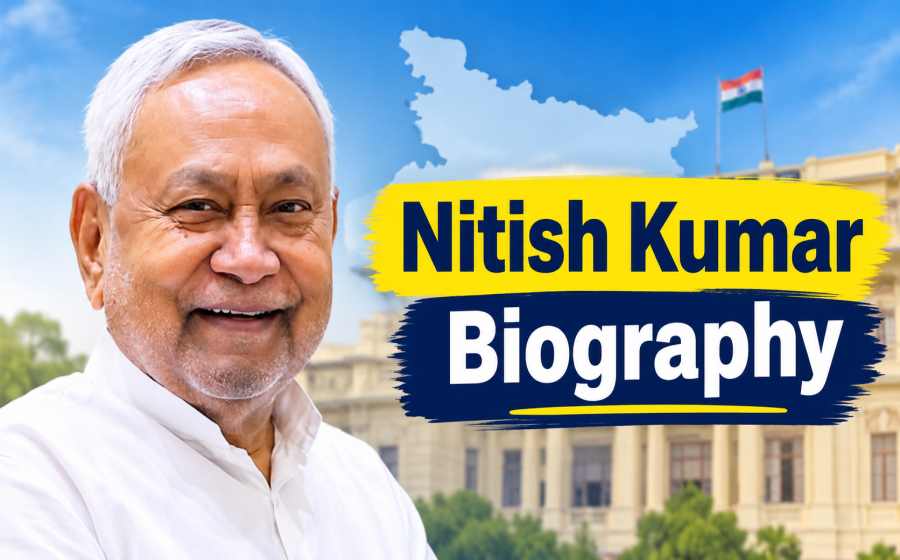
Nitish Kumar Biography – Life, Political Journey, Achievements and Legacy
Explore Nitish Kumar Biography, his early life, education, political career, achievements, leadership and contributions to Bihar’s development.
Nitish Kumar Biography
Nitish Kumar is one of India’s most prominent regional political leaders and a significant figure in Bihar’s modern political history. Known for his long political career, administrative experience, and focus on development, he has played an important role in shaping Bihar’s governance. From his early involvement in student politics to becoming the Chief Minister of Bihar, his journey reflects decades of political dedication, challenges, and leadership.
Table of Contents
Early Life and Education
Nitish Kumar was born on 1 March 1951 in Bakhtiarpur, a town in the Patna district of Bihar, India. His father, Ram Lakhan Singh, was a freedom fighter and an Ayurvedic practitioner. His family background and his father’s involvement in public life influenced his early interest in social and political issues.
He completed his schooling in Bihar and later graduated in Electrical Engineering from Bihar College of Engineering, Patna, which is now known as the National Institute of Technology (NIT), Patna.
Although he initially studied engineering, Nitish Kumar gradually developed an interest in public service and politics. His educational background helped shape his analytical approach to administration and governance.
Entry into Politics
Nitish Kumar entered active politics during the 1970s, a period when India witnessed significant political movements. He participated in the Bihar movement led by Jayaprakash Narayan, which demanded political and social reforms.
He became associated with leaders who advocated democratic values, social justice, and political accountability. His involvement in the movement helped him build connections and gain experience in public life.
In 1985, he was elected to the Bihar Legislative Assembly for the first time. This victory marked the beginning of his successful parliamentary and political career.
Rise in National Politics
Nitish Kumar gradually established himself as an important political leader in Bihar and at the national level. He was elected to the Lok Sabha multiple times and served in the Union Government.
He held important ministerial responsibilities, including the position of Union Minister for Railways and Union Minister for Agriculture. His work in the railway sector brought him national recognition, particularly for his administrative decisions and efforts to improve railway services.
His experience in national politics strengthened his political position and prepared him for a major leadership role in Bihar.
Nitish Kumar as Chief Minister of Bihar
Nitish Kumar first became the Chief Minister of Bihar in March 2000, although his initial tenure lasted only a few days. He returned to the position in November 2005 and began a longer period of leadership.
During his tenure, his government focused on improving roads, electricity, education, healthcare, and law and order. His administration also introduced initiatives aimed at encouraging girls’ education, improving school attendance, and increasing women’s participation in public life.
One of his widely recognised initiatives was the bicycle scheme for schoolgirls, which helped many students travel to school more easily. His government also introduced measures to strengthen women’s representation in local government institutions.
His political career has included several changes in alliances and multiple terms as Chief Minister. These developments have made him one of the most discussed and influential political figures in Bihar.
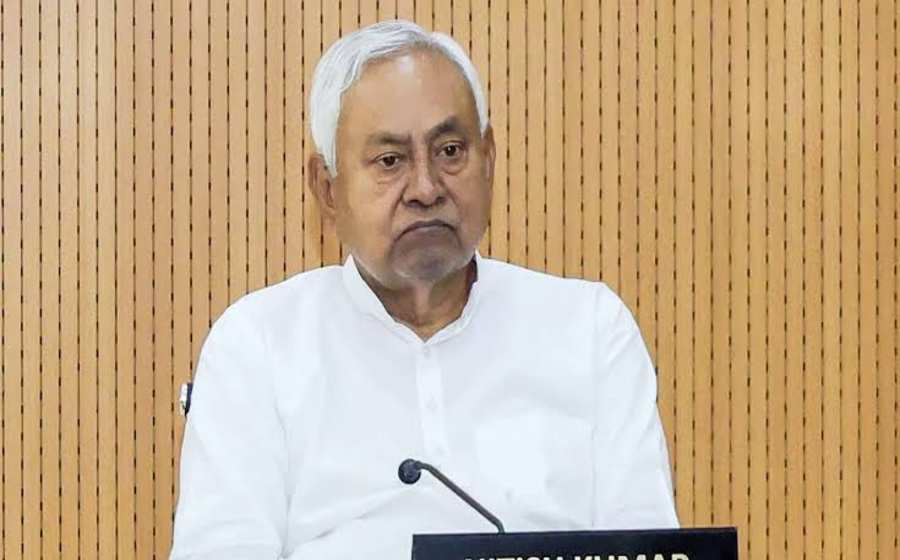
Political status: Nitish Kumar resigned as Bihar Chief Minister on 14 April 2026 and subsequently became a Rajya Sabha member. Therefore, the article should describe him as a former Chief Minister of Bihar, not the current Chief Minister.
Major Achievements and Development Initiatives
Nitish Kumar’s political legacy is closely associated with his development initiatives in Bihar. Some of the major areas of focus during his government included:
- Road Development: Expansion and improvement of road networks to connect villages, towns, and cities.
- Education: Initiatives to improve school attendance, particularly among girls.
- Women’s Empowerment: Reservation for women in Panchayati Raj institutions and employment initiatives.
- Healthcare: Expansion of healthcare facilities and improvements in public health services.
- Electricity: Efforts to improve electricity supply in rural and urban areas.
- Social Welfare: Various programmes aimed at supporting economically weaker and disadvantaged communities.
These initiatives contributed to changes in Bihar’s infrastructure and social development, although challenges in employment, migration, education quality, and economic growth continued.
Political Challenges and Changing Alliances
Nitish Kumar’s political career has not been without controversy. His changing political alliances have frequently attracted public attention and criticism.
He has worked with different political parties and coalitions during his career, including the BJP-led NDA and the RJD-led Mahagathbandhan. His political decisions sometimes created uncertainty about the direction of Bihar’s government.
Despite these challenges, he maintained a significant position in Bihar politics for several decades. His long tenure as Chief Minister made him one of the most influential political leaders in the state’s history.
Resignation as Chief Minister and Entry into Rajya Sabha
In April 2026, Nitish Kumar resigned from the position of Chief Minister of Bihar after serving for approximately two decades across multiple terms. His resignation marked the end of a significant chapter in Bihar’s political history.
Before leaving the office, he expressed his willingness to extend cooperation and guidance to the new government.
On 10 April 2026, he took the oath as a member of the Rajya Sabha, India’s Upper House of Parliament. This marked another important milestone in his political journey, as he had previously served in the Bihar Legislative Assembly, Lok Sabha, and Legislative Council.
Personal Life
Nitish Kumar married Manju Kumari Sinha on 22 February 1973. She was a teacher and passed away in 2007. They had one son, Nishant Kumar.
Despite spending several decades in public life, Nitish Kumar has generally maintained a relatively simple public image. His personal life has largely remained away from the spotlight compared with his political activities.
Nitish Kumar Net Worth
According to his latest publicly reported asset declaration in December 2025, Nitish Kumar owns total movable and immovable assets worth approximately ₹1.65 crore. His movable assets are valued at around ₹17.66 lakh, while his immovable assets are worth approximately ₹1.48 crore, mainly consisting of a residential flat in Dwarka, New Delhi. His declared assets also include a Ford EcoSport car, bank deposits, cash, jewellery, and household belongings. His disclosure reported no outstanding liabilities. These figures are based on his declared assets and should not be confused with an independently calculated net worth.
5 Inspirational Lessons from Nitish Kumar’s Life
Nitish Kumar’s long political journey offers several lessons for students and aspiring leaders.
1. Education Matters: His engineering education demonstrates the importance of learning and developing knowledge before entering professional life.
2. Stay Committed to Your Goals: His decades-long political career reflects persistence and dedication to public service.
3. Leadership Requires Responsibility: His experience in administration highlights the importance of taking responsibility for important decisions.
4. Focus on Social Development: His initiatives for education, women’s empowerment, and infrastructure demonstrate the importance of working towards broader social progress.
5. Adapt to Changing Circumstances: His political journey shows how leaders must navigate changing situations, challenges, and responsibilities.
Summary
Nitish Kumar’s biography represents an important chapter in the political history of Bihar. From his early involvement in the JP Movement to becoming one of India’s longest-serving Chief Ministers, he has experienced numerous achievements, challenges, and political transformations. His contributions to infrastructure, education, women’s empowerment, and governance have influenced Bihar’s development. Even after stepping down as Chief Minister in 2026, his political journey remains significant in Indian public life.
Also Check: Biography