Ronaldo Nazario Biography – The Phenomenal Journey of Brazil’s Legendary Football Striker
Explore Ronaldo Nazario biography, early life, football career, World Cup victories, major achievements and five inspiring life lessons.
Ronaldo Nazario Biography
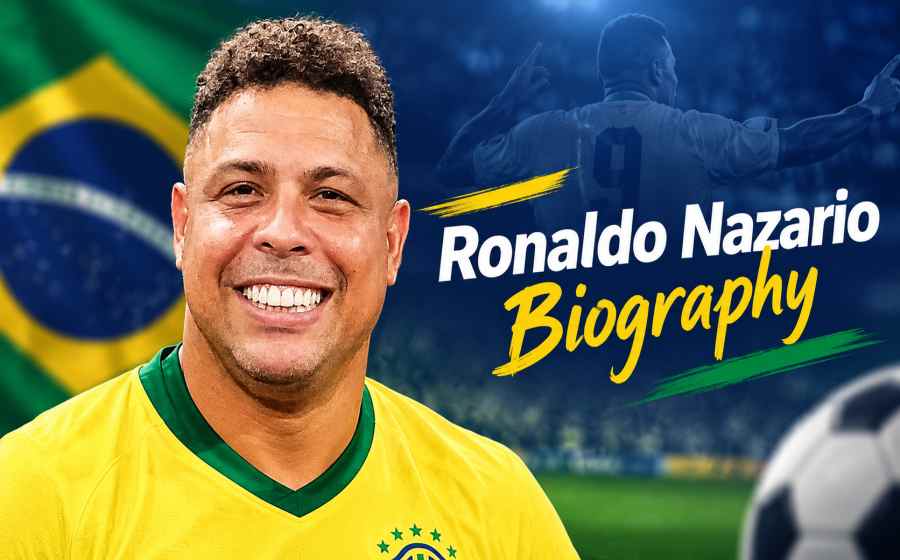
Ronaldo Nazário is one of the greatest footballers in the history of the sport. Known worldwide as “O Fenômeno,” meaning “The Phenomenon,” he became famous for his incredible speed, extraordinary dribbling skills, powerful finishing, and ability to score goals against the strongest opponents. His performances for Brazil and several of Europe’s biggest football clubs established him as a legend of the game.
Despite suffering serious knee injuries that threatened his career, Ronaldo returned to the highest level and helped Brazil win the 2002 FIFA World Cup. His journey from a young boy in Brazil to an international football icon remains an inspiring story of talent, determination, and resilience.
Table of Contents
Early Life and Childhood
Ronaldo Luís Nazário de Lima was born on 22 September 1976 in Rio de Janeiro, Brazil. He grew up in a modest family and developed a passion for football at a young age. Like many Brazilian children, he enjoyed playing the game in local streets and neighbourhoods, where his natural ability quickly became apparent.
Ronaldo initially played futsal, a form of indoor football that helped him improve his close control, quick movements, balance, and decision-making. These skills later became important elements of his playing style.
His talent attracted attention as he progressed through youth football. He joined São Cristóvão before moving to Cruzeiro, where he began his professional career in 1993. His outstanding performances at such a young age soon brought him recognition beyond Brazil.
Beginning of His Professional Career
Ronaldo started his senior career with Cruzeiro in Brazil. His pace, technical ability, and goal-scoring instinct made him stand out among other young players. He quickly became one of the most exciting prospects in Brazilian football.
In 1994, he moved to PSV Eindhoven in the Netherlands. Ronaldo continued to score goals regularly and demonstrated that he could succeed in European football. His performances attracted the attention of major clubs across the continent.
In 1996, he joined FC Barcelona. Although his time at the Spanish club lasted only one season, it became one of the most memorable periods of his early career. He scored spectacular goals and impressed supporters with his ability to dribble past several defenders in a single movement.
His performances helped establish his reputation as a world-class striker.
Success at Inter Milan and Real Madrid
In 1997, Ronaldo signed for Inter Milan in Italy. His powerful performances made him one of the most exciting players in the world. He won the 1997 Ballon d’Or and the 1998 Ballon d’Or, recognising his exceptional achievements at the highest level.
However, his time in Italy was interrupted by serious knee injuries. These injuries required extensive treatment and rehabilitation, forcing him to spend long periods away from the pitch. Many supporters worried that he might never return to his previous level.
Ronaldo refused to give up. After years of physical challenges, he made a remarkable comeback at the 2002 FIFA World Cup.
Following Brazil’s triumph, he joined Real Madrid in 2002 as part of the club’s celebrated era of international superstars. He scored regularly in Spain and helped Real Madrid win major honours, including the La Liga title. His partnership with talented teammates made the club a major attraction for football fans worldwide.
Later, he played for AC Milan and returned to Brazil to represent Corinthians before announcing his retirement from professional football in 2011.
Ronaldo Nazário and the FIFA World Cup
Ronaldo’s international career with Brazil is one of the most important parts of his legacy. He was part of Brazil’s squad that won the 1994 FIFA World Cup, although he did not play in the tournament.
At the 1998 World Cup in France, Ronaldo helped Brazil reach the final. The team eventually lost to the hosts, but his performances throughout the competition demonstrated his importance to the national side.
The defining moment of his international career came at the 2002 FIFA World Cup in South Korea and Japan. After overcoming serious injuries, Ronaldo returned to lead Brazil’s attack alongside stars such as Rivaldo and Ronaldinho.
He scored eight goals in the tournament and won the Golden Boot as its leading scorer. In the final against Germany, Ronaldo scored both goals in Brazil’s 2–0 victory, securing the country’s fifth men’s World Cup title.
He also scored at the 2006 World Cup in Germany. By the end of his World Cup career, he had scored 15 goals across the tournaments he played in, making him one of the most successful scorers in World Cup history.
Major Achievements and Awards
Ronaldo earned numerous individual awards and team honours throughout his career. His achievements include:
- Two FIFA World Cup titles: 1994 and 2002, as a member of Brazil’s winning squads.
- Two Ballon d’Or awards: 1997 and 2002.
- Three FIFA World Player of the Year awards: 1996, 1997, and 2002.
- 2002 FIFA World Cup Golden Boot: Awarded after scoring eight goals.
- 1998 FIFA World Cup Golden Ball: Recognising him as the tournament’s outstanding player.
- European club success: Major honours with clubs including Barcelona and Real Madrid.
- 1996 Olympic bronze medal: Won with Brazil’s under-23 team at the Atlanta Games.
These achievements reflect his extraordinary impact on football at both club and international levels.
Playing Style and Legacy
Ronaldo was a complete striker who combined speed, strength, balance, and technical brilliance. He could accelerate past defenders, change direction quickly, create scoring opportunities, and finish with either foot. His composure in one-on-one situations made him particularly dangerous in front of goal.
Unlike traditional strikers who mainly waited inside the penalty area, Ronaldo often collected the ball farther up the pitch and created opportunities through individual skill. His style influenced many future generations of forwards.
Although injuries prevented him from enjoying a longer period at his peak, his best performances remain among the most celebrated in football history. Fans and former players continue to recognise him as one of the finest natural talents the game has produced.
5 Inspirational Lessons from Ronaldo Nazário
- Never Give Up After Failure: Ronaldo suffered serious knee injuries but fought his way back to become a World Cup champion. His story teaches us to keep moving forward during difficult times.
- Believe in Your Talent: Ronaldo trusted his abilities and worked to improve them. Confidence, combined with effort, can help people achieve extraordinary goals.
- Hard Work Creates Opportunities: His progress from youth football in Brazil to the world’s biggest clubs shows the importance of developing skills and remaining dedicated to your ambitions.
- Turn Challenges into Comebacks: Instead of allowing injuries to define his career, Ronaldo returned to international football and delivered outstanding performances in 2002. Difficult experiences can become opportunities for growth.
- Make Your Own Legacy: Ronaldo developed a distinctive playing style that influenced future generations. His journey reminds us to pursue our passions, develop our strengths, and aim to make a positive impact.
Life After Retirement
After retiring in 2011, Ronaldo remained involved in football and business. He became a public figure in sports management and investment, and later became the majority owner of Spanish club Real Valladolid before selling his controlling stake in 2024.
He also owned a controlling stake in Brazilian club Cruzeiro, the team where his professional journey began, before selling that stake in 2024.
His activities after retirement demonstrate that his interests extend beyond playing football. He has continued to contribute to the sport through business ventures, club ownership, and public appearances.
Summary
Ronaldo Nazário’s biography is a story of extraordinary talent, determination, and comeback. From his early days in Brazil to his triumphs with the national team and Europe’s leading clubs, he achieved a place among football’s all-time greats.
His recovery from devastating injuries and his performance at the 2002 World Cup remain defining examples of perseverance. More than his goals and trophies, his legacy lies in the joy he brought to millions of supporters and the influence he had on the modern striker’s role.
Ronaldo Nazário will always be remembered as “The Phenomenon,” a football legend whose achievements continue to inspire young players around the world.
Also Check: Biography