Causes of Climate Change – Major Factors Affecting Earth’s Climate
Explore Causes of Climate Change, fossil fuels, deforestation, industry, agriculture and other human activities drive global warming and environmental change.
Causes of Climate Change
Climate change is one of the most serious environmental challenges facing the world today. It refers to long-term changes in temperature, weather patterns, and climate systems of the Earth. While climate variations have occurred naturally throughout Earth’s history, the current rate of change is much faster than before. Scientists believe that human activities are the primary drivers of modern climate change. Understanding the causes of climate change is important because it helps us identify the actions needed to reduce environmental damage and protect the planet for future generations.
Table of Contents
Burning of Fossil Fuels
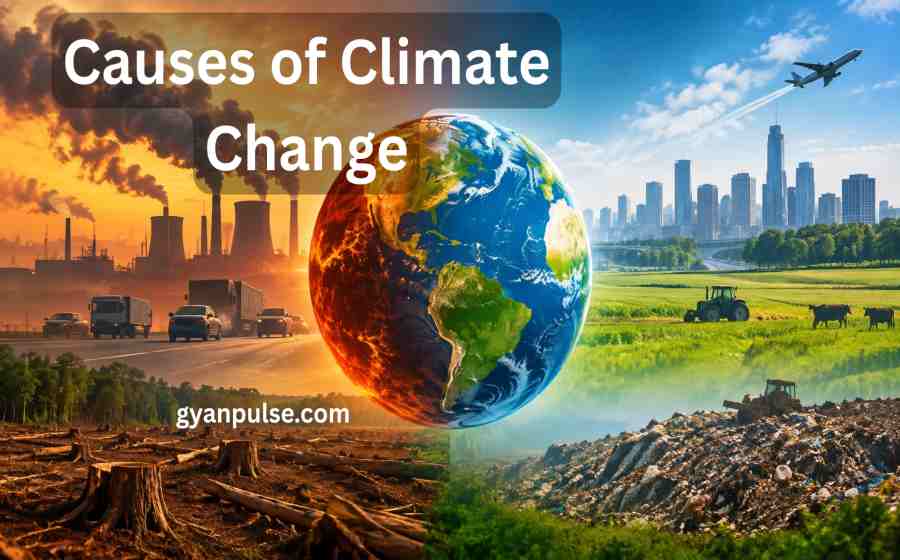
One of the main causes of climate change is the burning of fossil fuels such as coal, oil, and natural gas. These fuels are widely used to produce electricity, run vehicles, and power industries.
When fossil fuels are burned, they release large amounts of carbon dioxide (CO₂) and other greenhouse gases into the atmosphere. These gases trap heat from the sun and prevent it from escaping back into space. As a result, the Earth’s temperature gradually increases, leading to global warming.
Power plants, factories, and transportation systems are major contributors to fossil fuel emissions. As the global population grows and energy demand increases, the amount of greenhouse gases released into the atmosphere also rises.
Deforestation
Forests play a crucial role in maintaining the balance of the Earth’s climate. Trees absorb carbon dioxide during photosynthesis and store carbon in their trunks, roots, and leaves.
However, large areas of forests are being cut down for agriculture, urban development, and industrial use. This process is known as deforestation.
When trees are removed, two harmful things happen. First, the stored carbon is released back into the atmosphere. Second, fewer trees remain to absorb carbon dioxide. This increases the concentration of greenhouse gases and contributes to climate change.
Tropical forests are particularly important because they absorb huge amounts of carbon and support biodiversity.
Industrial Activities
Industrial development has significantly increased greenhouse gas emissions. Factories produce goods such as cement, steel, chemicals, and plastics, which require large amounts of energy.
Many industrial processes release gases like carbon dioxide, methane, and nitrous oxide. For example, cement production alone is responsible for a significant percentage of global carbon emissions.
Rapid industrial growth, especially in developing countries, has increased environmental pressure and accelerated climate change.
Agricultural Practices
Agriculture is another major contributor to climate change. Farming activities release different greenhouse gases that affect the atmosphere.
Livestock such as cows, sheep, and goats produce methane during digestion. Methane is a powerful greenhouse gas that traps more heat than carbon dioxide.
In addition, the use of chemical fertilizers releases nitrous oxide into the air. Rice cultivation also produces methane because of the flooded conditions in rice fields.
As global food demand increases, agricultural emissions continue to rise, adding to the climate problem.
Transportation Emissions
Transportation is one of the largest sources of greenhouse gas emissions worldwide. Cars, trucks, airplanes, and ships burn fossil fuels to operate.
These vehicles release carbon dioxide and other pollutants into the atmosphere. With increasing urbanization and population growth, the number of vehicles on the road has increased significantly.
Air travel and international shipping also contribute to global emissions, making transportation a key factor in climate change.
Urbanization and Infrastructure Development
Urbanization refers to the growth of cities and towns. As cities expand, more land is used for buildings, roads, and infrastructure.
Urban areas consume large amounts of energy for lighting, heating, cooling, and transportation. Construction activities also require materials like cement and steel, which produce carbon emissions during manufacturing.
Furthermore, cities often replace natural landscapes such as forests and grasslands, reducing the Earth’s ability to absorb carbon dioxide.
Waste Generation and Landfills
Waste management is another overlooked cause of climate change. Large amounts of waste are produced every day by households, industries, and businesses.
When organic waste such as food scraps and plant materials decomposes in landfills, it releases methane gas. Poor waste management practices increase greenhouse gas emissions and contribute to environmental pollution.
Reducing waste, recycling materials, and improving waste management systems can help lower emissions.
Natural Causes
Although human activities are the main drivers of modern climate change, some natural factors also influence the Earth’s climate.
Volcanic eruptions release gases and particles into the atmosphere that can temporarily affect climate patterns. Changes in solar radiation from the sun can also influence global temperatures.
However, scientists agree that these natural factors alone cannot explain the rapid warming observed in recent decades. Human activities remain the dominant cause of current climate change.
Key Factors Behind Climate Change
Modern climate change is mainly driven by human activities that increase greenhouse gases in the atmosphere. Burning fossil fuels, cutting down forests, industrial production, agriculture, transportation, urban expansion, and poor waste management all contribute to rising global temperatures. Although natural factors can influence climate, they cannot explain the rapid warming seen today. Understanding these major causes is essential for reducing emissions, protecting ecosystems, and building a more sustainable future.
Summary
Climate change is caused by a combination of human activities and natural processes, but human influence has become the most significant factor in recent years. The burning of fossil fuels, deforestation, industrialization, agriculture, transportation, urbanization, and waste generation all contribute to the increasing levels of greenhouse gases in the atmosphere.
Understanding these causes is the first step toward solving the problem. By reducing emissions, adopting renewable energy sources, protecting forests, and practicing sustainable living, individuals and governments can work together to slow down climate change. Protecting the Earth’s climate is not only necessary for the environment but also essential for the survival and well-being of future generations.
Also Check: Environment