
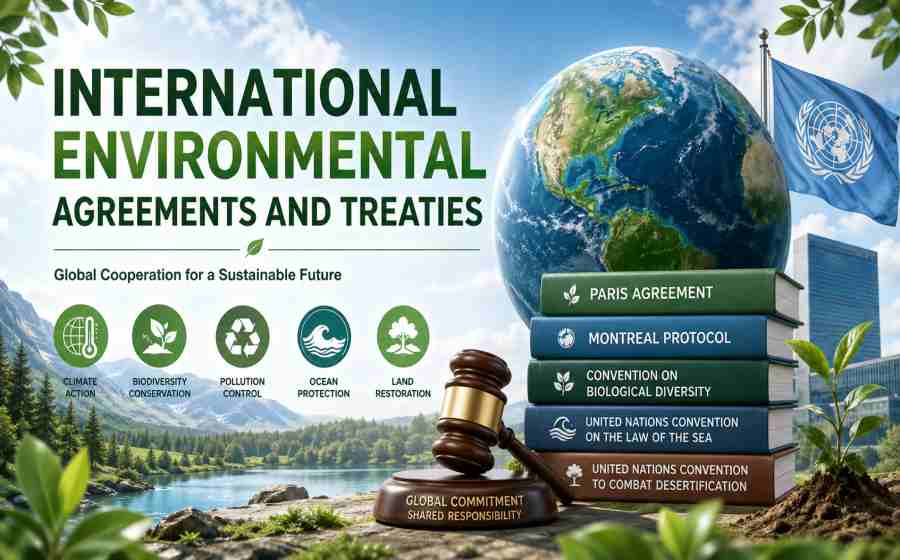
International Environmental Agreements and Treaties – Global Green Commitments
Explore International Environmental Agreements and Treaties and how global cooperation helps tackle climate change, biodiversity loss and pollution effectively.
International Environmental Agreements and Treaties
International environmental agreements and treaties are essential frameworks that bring countries together to address environmental challenges that cross national borders. Problems like climate change, biodiversity loss, ocean pollution, and desertification cannot be solved by one nation alone. These agreements create a platform for cooperation, helping countries set shared goals, exchange knowledge, and take collective action to protect the Earth.
Table of Contents
What are International Environmental Agreements?
International environmental agreements are legally binding or voluntary arrangements between countries to manage and protect the environment. These treaties often include specific targets, timelines, and guidelines for action. They are typically negotiated under global organizations such as the United Nations and aim to balance environmental protection with economic development.
Major Climate Change Agreements
The Paris Agreement
Adopted in 2015, this agreement is a milestone in global climate action. It aims to limit global warming to well below 2°C, while striving for 1.5°C. Countries submit Nationally Determined Contributions (NDCs), which outline their plans to reduce emissions. The agreement also emphasizes financial and technological support for developing nations.
The Kyoto Protocol
Before the Paris Agreement, the Kyoto Protocol was a major step toward reducing greenhouse gas emissions. It set binding targets for developed countries, acknowledging their historical role in causing climate change. Though limited in scope, it laid the groundwork for future global cooperation.
Ozone Layer Protection – The Montreal Protocol
This treaty is considered one of the most successful environmental agreements. It focuses on phasing out harmful substances like chlorofluorocarbons (CFCs) that damage the ozone layer. Due to global efforts, the ozone layer is slowly recovering, showing the power of coordinated international action.
Biodiversity Conservation – The Convention on Biological Diversity
Established during the Earth Summit, this agreement promotes the conservation of biodiversity, sustainable use of natural resources, and fair sharing of benefits. Countries develop national strategies to protect ecosystems and species.
Marine and Ocean Protection – The UN Convention on the Law of the Sea
UNCLOS provides a legal framework for ocean governance, including maritime boundaries and resource management.
The MARPOL Convention
This treaty aims to prevent marine pollution from ships, including oil spills and waste disposal, helping protect marine ecosystems.
Combating Land Degradation – The UN Convention to Combat Desertification
This agreement addresses desertification and land degradation, particularly in dry regions. It promotes sustainable land management practices and supports communities affected by soil degradation.
Importance of These Treaties
International environmental treaties are vital because they:
- Encourage global cooperation
- Set measurable environmental goals
- Promote sustainable development
- Provide financial and technical support
- Raise awareness about environmental issues
They help countries work together rather than acting in isolation.
Challenges and Limitations
Despite their importance, these agreements face several challenges:
- Lack of strict enforcement mechanisms
- Differences in economic development among countries
- Political disagreements
- Insufficient funding and resources
Many treaties rely on voluntary commitments, which can lead to uneven implementation.
Achievements and Success Stories
Some treaties have achieved remarkable success. The Montreal Protocol significantly reduced ozone-depleting substances, while the Paris Agreement has increased global awareness and action on climate change. These successes show that international cooperation can lead to meaningful environmental improvements.
Summary
International environmental agreements and treaties are essential tools for addressing global environmental challenges. They bring nations together, set common goals, and promote accountability. As environmental issues continue to grow, strengthening these agreements and ensuring their proper implementation will be key to achieving a sustainable and healthy planet for future generations.
Also Check: Environment