Climate Change Mitigation and Adaptation – Strategies for a Sustainable Future
Learn about Climate Change Mitigation and Adaptation, their importance, strategies and how they help build a sustainable and resilient future.
Climate Change Mitigation and Adaptation
Climate change is one of the most pressing challenges facing humanity in the 21st century. Rising global temperatures, extreme weather events, melting glaciers, and rising sea levels are clear signs that the Earth’s climate system is undergoing significant transformation. Addressing this issue requires a two-pronged approach: mitigation and adaptation. While mitigation focuses on reducing the causes of climate change, adaptation aims to manage its impacts. Both are essential for building a sustainable and resilient future.
Table of Contents
Understanding Climate Change
Climate change primarily results from increased concentrations of greenhouse gases such as carbon dioxide, methane, and nitrous oxide in the atmosphere. Human activities like burning fossil fuels, deforestation, and industrial processes have accelerated this phenomenon. International efforts, such as the Intergovernmental Panel on Climate Change and agreements like the Paris Agreement, highlight the urgency of limiting global warming to well below 2°C above pre-industrial levels.
What is Climate Change Mitigation?
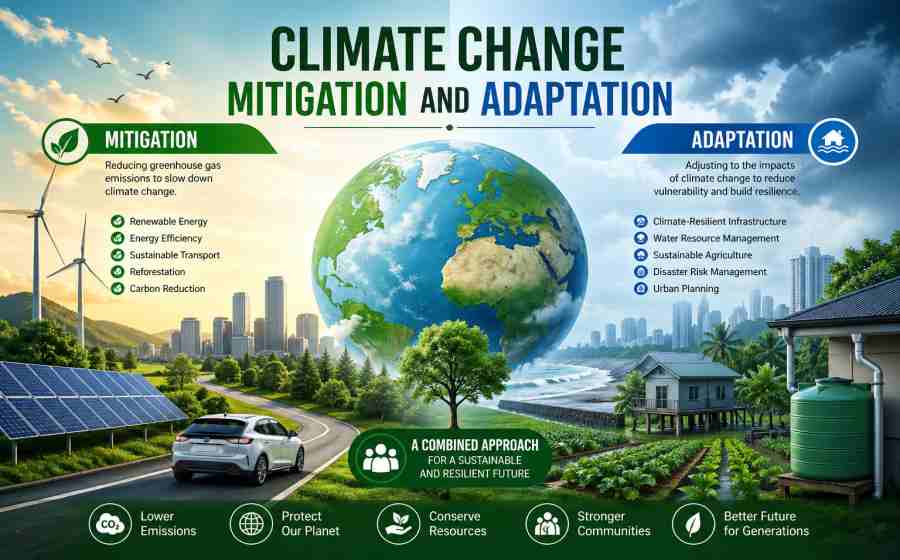
Mitigation refers to efforts aimed at reducing or preventing the emission of greenhouse gases. The goal is to tackle the root causes of climate change and slow down global warming.
Key Mitigation Strategies
1. Transition to Renewable Energy
Replacing fossil fuels with renewable energy sources such as solar, wind, and hydroelectric power is one of the most effective mitigation strategies. These energy sources produce little to no greenhouse gas emissions.
2. Energy Efficiency
Improving energy efficiency in industries, transportation, and households can significantly reduce emissions. Using LED lighting, energy-efficient appliances, and better insulation are simple yet impactful steps.
3. Reforestation and Afforestation
Forests act as carbon sinks by absorbing carbon dioxide from the atmosphere. Planting new trees and protecting existing forests help reduce the overall carbon footprint.
4. Sustainable Transportation
Promoting public transport, electric vehicles, and cycling can reduce emissions from the transportation sector, which is a major contributor to greenhouse gases.
5. Carbon Capture and Storage (CCS)
This technology involves capturing carbon dioxide emissions from industrial sources and storing them underground to prevent their release into the atmosphere.
Mitigation is crucial because it addresses the root cause of climate change. However, even with strong mitigation efforts, some level of climate change is inevitable due to past emissions. This is where adaptation becomes essential.
What is Climate Change Adaptation?
Adaptation involves adjusting to the current or expected impacts of climate change. It focuses on reducing vulnerability and enhancing resilience to climate-related risks.
Key Adaptation Strategies
1. Climate-Resilient Infrastructure
Building infrastructure that can withstand extreme weather events such as floods, storms, and heatwaves is vital. For example, constructing flood-resistant buildings in coastal areas.
2. Water Resource Management
Climate change affects water availability. Efficient water management, rainwater harvesting, and desalination can help address water scarcity.
3. Agricultural Adaptation
Farmers can adopt climate-resilient crops, improved irrigation techniques, and sustainable farming practices to cope with changing weather patterns.
4. Disaster Risk Management
Early warning systems, emergency preparedness, and community awareness programs can reduce the impact of natural disasters.
5. Urban Planning
Cities can adapt by creating green spaces, improving drainage systems, and implementing heat management strategies to combat urban heat islands.
Adaptation is especially important for developing countries, where communities are often more vulnerable to climate impacts due to limited resources.
Mitigation vs Adaptation: Complementary Approaches
Mitigation and adaptation are not opposing strategies; rather, they complement each other. Mitigation reduces the severity of future climate change, while adaptation helps manage its current and unavoidable effects. For example, investing in renewable energy reduces emissions (mitigation), while building flood defenses protects communities from rising sea levels (adaptation).
A balanced approach ensures both long-term sustainability and immediate resilience. Policymakers, businesses, and individuals must work together to implement both strategies effectively.
Global and Local Efforts
International cooperation plays a vital role in combating climate change. Agreements like the Paris Agreement encourage countries to set emission reduction targets and support adaptation initiatives. Organizations such as the United Nations Framework Convention on Climate Change provide a platform for global collaboration.
At the local level, governments and communities are taking steps such as promoting renewable energy, conserving water, and raising awareness about sustainable practices. Individual actions, like reducing energy consumption, minimizing waste, and using eco-friendly products, also contribute significantly.
Challenges in Implementation
Despite growing awareness, several challenges hinder effective climate action:
- Financial Constraints: Developing countries often lack funds for large-scale mitigation and adaptation projects.
- Technological Barriers: Access to advanced technologies remains limited in many regions.
- Political and Social Factors: Policy inconsistencies and lack of public awareness can slow progress.
- Uncertainty in Climate Projections: Predicting exact climate impacts remains complex, making planning difficult.
Addressing these challenges requires global cooperation, technological innovation, and strong political will.
Summary
Climate change mitigation and adaptation are both essential in addressing the global climate crisis. While mitigation tackles the root causes by reducing greenhouse gas emissions, adaptation helps societies cope with the unavoidable impacts. Together, they form a comprehensive strategy for ensuring environmental sustainability and human well-being.
The responsibility lies not only with governments and organizations but also with individuals. By adopting sustainable practices and supporting climate-friendly policies, everyone can contribute to a greener and more resilient future.
Also Check: Environment