Future Environmental Challenges and Solutions – Protecting Earth for Tomorrow
Explore the biggest future environmental challenges and solutions for climate change, pollution, water scarcity and sustainable living.
Future Environmental Challenges and Solutions
The environment is one of the most important foundations of life on Earth. However, rapid industrialization, population growth, urban expansion, and excessive use of natural resources have created serious environmental problems. In the coming decades, humanity will face even greater environmental challenges that could affect health, economies, biodiversity, and global stability. At the same time, scientific innovation, sustainable practices, and international cooperation offer hope for a greener future.
Understanding future environmental challenges and their solutions is essential for creating a sustainable and healthy planet for future generations.
Table of Contents
Climate Change and Global Warming
Climate change is expected to remain the biggest environmental challenge in the future. Rising greenhouse gas emissions from industries, vehicles, and deforestation are increasing the Earth’s temperature. Global warming leads to melting glaciers, rising sea levels, stronger storms, heatwaves, droughts, and unpredictable weather patterns.
Many coastal cities may face flooding in the future due to rising sea levels. Agriculture could also suffer because changing weather conditions affect crop production. Wildlife species may struggle to survive as their natural habitats disappear.
Solutions
- Increase the use of renewable energy such as solar, wind, and hydro power.
- Reduce dependence on fossil fuels like coal and petroleum.
- Promote electric vehicles and public transportation.
- Encourage tree plantation and forest conservation.
- Governments should implement strict carbon emission policies.
Water Scarcity
Freshwater resources are becoming limited due to pollution, excessive groundwater extraction, and climate change. Many regions of the world may face severe water shortages in the future. Rapid population growth will increase the demand for clean drinking water, agriculture and industrial use.
Water scarcity can create conflicts between regions and nations. It may also lead to food shortages because agriculture depends heavily on water availability.
Solutions
- Promote rainwater harvesting systems.
- Recycle and reuse wastewater.
- Use water-efficient irrigation methods such as drip irrigation.
- Prevent industrial and domestic water pollution.
- Spread awareness about water conservation among people.
Air Pollution
Air pollution is already responsible for millions of health problems worldwide. Future industrial growth and urbanization could worsen air quality if preventive measures are not taken. Harmful gases from factories, vehicles, and burning fuels contribute to respiratory diseases and environmental damage.
Smog and toxic air can reduce life expectancy and affect children and elderly people the most.
Solutions
- Shift to cleaner energy sources.
- Improve emission standards for vehicles and industries.
- Increase green spaces in cities.
- Promote cycling and eco-friendly transportation.
- Encourage the use of energy-efficient technologies.
Deforestation and Loss of Biodiversity
Forests are being destroyed for agriculture, construction, and industrial activities. Deforestation not only increases carbon dioxide levels but also threatens wildlife habitats. Thousands of plant and animal species may become extinct in the future if biodiversity loss continues.
Biodiversity is essential because every species plays an important role in maintaining ecological balance.
Solutions
- Protect forests through strict environmental laws.
- Promote afforestation and reforestation programs.
- Develop wildlife conservation projects.
- Encourage sustainable agriculture practices.
- Reduce illegal logging and forest exploitation.
Plastic Pollution and Waste Management
Plastic waste has become a major environmental issue. Oceans, rivers, and landfills are filled with plastic materials that take hundreds of years to decompose. Microplastics are entering food chains and harming marine life.
As consumerism grows, waste generation is expected to increase significantly in the future.
Solutions
- Reduce the use of single-use plastics.
- Promote recycling and waste segregation.
- Encourage biodegradable alternatives.
- Improve waste management systems in cities.
- Conduct public awareness campaigns about responsible consumption.
Energy Crisis
The world’s energy demand is increasing rapidly. Fossil fuels are limited resources and their overuse causes environmental pollution. In the future, countries may face energy shortages if sustainable alternatives are not adopted quickly.
Energy insecurity can affect industries, transportation, and daily life.
Solutions
- Invest in renewable energy technologies.
- Promote energy conservation in homes and industries.
- Develop smart grids and energy-efficient infrastructure.
- Encourage research in clean energy innovations.
- Support global cooperation for sustainable energy development.
Food Security Challenges
Climate change, soil degradation, and water shortages may reduce agricultural productivity in the future. Growing populations will increase food demand, creating pressure on farmers and natural resources.
Food insecurity can lead to malnutrition and social instability in many countries.
Solutions
- Use modern and sustainable farming techniques.
- Promote organic farming and soil conservation.
- Develop climate-resistant crop varieties.
- Reduce food wastage.
- Support local and sustainable food systems.
Urbanization and Environmental Stress
Rapid urban growth creates pressure on natural resources, transportation, housing, and waste management systems. Cities may experience overcrowding, pollution, and lack of green spaces. Urban environmental stress can reduce the quality of life for millions of people.
Solutions
- Develop smart and sustainable cities.
- Improve public transport systems.
- Increase urban green areas and parks.
- Promote eco-friendly construction methods.
- Encourage sustainable urban planning.
Role of Technology in Environmental Protection
Technology can play a major role in solving future environmental problems. Artificial intelligence, satellite monitoring, renewable energy systems, and advanced recycling technologies can improve environmental management.
Scientists are also developing carbon capture systems and sustainable materials to reduce pollution.
Positive Impacts of Technology
- Better climate monitoring and disaster prediction.
- Improved renewable energy efficiency.
- Smart agriculture for efficient resource use.
- Advanced recycling and waste management techniques.
- Eco-friendly innovations in industries.
Importance of Global Cooperation
Environmental challenges are global problems that require international cooperation. No single country can solve climate change or pollution alone. Organizations and governments must work together to create effective environmental policies.
International agreements and environmental awareness programs can help countries share knowledge, technology, and resources for a sustainable future.
Summary
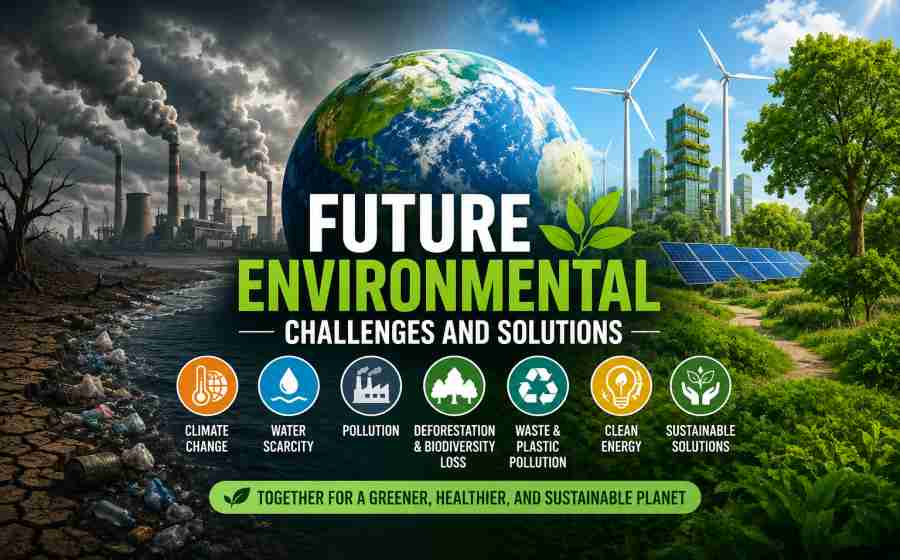
The future of the environment depends on the actions taken today. Climate change, pollution, deforestation, water scarcity, and energy crises are serious challenges that require immediate attention. However, sustainable development, technological innovation, environmental education, and global cooperation can provide effective solutions.
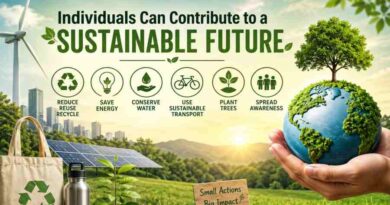
Every individual, community, business, and government has a role in protecting the planet. By adopting eco-friendly habits and supporting sustainable policies, humanity can create a cleaner, healthier, and more sustainable world for future generations.
Also Check: Environment