Individuals Can Contribute to a Sustainable Future – Small Actions for a Greener Planet
Learn how individuals can contribute to a sustainable future through eco-friendly habits, energy conservation, waste reduction and responsible living.
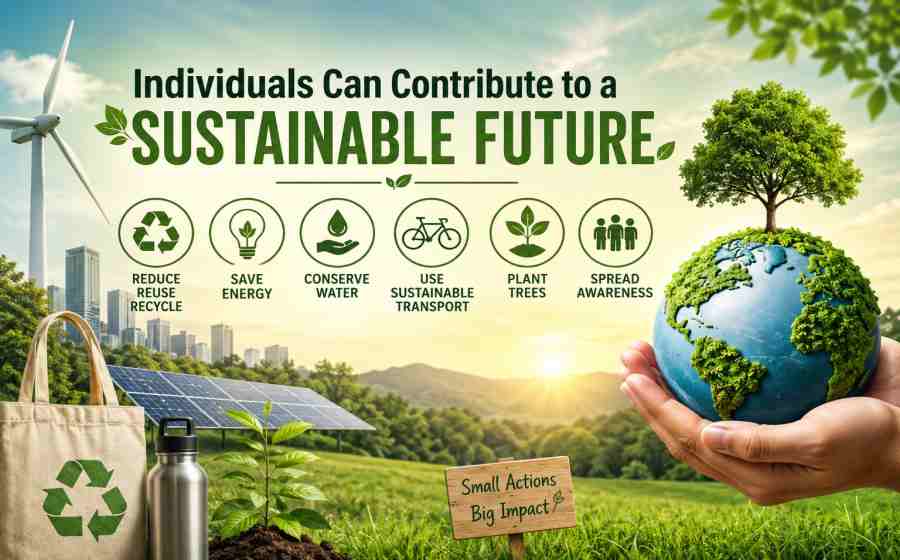
Individuals Can Contribute to a Sustainable Future
The future of our planet depends not only on governments and industries but also on the daily actions of ordinary people. Climate change, pollution, deforestation, and excessive waste are growing environmental concerns across the world. While these problems may seem too large for one person to solve, collective individual efforts can create a major positive impact. Every responsible choice made at home, school, office, or community level helps build a cleaner and healthier planet.
A sustainable future means meeting present needs without harming the ability of future generations to meet their own needs. Individuals can support sustainability by conserving natural resources, reducing waste, and adopting environmentally friendly lifestyles. Even small habits, when practiced consistently by millions of people, can significantly protect the environment.
Table of Contents
Reduce, Reuse and Recycle
One of the simplest ways individuals can help the environment is by following the “3Rs” principle – Reduce, Reuse and Recycle.
Reducing consumption means avoiding unnecessary purchases and minimizing waste generation. People can buy only what they truly need and choose products with less packaging. Reusing items such as cloth bags, water bottles, containers, and old clothes helps reduce the demand for new products and saves resources.
Recycling paper, plastic, glass, and metal prevents waste from ending up in landfills and reduces pollution. Proper waste segregation at home also supports effective recycling systems. Communities that actively recycle contribute greatly to environmental protection.
Save Energy at Home
Energy conservation is another important step toward sustainability. Many electricity sources still rely on fossil fuels, which release harmful greenhouse gases into the atmosphere. Individuals can reduce energy consumption through simple habits such as:
- Switching off lights and fans when not in use
- Using LED bulbs instead of traditional bulbs
- Unplugging electronic devices when they are idle
- Using energy-efficient appliances
- Maximizing natural sunlight and ventilation
These actions not only help the environment but also lower electricity bills. Families that practice energy conservation play a direct role in reducing carbon emissions.
Conserve Water Resources
Water is one of Earth’s most valuable natural resources, yet it is often wasted carelessly. Sustainable living requires responsible water usage in daily life. Individuals can conserve water by:
- Fixing leaking taps and pipes
- Turning off taps while brushing teeth
- Using buckets instead of long showers
- Collecting rainwater for gardening
- Reusing water whenever possible
Water conservation is especially important in regions facing droughts and water shortages. Responsible water use today ensures availability for future generations.
Use Sustainable Transportation
Transportation is a major source of air pollution and greenhouse gas emissions. Individuals can contribute to a cleaner environment by choosing eco-friendly travel options whenever possible.
Walking and cycling are healthy and environmentally friendly alternatives for short distances. Using public transportation reduces the number of vehicles on roads and lowers fuel consumption. Carpooling with friends or colleagues also helps reduce pollution and traffic congestion.
In recent years, electric vehicles and hybrid cars have become more popular sustainable transportation options. By reducing dependence on fossil fuels, individuals can support cleaner air and a healthier environment.
Avoid Single-Use Plastics
Plastic pollution has become a global environmental crisis. Single-use plastic items such as bags, straws, bottles, and disposable cups often end up in oceans, rivers, and landfills, harming wildlife and ecosystems.
Individuals can reduce plastic waste by carrying reusable shopping bags, steel or glass water bottles, and eco-friendly containers. Choosing biodegradable products and refusing unnecessary plastic packaging also supports sustainability.
Small changes in consumer behavior encourage businesses to adopt environmentally friendly practices and reduce plastic production.
Support Sustainable Food Habits
Food choices also affect the environment. Large-scale food production often uses excessive water, land, and energy resources. Individuals can contribute to sustainability through mindful eating habits.
Reducing food waste is one of the most effective actions people can take. Leftover food should be reused whenever possible instead of being discarded. Buying local and seasonal foods supports local farmers and reduces transportation-related pollution.
Plant-based diets and reduced meat consumption can also lower environmental impact because livestock farming contributes significantly to greenhouse gas emissions. Even moderate dietary changes can make a meaningful difference.
Plant Trees and Protect Nature
Trees absorb carbon dioxide, improve air quality, and support biodiversity. Planting trees is a simple yet powerful contribution to environmental sustainability. Individuals can participate in tree plantation drives or grow plants in homes, schools, and communities.
Protecting forests, rivers, wildlife, and natural habitats is equally important. Avoiding littering, respecting nature, and supporting conservation programs help preserve ecosystems for future generations.
Nature protection is not only beneficial for the environment but also essential for human health and well-being.
Spread Environmental Awareness
Creating awareness is one of the strongest tools for environmental change. Individuals can educate family members, friends, and communities about sustainable practices. Social media, schools, and local events can be used to share environmental knowledge and inspire action.
When people understand the consequences of pollution and climate change, they are more likely to adopt responsible habits. Awareness campaigns encourage collective efforts toward sustainability.
Young people especially have the power to influence future environmental decisions through education and activism.
Support Eco-Friendly Products and Businesses
Consumers influence markets through their purchasing choices. Supporting businesses that follow sustainable practices encourages environmentally responsible production. Individuals can choose products that are:
- Recyclable
- Energy-efficient
- Organic or natural
- Locally produced
- Eco-friendly certified
Responsible consumer behavior motivates companies to prioritize sustainability and reduce environmental harm.
Summary
Building a sustainable future is a shared responsibility. Governments and industries play important roles, but individual actions are equally powerful when practiced consistently. Simple habits such as saving water, conserving energy, reducing waste, using public transportation, and spreading awareness can collectively transform society.
Every person has the ability to make environmentally responsible choices in daily life. Sustainability begins with small actions, and these actions inspire others to do the same. By adopting eco-friendly lifestyles today, individuals can help create a cleaner, greener, and healthier world for future generations.
Also Check: Environment