Climate Change and Food Security – How Global Warming Threatens the Future of Food
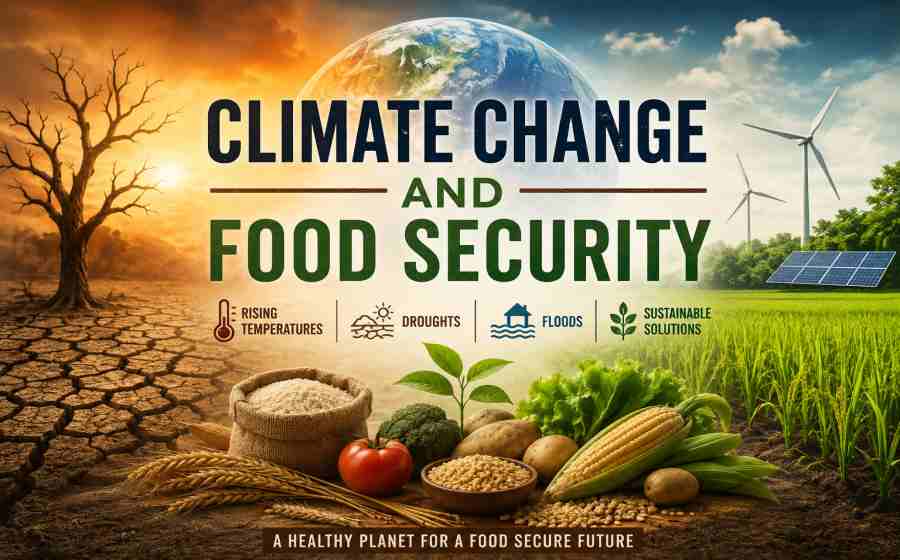
Climate Change and Food Security are closely linked as rising temperatures, droughts, floods and extreme weather threaten agriculture and global food supply.
Climate Change and Food Security
Climate change has emerged as one of the most serious global challenges in modern times. Rising temperatures, melting glaciers, irregular rainfall, droughts, floods, and extreme weather events are affecting every part of the planet. Among the many sectors impacted by climate change, food security is one of the most important concerns because it directly affects human survival and well-being.
Food security means that all people have regular access to safe, nutritious, and sufficient food for a healthy life. However, climate change is disrupting agricultural systems and making food production more difficult. As the global population continues to increase, ensuring food security has become a major international challenge.
Table of Contents
Understanding Climate Change and Food Security
Climate change refers to long-term changes in temperature, weather patterns, and environmental conditions caused mainly by human activities such as deforestation, industrialization, and the burning of fossil fuels. These activities release greenhouse gases like carbon dioxide and methane into the atmosphere, increasing global warming.
Food security depends heavily on stable environmental conditions. Agriculture requires proper rainfall, fertile soil, suitable temperatures, and water availability. When climate conditions become unstable, food production suffers.
Food security has four major components:
- Food availability
- Food access
- Food utilization
- Food stability
Climate change negatively affects all these components by reducing crop production, increasing food prices, and disrupting food distribution systems.
Effects of Climate Change on Agriculture
Agriculture is one of the most climate-sensitive sectors. Farmers depend on predictable weather conditions for successful crop cultivation. Climate change creates uncertainty and increases agricultural risks.
1. Reduced Crop Production
Rising temperatures can reduce the productivity of major crops such as wheat, rice, and maize. High temperatures damage crops during important growth stages and shorten growing seasons. Heatwaves can also lower crop quality and reduce harvests.
2. Irregular Rainfall Patterns
Many regions are experiencing changing rainfall patterns. Some areas face severe droughts, while others suffer from heavy floods. Lack of rainfall causes water shortages for irrigation, whereas floods destroy crops and farmland.
3. Soil Degradation
Extreme weather events such as floods and storms lead to soil erosion and loss of soil fertility. Droughts can also increase desertification in dry regions, making farming difficult.
4. Increase in Pests and Diseases
Warmer temperatures allow insects, pests, and plant diseases to spread more rapidly. Farmers often face large crop losses due to pest attacks and changing environmental conditions.
Impact on Livestock and Fisheries
Climate change also affects livestock farming and fisheries, which are important sources of food and income.
Livestock
Animals suffer from heat stress during high temperatures. This reduces milk production, fertility, and overall animal health. Water shortages and poor-quality feed further affect livestock productivity.
Fisheries
Oceans are warming due to global climate change. Rising sea temperatures disturb marine ecosystems and force fish species to migrate to cooler waters. Coastal communities that depend on fishing face economic and food-related challenges.
Rising Food Prices and Hunger
Climate-related disasters reduce food production and create shortages in local and global markets. As supply decreases, food prices rise. Poor families are the most affected because they spend a large portion of their income on food.
Higher food prices increase hunger and malnutrition, especially in developing countries. Children are particularly vulnerable because poor nutrition affects their physical and mental development.
Millions of people around the world already face food insecurity due to droughts, floods, and other climate-related problems.
Impact on Developing Countries
Developing nations are more vulnerable to climate change because many people depend directly on agriculture for their livelihoods. Limited financial resources, lack of technology, and weak infrastructure make adaptation difficult.
Small farmers often face severe losses when crops fail due to droughts or floods. In some regions, climate change has forced communities to migrate in search of better living conditions.
Countries in Africa and South Asia are particularly at risk because of rising temperatures, water shortages, and unpredictable monsoon patterns.
Solutions to Protect Food Security
Although climate change poses serious threats, several measures can help protect food security and reduce environmental damage.
1. Climate-Smart Agriculture
Climate-smart agriculture focuses on increasing productivity while protecting the environment. Practices such as crop rotation, organic farming, drip irrigation, and improved seed varieties help farmers adapt to changing climates.
2. Efficient Water Management
Water conservation is essential for sustainable agriculture. Rainwater harvesting, modern irrigation systems, and proper water management can help reduce water shortages.
3. Use of Modern Technology
Technology can support agriculture through weather forecasting, climate monitoring, and disease detection. Farmers can use mobile apps and digital tools for better farming decisions.
4. Reducing Food Waste
A significant amount of food is wasted globally every year. Reducing food waste can improve food availability and reduce pressure on natural resources.
5. Forest and Biodiversity Conservation
Forests help regulate climate and maintain ecological balance. Protecting forests and biodiversity supports healthy agricultural systems and natural pollination.
6. International Cooperation
Climate change is a global issue that requires cooperation between countries. Governments, scientists, and international organizations must work together to reduce greenhouse gas emissions and support sustainable development.
Role of Individuals
Individuals can also contribute to solving climate and food security problems through simple actions such as:
- Reducing food waste
- Conserving water and electricity
- Planting trees
- Using environmentally friendly products
- Supporting sustainable farming practices
Public awareness and responsible behavior can create positive environmental change.
Summary
Climate Change and Food Security are deeply connected global challenges. Rising temperatures, droughts, floods, and extreme weather events are threatening agriculture, livestock, fisheries, and food supply systems across the world.
The effects are especially severe in developing countries, where millions of people depend on farming for survival. Without proper action, climate change may increase hunger, poverty, and malnutrition in the future.
Protecting food security requires sustainable agriculture, modern technology, water conservation, and international cooperation. Governments, communities, and individuals must work together to reduce climate change and build a safer and more sustainable future for coming generations.
Also Check: Environment