
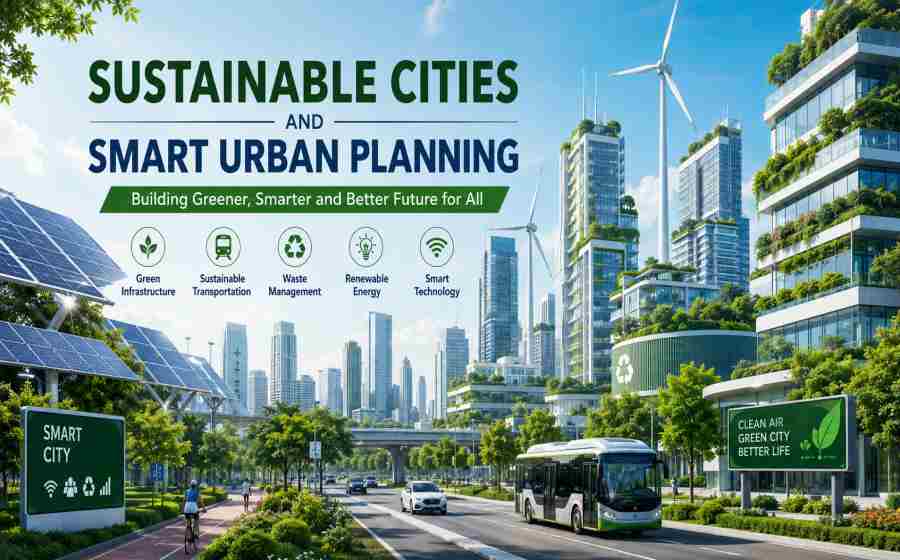
Sustainable Cities and Smart Urban Planning – Building the Future of Urban Living
Explore Sustainable Cities and Smart Urban Planning and learn how eco-friendly design, technology and innovation shape greener, smarter urban futures.
Sustainable Cities and Smart Urban Planning
As the global population continues to rise, cities are expanding at an unprecedented pace. Urban areas are now home to more than half of the world’s population, and this number is expected to grow significantly in the coming decades. While cities are centers of economic growth, innovation, and opportunity, they also face serious challenges such as pollution, traffic congestion, resource depletion, and environmental degradation. This is where the concept of sustainable cities and smart urban planning becomes crucial.
Table of Contents
What are Sustainable Cities?
Sustainable cities are urban areas designed to minimize environmental impact while maximizing the quality of life for their residents. These cities focus on efficient use of resources, reduction of pollution, and the creation of green spaces. The goal is to meet present needs without compromising the ability of future generations to meet their own needs.
A sustainable city promotes clean energy, efficient waste management, water conservation, and eco-friendly transportation systems. It also encourages community participation and social equity, ensuring that all residents have access to basic services such as healthcare, education, and housing.
Understanding Smart Urban Planning
Smart urban planning involves the use of technology, data, and innovative design to improve city infrastructure and services. It integrates digital solutions such as sensors, artificial intelligence, and the Internet of Things (IoT) to manage resources more efficiently. Smart planning helps cities become more responsive, adaptive, and efficient.
For example, smart traffic systems can reduce congestion by analyzing real-time data, while smart energy grids optimize electricity usage. These technologies not only improve convenience but also reduce environmental impact.
Key Features of Sustainable and Smart Cities
One of the most important aspects of sustainable cities is green infrastructure. This includes parks, urban forests, green roofs, and water bodies that help reduce pollution and improve air quality. Green spaces also enhance mental well-being and provide recreational opportunities for residents.
Another key feature is sustainable transportation. Cities are increasingly promoting public transport, cycling, and walking instead of relying on private vehicles. Electric vehicles and shared mobility services are also becoming popular, reducing carbon emissions and traffic congestion.
Energy efficiency plays a vital role as well. Smart buildings equipped with energy-saving technologies, such as solar panels and automated lighting systems, help reduce energy consumption. Renewable energy sources like wind and solar power are widely used in sustainable cities.
Waste management is another critical component. Smart waste systems use sensors to monitor waste levels and optimize collection routes, reducing fuel consumption and pollution. Recycling and composting are also encouraged to minimize landfill waste.
Benefits of Sustainable Cities
Sustainable cities offer numerous benefits. They improve air and water quality, reduce greenhouse gas emissions, and conserve natural resources. This leads to a healthier environment and better public health outcomes.
Economically, sustainable cities are more efficient and cost-effective in the long run. Investments in green infrastructure and smart technologies create jobs and boost innovation. Socially, these cities promote inclusivity and improve the overall quality of life.
Challenges in Implementation
Despite their advantages, building sustainable cities is not without challenges. High initial costs, lack of awareness, and inadequate infrastructure can hinder progress. In many developing regions, rapid urbanization makes it difficult to implement sustainable practices effectively.
Additionally, integrating advanced technologies requires skilled professionals and strong governance. Data privacy and cybersecurity are also concerns in smart city systems.
The Role of Governments and Citizens
Governments play a crucial role in promoting sustainable urban development through policies, regulations, and investments. Urban planning must prioritize sustainability and encourage public-private partnerships.
Citizens also have an important role to play. Simple actions like using public transport, conserving energy, reducing waste, and supporting green initiatives can make a significant difference. Community participation is essential for the success of sustainable cities.
Future of Urban Living
The future of cities lies in the balance between technology and sustainability. As innovations continue to evolve, cities will become more connected, efficient, and environmentally friendly. Concepts like smart grids, autonomous transport, and green architecture will shape the urban landscape.
Sustainable cities are not just a vision but a necessity. By adopting smart urban planning strategies, we can create cities that are resilient, inclusive, and capable of supporting future generations.
Summary
Sustainable cities and smart urban planning represent a forward-thinking approach to urban development. By combining eco-friendly practices with advanced technology, cities can overcome modern challenges and create a better future. The journey toward sustainability requires collective effort, innovation, and commitment from both governments and citizens. With the right strategies, we can transform our cities into thriving, sustainable hubs of life and progress.
Also Check: Environment