
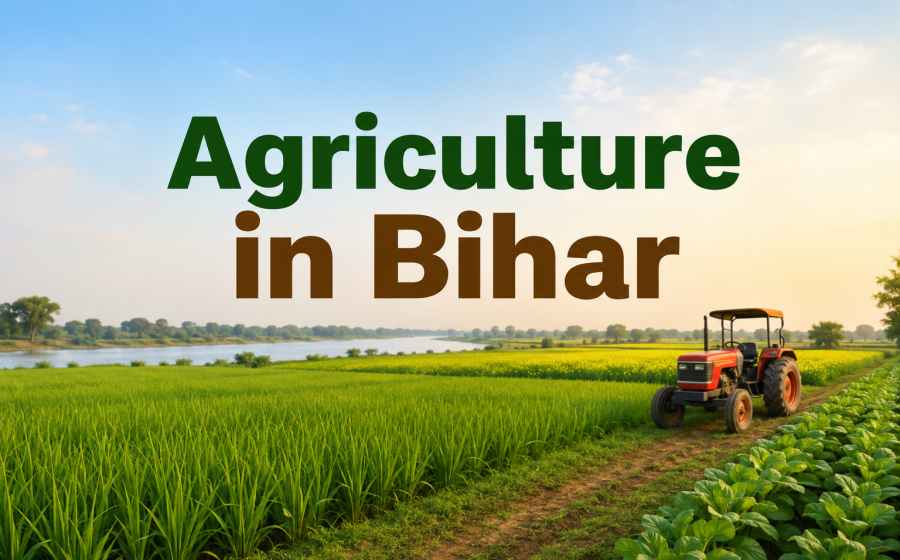
Agriculture in Bihar – Major Crops, Traditional Wisdom and Modern Farming Practices
Discover how Agriculture in Bihar shapes the state’s economy through major crops, seasonal farming, irrigation methods and modern agricultural techniques.
Agriculture in Bihar
Agriculture forms the backbone of Bihar’s economy and livelihood. Known for its fertile alluvial plains and abundant water resources, Bihar has been an agricultural state for centuries. A large proportion of the state’s population depends directly or indirectly on farming for income and employment. The fertile soil deposited by rivers such as the Ganga, Kosi, Gandak, and Son makes Bihar one of India’s important agricultural regions.
Despite challenges like floods, droughts, and fragmented landholdings, Bihar continues to contribute significantly to the country’s food production. Farmers in the state cultivate a variety of crops throughout the year using both traditional knowledge and modern farming methods. Understanding Bihar’s agricultural landscape is essential for students preparing for competitive examinations and anyone interested in the state’s economy and culture.
Table of Contents
Importance of Agriculture in Bihar
Agriculture is the primary occupation of the people of Bihar. More than half of the state’s workforce is engaged in farming and related activities. The sector contributes substantially to Bihar’s economy and supports rural livelihoods.
The importance of agriculture in Bihar includes:
- Providing employment opportunities to millions of people.
- Ensuring food security within the state.
- Supplying raw materials to agro-based industries.
- Contributing to exports of agricultural products.
- Supporting allied sectors such as dairy, fisheries, and poultry.
Factors Supporting Agriculture in Bihar
Several geographical and climatic factors make Bihar suitable for farming.
Fertile Alluvial Soil
Most parts of Bihar have rich alluvial soil brought by rivers flowing from the Himalayas. This soil is highly productive and ideal for growing cereals, pulses, fruits, and vegetables.
Favorable Climate
Bihar experiences a subtropical climate with distinct summer, monsoon, and winter seasons. Adequate rainfall during the southwest monsoon supports agricultural activities.
Availability of Water Resources
Major rivers and groundwater reserves provide irrigation facilities to farmers, helping them cultivate crops throughout the year.
Agricultural Seasons in Bihar
Farming activities in Bihar are generally divided into three major seasons.
1. Kharif Season
The Kharif season begins with the onset of the monsoon, usually from June to October.
Major Kharif crops include:
- Rice (Paddy)
- Maize
- Arhar (Pigeon Pea)
- Jute
- Bajra
2. Rabi Season
The Rabi season extends from October to March and depends largely on irrigation facilities.
Major Rabi crops include:
- Wheat
- Gram
- Lentil
- Mustard
- Peas
- Barley
3. Zaid Season
This short season falls between the Rabi and Kharif periods.
Major Zaid crops include:
- Watermelon
- Muskmelon
- Cucumber
- Green vegetables
- Fodder crops
Major Crops Grown in Bihar
Rice
Rice is the most important food crop of Bihar. It is widely cultivated across the state during the Kharif season. Districts with good rainfall and irrigation facilities produce large quantities of paddy.
Wheat
Wheat is the second major crop and an important Rabi crop. Improved seed varieties and irrigation have increased wheat productivity over time.
Maize
Bihar is one of India’s leading maize-producing states. Maize is cultivated in both Kharif and Rabi seasons and is used for food, animal feed, and industrial purposes.
Pulses
Pulses such as gram, lentil, moong, urad, and arhar play a significant role in improving soil fertility through nitrogen fixation while providing protein-rich food.
Sugarcane
Sugarcane is an important commercial crop grown mainly in northern Bihar. It supports sugar mills and related industries in the region.
Jute
Jute cultivation is concentrated in northeastern districts where climatic conditions favor its growth. It serves as a valuable cash crop.
Oilseeds
Mustard and other oilseed crops are cultivated during the Rabi season and contribute to edible oil production.
Fruits and Vegetables
Bihar has earned recognition for horticultural production. Some famous products include:
- Litchi from Muzaffarpur
- Mangoes from several districts
- Banana cultivation in northern regions
- Potato production
- Onion and tomato farming
- Green leafy vegetables
Traditional Farming Practices
For generations, Bihar’s farmers have relied on indigenous agricultural knowledge.
Common traditional practices include:
- Use of farmyard manure and compost.
- Bullock-driven ploughing methods.
- Seed preservation techniques.
- Mixed cropping systems.
- Community participation during harvesting seasons.
These methods promoted sustainability and reduced dependence on external inputs.
Modern Farming Practices in Bihar
Agriculture in Bihar has gradually embraced modernization to improve productivity and profitability.
Improved Seed Varieties
Farmers increasingly use high-yielding and disease-resistant seeds to obtain better harvests.
Mechanization
The use of tractors, power tillers, threshers, and harvesting machines has reduced labor requirements and increased efficiency.
Irrigation Techniques
Tube wells, canals, pumps, and other irrigation systems help maintain crop production even during irregular rainfall.
Use of Fertilizers and Pesticides
Balanced application of fertilizers and scientific pest management practices contribute to higher yields.
Crop Diversification
Many farmers are diversifying into horticulture, floriculture, and cash crops to enhance income and reduce risk.
Organic Farming Initiatives
Growing awareness about environmental sustainability has encouraged organic farming practices in certain areas of the state.
Challenges Faced by Agriculture in Bihar
Despite its strengths, Bihar’s agricultural sector faces several obstacles.
Some major challenges include:
- Frequent floods in northern districts.
- Drought conditions in some regions.
- Small and fragmented landholdings.
- Limited access to modern technology.
- Inadequate storage and marketing infrastructure.
- Fluctuating market prices.
- Dependence on monsoon rainfall.
Addressing these issues is essential for ensuring long-term agricultural growth.
Government Efforts for Agricultural Development
Various initiatives have been introduced to support farmers and improve agricultural productivity.
Key measures include:
- Promotion of improved seed distribution.
- Expansion of irrigation facilities.
- Farmer training and awareness programmes.
- Crop insurance schemes.
- Financial assistance and agricultural credit.
- Encouragement of horticulture and allied activities.
These efforts aim to strengthen the agricultural sector and improve rural livelihoods.
Summary
Agriculture remains the lifeline of Bihar and continues to shape the state’s economy, culture, and social structure. From rice and wheat fields to flourishing orchards of litchi and banana, Bihar’s agricultural diversity reflects both tradition and innovation. While challenges such as floods and fragmented landholdings persist, the adoption of modern farming practices, improved technologies, and supportive government initiatives offers hope for sustainable growth. Understanding Bihar’s major crops and farming practices provides valuable insight into the state’s development and highlights the resilience and dedication of its farming community.
Also Check: Bihar GK