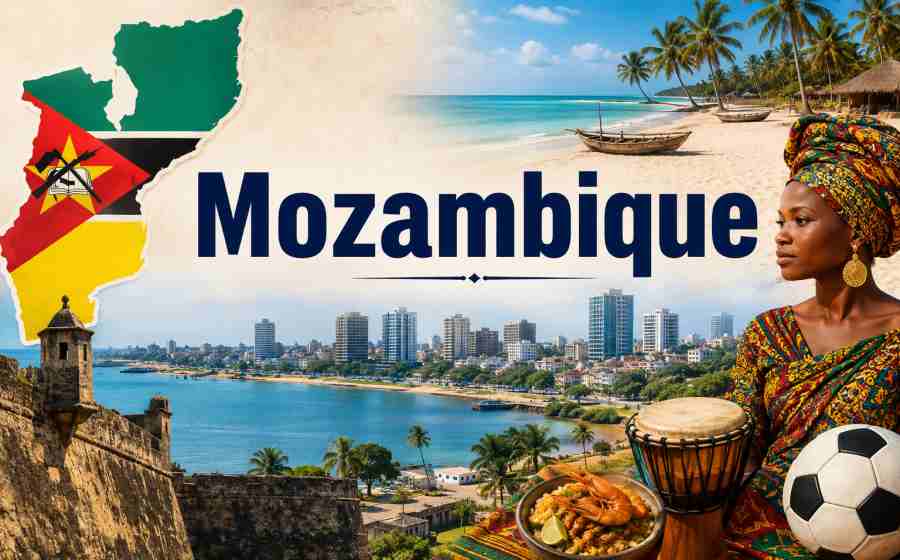
Mozambique – History, Culture, Sports, Tourist Places and Fascinating Facts
Discover Mozambique’s history, culture, sports, geography, cuisine and fascinating facts that highlight the spirit of this vibrant African nation.
Mozambique
Mozambique is a beautiful country located on the southeastern coast of Africa. Known for its long coastline along the Indian Ocean, rich cultural traditions, and resilient people, Mozambique is a nation with a fascinating story. From ancient trade routes and colonial struggles to modern development and sporting achievements, the country offers numerous interesting facts for students and general knowledge enthusiasts.
Table of Contents
Introduction to Mozambique
Mozambique is officially known as the Republic of Mozambique. It gained independence in 1975 after centuries of Portuguese colonial rule. The country shares borders with Tanzania, Malawi, Zambia, Zimbabwe, South Africa, and Eswatini. Its strategic location on the Indian Ocean has made it an important center of trade and cultural exchange for centuries. The capital city of Mozambique is Maputo, which is also the country’s largest city and economic hub.
Basic Facts About Mozambique
- Official Name: Republic of Mozambique
- Capital: Maputo
- Continent: Africa
- Official Language: Portuguese
- Currency: Mozambican Metical (MZN)
- Government: Presidential Republic
- Population: More than 34 million people
- Major Religions: Christianity, Islam, and traditional beliefs
- Time Zone: Central Africa Time (CAT)
History of Mozambique
Mozambique’s history dates back thousands of years. Early inhabitants included Bantu-speaking communities that migrated into the region and established agricultural societies. During the 10th century, Arab traders arrived on the coast and developed prosperous trading settlements. These traders exchanged gold, ivory, and other goods with merchants from Asia and the Middle East.
In 1498, Portuguese explorer Vasco da Gama reached the Mozambican coast during his voyage to India. Portugal gradually established control over the region, turning Mozambique into one of its major colonies. Colonial rule lasted for nearly five centuries. In the 1960s, nationalist movements demanding freedom emerged. The Front for the Liberation of Mozambique (FRELIMO) led the struggle for independence.
Mozambique finally gained independence from Portugal on 25 June 1975. However, the country later experienced a devastating civil war from 1977 to 1992. Following peace agreements, Mozambique began rebuilding its economy and institutions. Today, Mozambique continues to progress while preserving its historical heritage.
Geography and Natural Beauty
Mozambique covers an area of approximately 801,590 square kilometers, making it one of Africa’s larger countries.
One of its most remarkable features is its 2,500-kilometer coastline along the Indian Ocean. The coastline is famous for pristine beaches, coral reefs, and marine biodiversity.
The country has several important rivers, including:
- Zambezi River
- Limpopo River
- Rovuma River
- Save River
Mozambique also contains national parks and wildlife reserves that protect elephants, antelopes, lions, and other species.
Agriculture plays a major role in the country’s economy, with crops such as cassava, maize, sugarcane, and cashew nuts being widely cultivated.
Culture of Mozambique
Mozambique possesses a vibrant and diverse culture shaped by African traditions and Portuguese influences.
Languages
Although Portuguese is the official language, many indigenous languages are spoken throughout the country, including:
- Makhuwa
- Sena
- Tsonga
- Ndau
- Lomwe
Music and Dance
Music forms an important part of Mozambican life. Traditional instruments and rhythmic dances are performed during festivals, weddings, and community celebrations.
Marrabenta, a lively musical style that combines local rhythms with Portuguese influences, is considered one of Mozambique’s most recognizable music genres.
Art and Crafts
Mozambican artisans are known for their creativity. Wood carvings, masks, woven baskets, pottery, and colorful textiles showcase the country’s artistic heritage.
Traditional Clothing
Traditional attire varies among ethnic groups. Brightly patterned fabrics are commonly worn during ceremonies and festive occasions.
Food and Cuisine
Mozambican cuisine reflects a blend of African, Portuguese, and coastal influences.
Popular dishes include:
- Piri-Piri Chicken: Grilled chicken seasoned with spicy chili sauce.
- Matapa: A dish made from cassava leaves, coconut milk, and peanuts.
- Seafood Curry: Fish and shellfish cooked with aromatic spices.
- Xima: A maize-based staple food served with vegetables or meat.
Fresh seafood is widely enjoyed due to the country’s extensive coastline.
Sports in Mozambique
Sports unite communities across Mozambique and inspire young athletes.
Football
Football is the most popular sport in the country. The national football team is nicknamed “The Mambas.” Local leagues attract enthusiastic supporters, and many children dream of representing their nation on the international stage.
Athletics
Mozambique has produced talented athletes who have achieved global recognition. The country’s most celebrated sporting figure is Maria de Lurdes Mutola, who won the gold medal in the women’s 800 meters at the 2000 Sydney Olympic Games. Her achievement remains a source of national pride and inspiration.
Other Sports
Other sports enjoyed in Mozambique include:
- Basketball
- Volleyball
- Swimming
- Boxing
- Beach sports
Economy of Mozambique
Mozambique’s economy is primarily based on agriculture, fishing, mining, and energy production.
The nation possesses valuable natural resources, including:
- Natural gas
- Coal
- Titanium
- Graphite
- Precious stones
Recent discoveries of offshore natural gas reserves have increased international interest in Mozambique’s economic potential.
Tourism also contributes to the economy, attracting visitors to beaches, islands, wildlife reserves, and cultural sites.
Interesting Facts About Mozambique
- Mozambique was a Portuguese colony for nearly 500 years.
- It gained independence on 25 June 1975.
- Portuguese remains the official language.
- The country has one of Africa’s longest coastlines.
- Cashew nuts are among Mozambique’s important agricultural products.
- The national football team is called The Mambas.
- Maria Mutola is Mozambique’s Olympic gold medal-winning sports icon.
- The country is rich in natural gas and mineral resources.
- Marrabenta music originated in Mozambique.
- The Indian Ocean strongly influences the country’s economy and lifestyle.
Summary
Mozambique is a nation defined by resilience, cultural richness, and natural beauty. Its journey from ancient trade networks and colonial rule to independence and modern development demonstrates the strength of its people. With vibrant traditions, delicious cuisine, growing economic opportunities, and inspiring sporting achievements, Mozambique remains an important country to study in the field of general knowledge.
Also Check: General Knowledge