
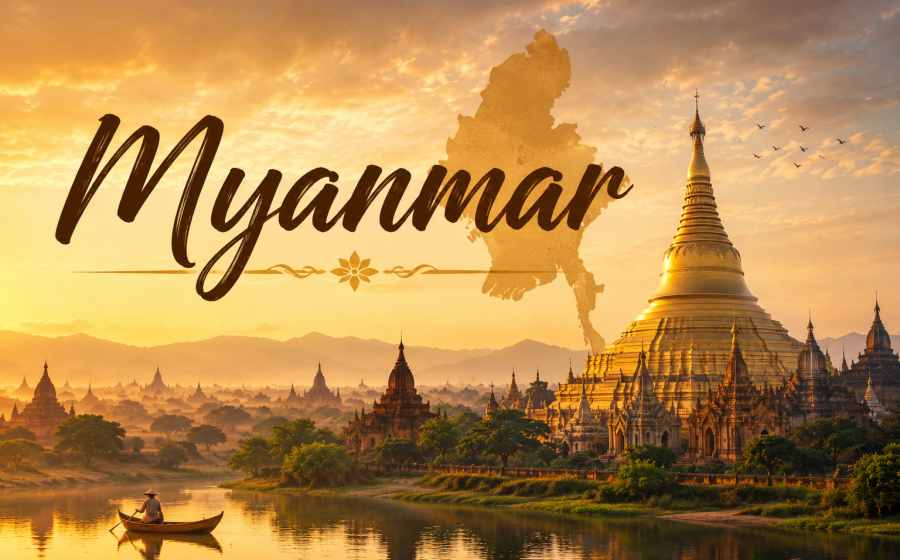
Myanmar – History, Culture, Sports and Facts About the Golden Land
Explore Myanmar’s history, culture, sports, geography, traditions and key facts. Learn about this fascinating Southeast Asian nation known as the Golden Land.
Myanmar
Myanmar, formerly known as Burma, is a beautiful country located in Southeast Asia. Known as the “Golden Land” because of its thousands of golden pagodas and Buddhist temples, Myanmar is rich in history, culture, and traditions. The country is blessed with diverse landscapes, ranging from mountains and forests to rivers and coastal regions. Despite facing various political and economic challenges, Myanmar remains an important nation with a unique cultural identity and historical significance.
Table of Contents
Geography and Location
Burma is situated in Southeast Asia and shares borders with India, Bangladesh, China, Laos, and Thailand. It has a long coastline along the Bay of Bengal and the Andaman Sea. The country covers an area of approximately 676,578 square kilometers, making it one of the largest nations in the region.
The capital city of Myanmar is Naypyidaw, while Yangon remains its largest and most economically significant city. The country’s landscape includes fertile plains, dense forests, and mountain ranges, with the Irrawaddy River serving as its most important waterway.
Brief History of Burma
Myanmar has a long and fascinating history that dates back thousands of years. Ancient civilizations flourished in the region, with the Pagan Kingdom emerging as one of the most powerful empires during the 9th century. The kingdom played a significant role in spreading Buddhism and constructing thousands of temples and pagodas, many of which still stand today.
During the 19th century, Burma came under British colonial rule after a series of Anglo-Burmese Wars. It became a part of British India before being administered separately. Myanmar gained independence from Britain on January 4, 1948.
Since independence, the country has experienced periods of military rule, political reforms, and democratic movements. Burma’s modern history continues to evolve as it seeks stability and development.
Culture and Traditions
Myanmar’s culture is deeply influenced by Buddhism, which is practiced by the majority of its population. Religious festivals, temple visits, and traditional ceremonies play an important role in daily life.
Respect for elders and community values are central aspects of Myanmar society. People often greet one another with kindness and hospitality, making visitors feel welcome.
Traditional clothing remains popular. Men commonly wear a garment called the Longyi, while women wear similar traditional attire. These garments are comfortable and suited to the country’s tropical climate.
Burma is also known for its traditional arts, including dance, music, puppetry, and handicrafts. Many cultural performances tell stories from Buddhist teachings and local folklore.
Language and Religion
The official language of Myanmar is Burmese. However, numerous ethnic groups across the country speak their own languages and dialects, reflecting the nation’s cultural diversity.
Buddhism is the dominant religion, followed by Christianity, Islam, Hinduism, and indigenous beliefs. Magnificent pagodas and monasteries can be found throughout the country, serving as important centers of worship and community life.
One of the most famous religious sites is the Shwedagon Pagoda, a golden stupa that attracts pilgrims and tourists from around the world.
Economy and Resources
Burma’s economy is largely based on agriculture, natural resources, and manufacturing. Rice is one of the country’s most important crops and serves as a staple food for the population.
The nation possesses valuable natural resources, including natural gas, jade, gemstones, timber, and minerals. Myanmar is particularly famous for producing high-quality rubies and jade, which are exported internationally.
Tourism also contributes to the economy, with visitors attracted by ancient temples, scenic landscapes, and cultural heritage sites.
Sports in Myanmar
Sports are an important part of life in Burma. Football (soccer) is the most popular sport and enjoys widespread support across the country. Local leagues and national team matches attract enthusiastic fans.
Myanmar also has a traditional martial art called Lethwei, often referred to as Burmese boxing. Unlike many other combat sports, Lethwei allows the use of punches, kicks, knees, elbows, and even headbutts, making it one of the world’s most distinctive martial arts. Other popular sports include volleyball, chinlone, athletics, and badminton.
Chinlone – Burma’s Traditional Sport
Chinlone is a unique traditional sport that combines athletic skill with artistic performance. Players pass a woven rattan ball using their feet, knees, and other parts of the body without letting it touch the ground. The game emphasizes grace, teamwork, and coordination rather than competition.
Famous Tourist Attractions
Myanmar is home to many remarkable tourist destinations:
- Bagan – An ancient city famous for thousands of temples and pagodas.
- Inle Lake – Known for floating villages and unique leg-rowing fishermen.
- Mandalay – A cultural and historical center of Myanmar.
- Yangon – The country’s largest city and commercial hub.
- Golden Rock (Kyaiktiyo Pagoda) – A sacred Buddhist pilgrimage site balanced on a cliff edge.
These attractions showcase Myanmar’s rich heritage and natural beauty.
Education and Society
Education is highly valued in Burma, and efforts continue to improve access to schools and universities. Monasteries have historically played a significant role in providing education, especially in rural areas.
The country’s population consists of many ethnic groups, each contributing unique customs, languages, and traditions. This diversity makes Myanmar one of the most culturally rich nations in Southeast Asia.
Interesting Facts About Myanmar
- Myanmar was formerly known as Burma.
- The capital city is Naypyidaw.
- The country is often called the “Golden Land.”
- Buddhism is the dominant religion.
- The Irrawaddy River is Myanmar’s most important river.
- Burma is one of the world’s leading sources of jade.
- Chinlone is a traditional sport unique to the country.
- Thousands of ancient temples can be found in Bagan.
- The national flower is the Padauk flower.
- Myanmar gained independence from Britain in 1948.
Summary
Burma is a nation with a rich historical legacy, vibrant culture, and unique traditions. From the ancient temples of Bagan to the spiritual significance of the Shwedagon Pagoda, the country offers a fascinating blend of history and heritage. Its diverse ethnic communities, traditional sports like Chinlone and Lethwei, and beautiful landscapes make Burma a remarkable country in Southeast Asia. Understanding Myanmar’s history, culture, sports, and key facts provides valuable insight into one of the most intriguing nations of the region.
Also Check: General Knowledge