Zimbabwe – History, Culture, Sports, Wildlife, Tourism and Fascinating Facts About the Nation
Discover Zimbabwe’s rich history, vibrant culture, famous sports, stunning wildlife, iconic landmarks and key facts about this remarkable African nation.
Zimbabwe
Zimbabwe is a beautiful country located in southern Africa, known for its rich history, diverse culture, breathtaking landscapes, and remarkable wildlife. Despite facing various economic and political challenges over the years, Zimbabwe remains one of Africa’s most historically significant nations. From ancient civilizations and natural wonders to sporting achievements and cultural traditions, Zimbabwe offers a fascinating story that continues to attract historians, travelers, and students worldwide.
Table of Contents
Location and Geography
Zimbabwe is a landlocked country situated in southern Africa. It shares borders with South Africa, Botswana, Zambia, and Mozambique. The country covers an area of approximately 390,757 square kilometers.
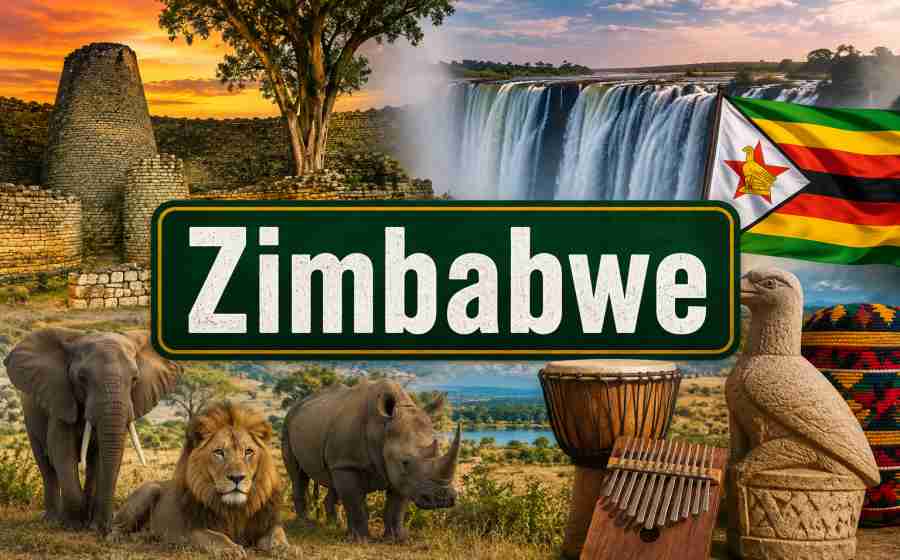
The landscape consists of high plateaus, mountains, rivers, and savannah grasslands. One of the most famous natural attractions is Victoria Falls, one of the largest and most spectacular waterfalls in the world. The Zambezi River, which forms the northern border, plays an important role in the country’s geography and economy.
Capital and Major Cities
- Capital: Harare
- Major Cities:
- Bulawayo
- Mutare
- Gweru
English is the official language, while Shona and Ndebele are among the most widely spoken indigenous languages.
Historical Background
Zimbabwe has one of the most impressive historical legacies in Africa. The country’s name comes from the ancient stone city known as Great Zimbabwe, which flourished between the 11th and 15th centuries. This remarkable archaeological site served as the capital of a powerful kingdom involved in trade with regions as far as Asia and the Middle East.
During the late 19th century, the area came under British colonial control and became known as Southern Rhodesia. The struggle for independence intensified during the 20th century, leading to a liberation war against colonial rule.
On April 18, 1980, Zimbabwe gained independence, with Robert Mugabe becoming the country’s first Prime Minister. Independence marked the beginning of a new chapter in Zimbabwe’s national development.
Culture and Traditions
Zimbabwean culture reflects a blend of indigenous traditions and modern influences. The majority of the population belongs to the Shona ethnic group, while the Ndebele community forms another significant cultural group.
Family values, respect for elders, and community cooperation are central elements of Zimbabwean society. Traditional ceremonies often celebrate births, marriages, harvests, and important community events.
Music and dance play a major role in cultural life. Traditional instruments such as the mbira, often called the “thumb piano,” are widely used in cultural performances. Zimbabwean music is known for its rhythmic patterns and spiritual significance.
Colorful traditional clothing and artistic expressions continue to preserve the country’s cultural identity despite modernization.
Food and Cuisine
Zimbabwean cuisine is simple, nutritious, and influenced by local agricultural products.
Popular foods include:
- Sadza (a maize-based staple food)
- Meat stews
- Vegetables and leafy greens
- Beans and groundnuts
- Fish from rivers and lakes
Sadza is considered the national dish and is commonly served with meat, vegetables, or gravy. Many traditional meals emphasize locally grown ingredients and communal dining.
Economy and Natural Resources
Agriculture remains one of Zimbabwe’s most important economic sectors. Farmers cultivate crops such as:
- Maize
- Tobacco
- Cotton
- Sugarcane
- Wheat
The country is also rich in mineral resources, including:
- Gold
- Platinum
- Diamonds
- Coal
- Nickel
Mining contributes significantly to national revenue and exports. Tourism also supports the economy, thanks to attractions like Victoria Falls, national parks, and wildlife reserves.
Wildlife and Tourism
Zimbabwe is home to a remarkable variety of wildlife. Visitors can encounter:
- Elephants
- Lions
- Leopards
- Buffaloes
- Rhinoceroses
Popular tourist destinations include:
- Victoria Falls
- Hwange National Park
- Mana Pools National Park
- Great Zimbabwe
These destinations attract thousands of visitors each year and showcase Zimbabwe’s natural beauty and biodiversity.
Sports in Zimbabwe
Sports are an important part of Zimbabwean society. Cricket and football are among the most popular sports in the country.
Cricket
Zimbabwe has achieved international recognition through cricket. The national cricket team has participated in several international tournaments and produced talented players such as:
- Andy Flower
- Heath Streak
- Brendan Taylor
Football
Football enjoys massive popularity across the country. The national team, known as the Warriors, regularly competes in African competitions and international qualifiers.
Other Sports
Zimbabwe also participates in:
- Rugby
- Athletics
- Swimming
- Golf
- Tennis
Several Zimbabwean athletes have represented the country successfully at global sporting events.
Education and Society
Zimbabwe has historically maintained one of the highest literacy rates in Africa. Education is highly valued, and the government has invested in expanding access to schools and universities.
The country’s educational system includes primary, secondary, and higher education institutions that contribute to workforce development and national growth.
Government and Politics
Zimbabwe operates as a republic with a presidential system of government. The President serves as both head of state and head of government.
The nation has experienced significant political developments since independence, including constitutional reforms and democratic transitions. Political participation and governance continue to play important roles in shaping Zimbabwe’s future.
Interesting Facts About Zimbabwe
- Zimbabwe’s name means “houses of stone.”
- Great Zimbabwe is one of Africa’s most famous archaeological sites.
- Victoria Falls is among the largest waterfalls on Earth.
- Zimbabwe has 16 official languages.
- The country is rich in gold, diamonds, and platinum.
- The mbira is one of Zimbabwe’s most famous traditional musical instruments.
- Zimbabwe has one of Africa’s highest literacy rates.
- The nation is home to diverse wildlife and renowned safari destinations.
- Cricket is one of the country’s most successful international sports.
- Zimbabwe’s national flag features a Zimbabwe Bird, an important cultural symbol.
Summary
Zimbabwe is a nation of remarkable history, cultural richness, natural beauty, and sporting achievements. From the ancient ruins of Great Zimbabwe and the majestic Victoria Falls to vibrant traditions and talented athletes, the country offers a unique blend of heritage and progress. Understanding Zimbabwe helps us appreciate the diversity and resilience of African civilizations and their contributions to world history and culture.
Also Check: General Knowledge