Iceland – History of a Land of Fire and Ice, Culture, Sports and Amazing Facts
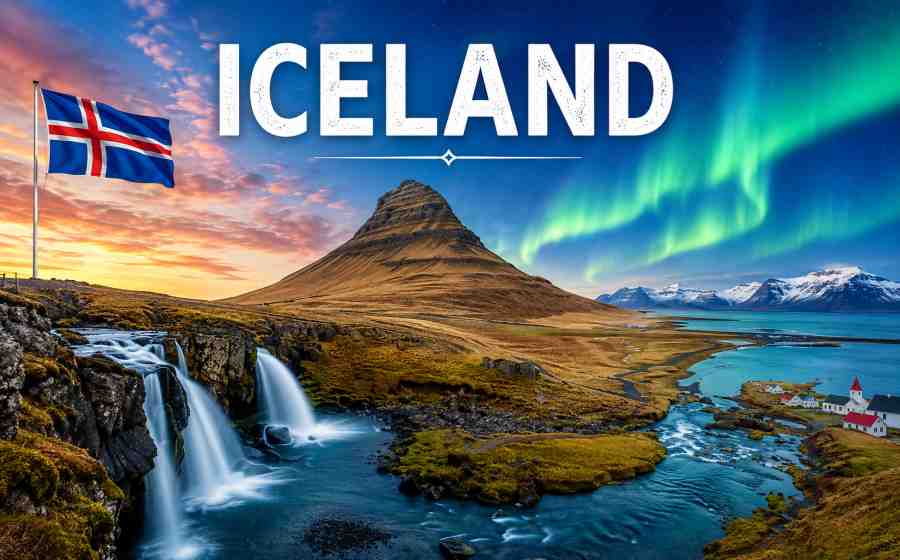
Iceland is a land of volcanoes, glaciers, Viking heritage, geothermal wonders, culture, thriving tourism and breathtaking natural beauty in the North Atlantic.
Iceland
Iceland is one of the world’s most fascinating island nations, famous for its dramatic landscapes, volcanoes, glaciers, waterfalls, and geothermal springs. Often called the “Land of Fire and Ice,” Iceland combines powerful volcanic activity with massive ice caps, creating breathtaking natural scenery. Despite its remote location in the North Atlantic Ocean, Iceland is among the world’s most developed, peaceful, and environmentally conscious countries.
The country is known for its Viking heritage, rich literary traditions, renewable energy, and stunning natural wonders such as the Northern Lights and the Blue Lagoon. Although Iceland has a relatively small population, it has made a remarkable impact in areas like sports, literature, music, and environmental sustainability.
Table of Contents
Location and Geography
Iceland is located in the North Atlantic Ocean, between Greenland and Norway, just south of the Arctic Circle. It covers an area of approximately 103,000 square kilometers, making it Europe’s second-largest island after Great Britain.
The country’s landscape is dominated by volcanoes, lava fields, glaciers, mountains, waterfalls, geysers, and black sand beaches. Iceland has over 130 volcanic mountains, many of which remain active. It is also home to Europe’s largest glacier, Vatnajökull, covering nearly 8% of the country’s land area.
Because Iceland sits on the Mid-Atlantic Ridge, earthquakes and volcanic eruptions are common geological events.
Capital and Population
- Capital: Reykjavík
- Largest City: Reykjavík
- Population: Around 400,000
- Official Language: Icelandic
- Currency: Icelandic Króna (ISK)
Most of Iceland’s population lives in and around Reykjavík, which is also the country’s cultural, political, and economic center.
Brief History of Iceland
Iceland was first settled by Norse Vikings during the late 9th century. According to historical records, the first permanent settler was Ingólfur Arnarson, who established Reykjavík around 874 AD.
One of Iceland’s greatest historical achievements was the establishment of the Althing in 930 AD, considered one of the oldest functioning parliaments in the world.
For centuries, Iceland remained under Norwegian and later Danish rule. During the 19th century, Icelandic nationalism grew stronger, leading to greater self-government.
In 1944, during World War II, Iceland officially became an independent republic after ending its union with Denmark.
Since independence, Iceland has transformed into one of the world’s wealthiest and most developed nations.
Government and Economy
Iceland is a parliamentary republic with a democratic political system.
Its economy is based on:
- Fishing and seafood exports
- Renewable energy
- Tourism
- Aluminum production
- Technology
- Creative industries
Iceland generates almost all of its electricity from renewable sources, mainly geothermal and hydroelectric power, making it a global leader in clean energy. Tourism has become one of Iceland’s largest industries, attracting millions of visitors every year.
Culture of Iceland
Icelandic culture reflects its Viking roots while embracing modern European values.
Some unique aspects include:
Literature
Iceland has a remarkable literary tradition. The medieval Icelandic Sagas are considered masterpieces of world literature. Reading and storytelling remain deeply rooted in Icelandic society.
Music
Iceland has produced internationally recognized musicians such as Björk and bands like Sigur Rós. Traditional folk music also remains popular.
Festivals
Popular Icelandic festivals include:
- Iceland National Day (17 June)
- Reykjavík Culture Night
- Winter Lights Festival
- Þorrablót (traditional midwinter festival)
Traditional Food
Icelandic cuisine mainly features seafood, lamb, and dairy products.
Popular dishes include:
- Fresh cod
- Arctic char
- Lamb soup
- Skyr (a thick dairy product)
- Rye bread
- Seafood stew
Some traditional foods, like fermented shark (Hákarl), are famous for their unusual taste and are often tried by adventurous visitors.
Sports in Iceland
Despite its small population, Iceland performs impressively in international sports.
Popular sports include:
Football (Soccer)
Football is Iceland’s most popular sport. The national team gained worldwide recognition after reaching the UEFA Euro 2016 quarter-finals, defeating several stronger football nations.
Handball
Handball is one of Iceland’s strongest sports. The country won a silver medal at the 2008 Olympic Games, one of its greatest sporting achievements.
Basketball
Basketball has become increasingly popular, especially among young people.
Winter Sports
Skiing, snowboarding, ice climbing, and glacier hiking are common recreational activities because of Iceland’s snowy climate.
Education
Iceland has one of the highest literacy rates in the world.
Education is:
- Free in public schools
- Highly accessible
- Focused on equality
- Supported by modern technology
The University of Iceland, founded in 1911, is the country’s leading higher education institution.
Tourism
Tourism is a major contributor to Iceland’s economy.
Famous attractions include:
- Blue Lagoon
- Golden Circle
- Gullfoss Waterfall
- Geysir geothermal area
- Thingvellir National Park
- Jökulsárlón Glacier Lagoon
- Vatnajökull National Park
- Northern Lights
Visitors also enjoy whale watching, glacier hiking, volcanic tours, and hot spring bathing.
Wildlife
Although Iceland has few native land mammals, it has rich marine life.
Common wildlife includes:
- Puffins
- Arctic foxes
- Whales
- Seals
- Reindeer (introduced)
- Various seabirds
The surrounding ocean supports one of the richest fishing grounds in the North Atlantic.
Climate
Iceland has a cool oceanic climate. Winters are cold but generally milder than expected due to the warming influence of the Gulf Stream.
Summers are short and cool, with long daylight hours. During June and July, some regions experience nearly 24 hours of daylight, known as the Midnight Sun.
Interesting Facts About Iceland
- Iceland has no standing army.
- Nearly all electricity comes from renewable energy.
- It is one of the safest countries in the world.
- Iceland has more sheep than people.
- There are no mosquitoes in Iceland.
- The country has hundreds of geothermal hot springs.
- Icelanders use patronymic surnames instead of traditional family names.
- The Althing, established in 930 AD, is among the world’s oldest parliaments.
- The Northern Lights are visible during winter months.
- Iceland consistently ranks among the happiest and most peaceful countries globally.
Summary
Iceland is a remarkable nation where ancient Viking traditions coexist with modern innovation and environmental sustainability. Its volcanic landscapes, glaciers, geothermal energy, rich literary heritage, and strong democratic institutions make it one of the world’s most unique countries. Whether admired for its natural beauty, sporting achievements, renewable energy leadership, or peaceful society, Iceland continues to inspire travelers, researchers, and history enthusiasts alike. Its commitment to preserving nature while maintaining a high quality of life makes Iceland an outstanding example of sustainable development and cultural pride.
Also Check: General Knowledge