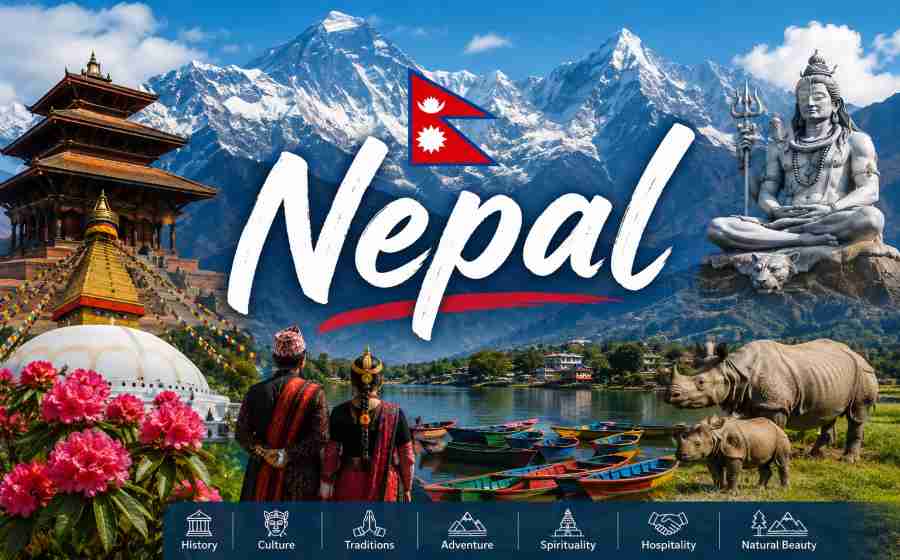
Nepal – History, Culture, Sports and Fascinating Facts About the Himalayan Nation
Explore Nepal’s history, culture, sports, geography, traditions and key facts. Discover what makes Nepal one of the most unique nations in South Asia.
Nepal
Nepal is a beautiful landlocked country located in South Asia, nestled between India and China. Known for its breathtaking Himalayan landscapes, rich cultural heritage, and spiritual significance, Nepal attracts millions of visitors from around the world. Home to Mount Everest, the highest peak on Earth, Nepal is a nation where ancient traditions blend harmoniously with modern aspirations.
Despite its relatively small size, Nepal possesses remarkable geographical diversity, cultural richness, and historical importance. From snow-capped mountains to lush valleys and vibrant festivals, Nepal offers a fascinating glimpse into one of the world’s most unique civilizations.
Table of Contents
History of Nepal
The history of Nepal dates back thousands of years. Archaeological evidence suggests human settlements existed in the region long before recorded history. The Kathmandu Valley became an important center of trade, culture, and religion due to its strategic location between India and Tibet. The Licchavi Dynasty (approximately 400–750 CE) is considered one of Nepal’s golden periods. During this era, art, architecture, and religious institutions flourished. Later, the Malla Dynasty ruled Nepal and contributed significantly to the construction of magnificent temples, palaces, and public squares that still stand today.
In the 18th century, King Prithvi Narayan Shah unified numerous small kingdoms and laid the foundation for modern Nepal. The country remained independent throughout the colonial era, making it one of the few South Asian nations never formally colonized by European powers. Nepal transitioned from a monarchy to a federal democratic republic in 2008, marking a major milestone in its political history.
Geography and Natural Beauty
Nepal covers approximately 147,516 square kilometers and is famous for its extraordinary geographical diversity.
The country is divided into three major regions:
- The Himalayas – Home to Mount Everest and several of the world’s highest peaks.
- The Hills – Featuring valleys, forests, and fertile lands.
- The Terai Plains – Rich agricultural areas bordering India.
Nepal contains eight of the world’s fourteen mountains that rise above 8,000 meters. The country’s natural beauty includes glaciers, rivers, lakes, forests, and wildlife reserves.
Popular destinations include:
- Kathmandu Valley
- Pokhara
- Chitwan National Park
- Lumbini (birthplace of Buddha)
- Mount Everest region
Culture of Nepal
Nepal’s culture is a vibrant blend of traditions, languages, ethnic groups, and religious practices.
More than 100 ethnic communities live in Nepal, including:
- Sherpa
- Newar
- Gurung
- Tharu
- Tamang
- Rai
- Limbu
The official language is Nepali, although many regional languages are spoken throughout the country.
Traditional music, dance, handicrafts, and architecture play important roles in daily life. Nepali culture emphasizes family values, respect for elders, hospitality, and community harmony.
The architecture of Nepal is especially renowned for its intricately carved temples, stupas, and historic palaces that reflect centuries of artistic excellence.
Religion and Spiritual Significance
Nepal holds immense religious importance for both Hindus and Buddhists. The majority of the population follows Hinduism, while Buddhism also has a significant presence. Many sacred sites attract pilgrims from across the globe.
Lumbini is widely recognized as the birthplace of Gautama Buddha, making Nepal one of the most important destinations for Buddhist pilgrims.
Famous religious sites include:
- Pashupatinath Temple
- Swayambhunath Stupa
- Boudhanath Stupa
- Lumbini
The peaceful coexistence of different religions reflects Nepal’s spirit of tolerance and cultural diversity.
Festivals of Nepal
Festivals form an essential part of Nepali life and showcase the country’s rich traditions.
Some major festivals include:
Dashain
The largest and most celebrated festival in Nepal, symbolizing the victory of good over evil.
Tihar
Known as the Festival of Lights, Tihar honors animals, family bonds, and prosperity.
Holi
The colorful festival marking the arrival of spring.
Buddha Jayanti
Celebrated to honor the birth, enlightenment, and teachings of Buddha.
Indra Jatra
A famous cultural festival celebrated particularly in Kathmandu.
These festivals bring communities together through music, dance, rituals, and celebrations.
Sports in Nepal
Sports are becoming increasingly popular across Nepal.
Cricket
Cricket has experienced tremendous growth in recent years. Nepal’s national cricket team has gained international recognition and enjoys strong support from fans.
Football
Football remains one of the most widely followed sports in Nepal. Local leagues and international competitions attract large audiences.
Mountaineering
Mountaineering is deeply associated with Nepal’s identity. Thousands of climbers visit annually to attempt Himalayan peaks, particularly Mount Everest.
Traditional Sports
Traditional games and martial arts continue to be practiced in various communities, helping preserve cultural heritage.
Adventure sports such as trekking, rafting, paragliding, and mountain biking are also popular among tourists and locals.
Economy of Nepal
Nepal’s economy relies on agriculture, tourism, remittances, and services. Agriculture remains a major source of employment, with crops such as rice, maize, wheat, and millet widely cultivated.
Tourism significantly contributes to national income due to Nepal’s natural beauty, trekking routes, and religious heritage. The country’s mountain tourism industry attracts visitors from all corners of the world. Hydropower development is also considered a promising sector due to Nepal’s abundant river systems.
Key Facts About Nepal
- Capital City: Kathmandu
- Official Language: Nepali
- Currency: Nepalese Rupee (NPR)
- Government: Federal Democratic Republic
- Population: Over 30 million
- Highest Mountain: Mount Everest (8,848.86 meters)
- National Animal: Cow
- National Flower: Rhododendron
- Time Zone: Nepal Standard Time (UTC +5:45)
- Birthplace of Buddha: Lumbini
Interesting Facts About Nepal
- Nepal is home to Mount Everest, the world’s highest mountain.
- It has one of the world’s unique time zones, 45 minutes ahead of UTC+5.
- The national flag of Nepal is the only non-rectangular national flag in the world.
- Nepal contains extraordinary biodiversity despite its small size.
- The country has hundreds of peaks suitable for trekking and climbing.
- Kathmandu Valley is known for its ancient temples and UNESCO World Heritage Sites.
- Nepal was never formally colonized by any European power.
- Lumbini attracts Buddhist pilgrims from around the world.
Summary
Nepal is a nation of remarkable contrasts and extraordinary beauty. Its towering Himalayan peaks, ancient history, diverse cultures, vibrant festivals, and growing sporting achievements make it one of the most fascinating countries in the world. Whether admired for its spiritual significance, natural wonders, or cultural richness, Nepal continues to inspire travelers, scholars, and adventurers alike. As the birthplace of Buddha and the home of Mount Everest, Nepal holds a unique place in global history and remains a symbol of resilience, heritage, and natural splendor.
Also Check: General Knowledge