Madagascar – History, Culture, Sports, Tourist Places, Geography and Fascinating Facts
Explore Madagascar’s history, culture, sports, geography, wildlife, economy and key facts. Learn what makes this unique island nation truly remarkable.
Madagascar
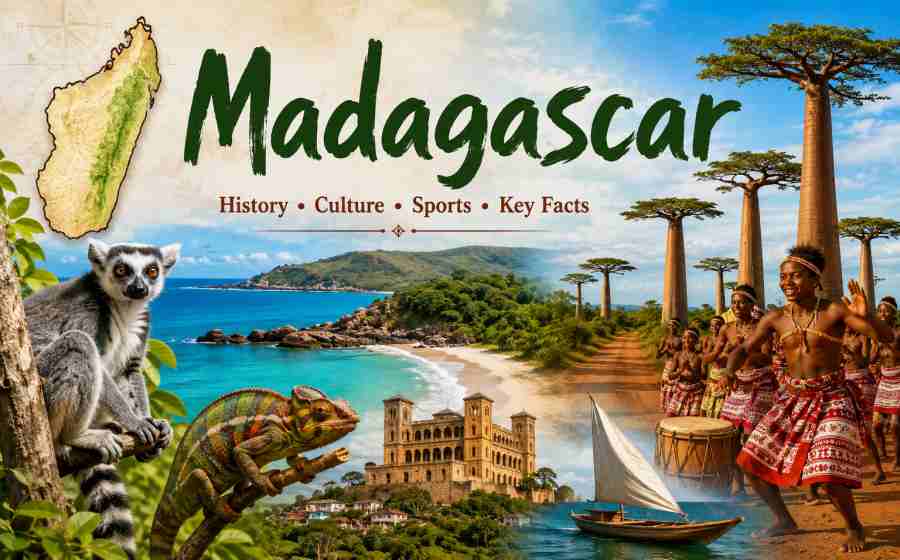
Madagascar is one of the most unique countries in the world. Located in the Indian Ocean off the southeastern coast of Africa, it is the fourth-largest island on Earth. Known for its extraordinary biodiversity, rich cultural heritage, and fascinating history, Madagascar attracts the attention of travelers, scientists, and historians alike. The country is famous for its lemurs, baobab trees, beautiful landscapes, and traditions that blend African and Asian influences.
Madagascar’s isolation from other landmasses for millions of years has allowed many unique plant and animal species to evolve. Today, it remains one of the world’s most important biodiversity hotspots and an interesting subject in general knowledge studies.
Table of Contents
History of Madagascar
The history of Madagascar is unlike that of most African nations. Archaeological and linguistic evidence suggests that the island was first settled around 1,500 to 2,000 years ago by people arriving from Southeast Asia, particularly from present-day Indonesia and Malaysia. Later, migrants from East Africa also settled on the island, creating a unique blend of cultures.
Over time, several kingdoms emerged across Madagascar. The most powerful was the Merina Kingdom, which expanded its influence during the 18th and 19th centuries. Under rulers such as King Andrianampoinimerina and Queen Ranavalona I, the kingdom gained significant control over the island.
In 1896, Madagascar became a French colony after French military intervention. During the colonial period, France introduced new infrastructure, education systems, and economic policies. However, many Malagasy people opposed foreign rule.
Madagascar gained independence from France on June 26, 1960. Since independence, the country has experienced periods of political change, economic challenges, and democratic reforms while continuing to preserve its unique identity.
Geography and Climate
Madagascar covers an area of approximately 587,000 square kilometers, making it the world’s fourth-largest island. The capital city is Antananarivo, located in the central highlands.
The country’s geography is diverse and includes:
- Central highlands
- Tropical rainforests
- Dry western plains
- Coastal regions
- Mountain ranges
- Mangrove forests
Madagascar experiences a tropical climate, though temperatures vary depending on elevation and region. The eastern coast receives heavy rainfall, while the southern areas are much drier. Cyclones occasionally affect the island, particularly during the rainy season from November to April.
People and Culture
Madagascar’s culture reflects a remarkable blend of African, Asian, Arab, and European influences. The people of Madagascar are known as Malagasy.
The official languages are:
- Malagasy
- French
Many people also understand English, especially in tourist areas.
Family and community play important roles in Malagasy society. Traditional customs and respect for ancestors remain deeply rooted in daily life. One of the most famous traditions is Famadihana, often called the “Turning of the Bones” ceremony, where families honor their ancestors through celebrations and rituals.
Music and dance are central to Malagasy culture. Traditional instruments such as the valiha, a bamboo tube zither, are commonly used in folk music.
Religion in Madagascar
Religion is an important aspect of life in Madagascar. The population follows a variety of beliefs, including:
- Christianity
- Traditional ancestral beliefs
- Islam
Many Malagasy people combine Christian practices with traditional customs that emphasize respect for ancestors and family heritage.
Wildlife and Natural Wonders
Madagascar is often referred to as a living laboratory of evolution because of its extraordinary biodiversity.
Some of the most famous wildlife species include:
- Lemurs
- Chameleons
- Fossa
- Tenrecs
- Various rare bird species
More than 90% of Madagascar’s wildlife is found nowhere else on Earth.
The island is also known for its iconic baobab trees, especially the famous Avenue of the Baobabs. National parks and protected areas help preserve these unique ecosystems.
Popular natural attractions include:
- Rainforests of Andasibe
- Tsingy limestone formations
- Avenue of the Baobabs
- Isalo National Park
- Nosy Be Island
These destinations attract nature enthusiasts from around the globe.
Economy of Madagascar
Madagascar’s economy is largely based on agriculture, fishing, mining, and tourism.
Major agricultural products include:
- Vanilla
- Coffee
- Rice
- Cloves
- Cocoa
Madagascar is one of the world’s leading producers of vanilla. The country’s high-quality vanilla is exported to many international markets.
Mining also contributes significantly to the economy, with resources such as nickel, cobalt, graphite, and precious stones. Tourism has become increasingly important due to Madagascar’s unique wildlife and scenic beauty.
Sports in Madagascar
Sports are popular throughout Madagascar and provide entertainment and opportunities for young athletes.
The most popular sports include:
Football (Soccer)
Football is the country’s favorite sport. Local clubs and the national team enjoy strong support from fans across Madagascar.
Rugby
Rugby has a passionate following and is considered one of the most popular sports after football. Madagascar has produced talented rugby players who compete internationally.
Basketball
Basketball is growing rapidly, particularly among urban youth. Schools and local organizations actively promote the sport.
Athletics
Track and field events are common in schools and regional competitions, helping develop future sporting talent.
Education and Society
Education is considered important for national development. Madagascar has expanded access to primary and secondary education over the years, although challenges remain in rural areas.
Universities and vocational institutions provide higher education opportunities, particularly in fields such as agriculture, science, business, and technology. Efforts continue to improve literacy rates, infrastructure, and educational resources throughout the country.
Key Facts About Madagascar
- Capital City: Antananarivo
- Official Languages: Malagasy and French
- Independence Day: June 26, 1960
- Currency: Malagasy Ariary (MGA)
- Continent: Africa
- Area: Approximately 587,000 square kilometers
- Largest Island in Africa
- Fourth-largest island in the world
- Home to thousands of unique species
- One of the world’s leading vanilla producers
Summary
Madagascar is a truly remarkable nation known for its rich history, diverse culture, unique wildlife, and stunning natural landscapes. Its blend of African and Asian heritage has created a distinct identity unlike any other country. From ancient kingdoms and colorful traditions to rare lemurs and world-famous vanilla production, Madagascar offers countless fascinating facts for students and general knowledge enthusiasts. As the country continues to develop, it remains one of the world’s most extraordinary and environmentally important island nations.
Also Check: General Knowledge