
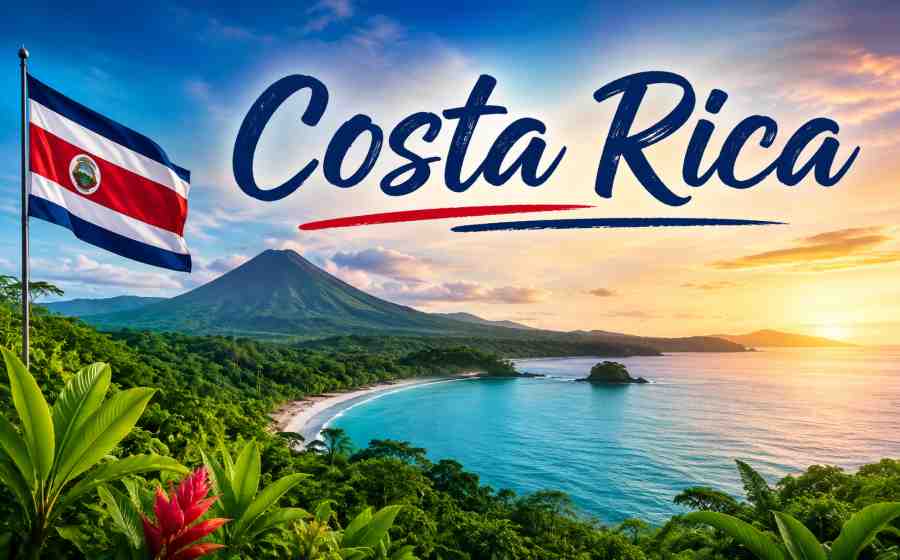
Costa Rica – A Tropical Paradise of Nature, Culture, History and National Natural Beauty
Discover Costa Rica’s history, culture, sports, wildlife, economy and key facts. Explore why this peaceful Central American nation is famous worldwide.
Costa Rica
Costa Rica is one of the most admired countries in Central America, known for its breathtaking rainforests, peaceful society, rich biodiversity, and commitment to environmental conservation. Despite being a relatively small nation, Costa Rica has earned global recognition for protecting its natural resources, promoting eco-tourism, and maintaining political stability.
Bordered by Nicaragua to the north, Panama to the southeast, the Caribbean Sea to the east, and the Pacific Ocean to the west, Costa Rica enjoys an ideal tropical climate that supports an incredible variety of plants and animals. The country’s motto, “Pura Vida” (Pure Life), perfectly reflects the relaxed, positive, and friendly lifestyle of its people.
Table of Contents
History of Costa Rica
Before European arrival, Costa Rica was inhabited by several indigenous groups, including the Chorotega, Bribri, Cabécar, and Boruca communities. These civilizations practiced farming, fishing, and trade with neighboring regions.
Christopher Columbus reached Costa Rica during his fourth voyage in 1502. The Spanish later colonized the region, naming it “Costa Rica,” meaning “Rich Coast,” because they believed it contained abundant natural wealth.
Unlike many other Spanish colonies, Costa Rica had limited mineral resources and a relatively small indigenous population. As a result, settlers relied mainly on agriculture rather than mining.
Costa Rica declared independence from Spain on 15 September 1821, alongside other Central American provinces. After briefly joining the Mexican Empire and the Federal Republic of Central America, Costa Rica became an independent republic.
One of the country’s most remarkable achievements came in 1948, following a short civil war. The government abolished the military in 1949, becoming one of the few countries in the world without a standing army. Since then, Costa Rica has invested heavily in education, healthcare, and environmental protection.
Geography and Climate
Costa Rica covers approximately 51,100 square kilometers, making it one of the smaller countries in Central America.
The landscape includes:
- Active volcanoes
- Mountain ranges
- Tropical rainforests
- Cloud forests
- Rivers and waterfalls
- Pacific and Caribbean coastlines
The country experiences a tropical climate with two main seasons:
- Dry season (December to April)
- Rainy season (May to November)
Its fertile land and diverse ecosystems make Costa Rica one of the world’s biodiversity hotspots.
People and Culture
Costa Rica has a population of around 5.3 million people.
Official Language
- Spanish
Capital City
- San José
Currency
- Costa Rican Colón (CRC)
Costa Rican people are commonly called Ticos (men) and Ticas (women).
The culture reflects a blend of Spanish colonial traditions and indigenous heritage. Family values, hospitality, and community life are highly respected.
The phrase “Pura Vida” is used as a greeting, farewell, expression of gratitude, and symbol of optimism.
Traditional Food
Costa Rican cuisine is simple, healthy, and flavorful. Popular dishes include:
- Gallo Pinto (rice and beans)
- Casado (rice, beans, meat, salad, and plantains)
- Tamales
- Ceviche
- Olla de Carne
- Arroz con Pollo
- Fresh tropical fruits
- Costa Rican coffee
Coffee production has been one of the country’s most important agricultural industries for centuries.
Festivals and Traditions
Costa Rica celebrates numerous colorful festivals throughout the year.
Major celebrations include:
- Independence Day (15 September)
- Palmares Festival
- Día de los Boyeros (Ox Cart Festival)
- Carnival of Limón
- Christmas celebrations
- Holy Week (Semana Santa)
Traditional music, folk dancing, and handcrafted ox carts remain important symbols of national identity.
Wildlife and Natural Beauty
Costa Rica is internationally famous for its extraordinary biodiversity. Although it occupies less than 0.1% of Earth’s land area, it contains nearly 5% of the world’s known species.
Common wildlife includes:
- Sloths
- Jaguars
- Scarlet macaws
- Toucans
- Howler monkeys
- Sea turtles
- Tree frogs
- Hummingbirds
The country protects nearly one-fourth of its territory through national parks and wildlife reserves. Famous natural attractions include:
- Arenal Volcano
- Monteverde Cloud Forest
- Manuel Antonio National Park
- Tortuguero National Park
- Corcovado National Park
These destinations attract millions of eco-tourists every year.
Economy
Costa Rica has one of the strongest economies in Central America. Major sectors include:
- Tourism
- Agriculture
- Coffee exports
- Banana production
- Pineapple exports
- Medical devices
- Technology services
- Renewable energy
The country is also a global leader in sustainable development and renewable electricity generation.
Education and Healthcare
Costa Rica places great importance on education and public welfare. Education is free and compulsory at the primary and secondary levels.
Healthcare is widely regarded as one of the best in Latin America, contributing to a high life expectancy and excellent quality of life.
Sports in Costa Rica
Football (soccer) is by far the most popular sport in Costa Rica. The national football team has participated in several FIFA World Cups and gained international recognition by reaching the quarter-finals in the 2014 FIFA World Cup, one of the greatest achievements in the nation’s sporting history.
Other popular sports include:
- Surfing
- Basketball
- Cycling
- Volleyball
- Athletics
- Tennis
- Mountain biking
Costa Rica’s Pacific coastline is considered one of the world’s premier surfing destinations.
Government
Costa Rica is a democratic republic. The President serves as both the head of state and head of government.
The country is admired for:
- Stable democracy
- Peaceful elections
- Independent judiciary
- Strong environmental policies
- High human development
Its decision to abolish the military remains a unique example of prioritizing education and social welfare.
Interesting Facts About Costa Rica
- Costa Rica means “Rich Coast.”
- It has no standing army since 1949.
- Nearly 25% of the country is protected land.
- “Pura Vida” is the national expression of happiness and positivity.
- Costa Rica hosts about 5% of the world’s biodiversity.
- It is one of the world’s leading eco-tourism destinations.
- Coffee has been one of its most valuable exports for over a century.
- Both the Pacific Ocean and Caribbean Sea border the country.
- Renewable energy supplies most of the nation’s electricity.
- Costa Rica consistently ranks among the happiest countries in Latin America.
Why Costa Rica Is Famous
Costa Rica is famous for its peaceful democracy, stunning national parks, eco-tourism, abundant wildlife, and commitment to environmental conservation. The country has become a global model for sustainable development by balancing economic growth with the protection of nature. Combined with its welcoming people, vibrant culture, and the spirit of “Pura Vida,” Costa Rica continues to inspire travelers and environmentalists from around the world.
Summary
Costa Rica is far more than a beautiful tropical destination. It is a nation that has demonstrated how peace, education, environmental conservation, and sustainable development can work together to create a high quality of life. From its fascinating history and colorful traditions to its rich wildlife and sporting achievements, Costa Rica offers countless reasons to admire this remarkable Central American country. Whether for learning, travel, or general knowledge, Costa Rica stands as an inspiring example of harmony between people and nature.
Also Check: General Knowledge