
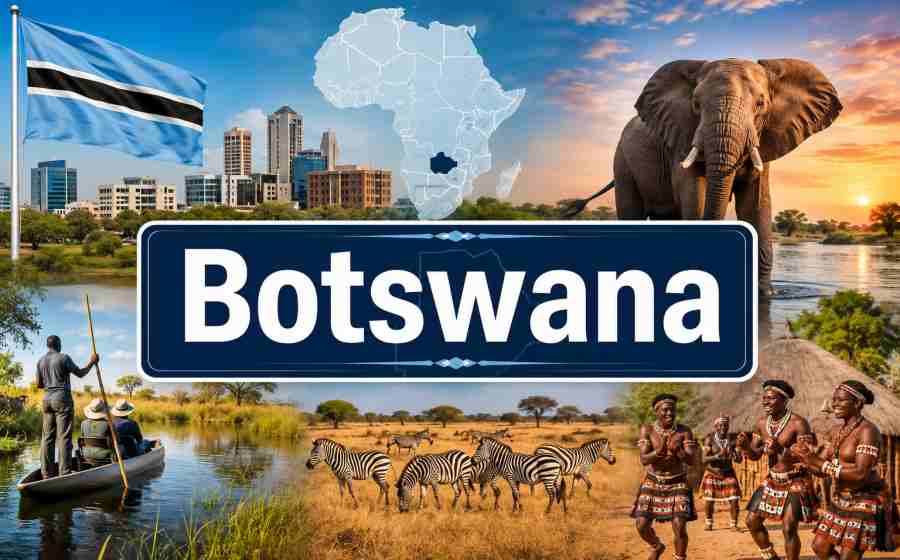
Botswana – The Land of Diamonds, History, Sports, Wildlife and Cultural Heritage
Discover Botswana’s history, culture, sports, wildlife, geography, economy and key facts. Learn about this peaceful and fascinating African nation.
Botswana
Botswana is a beautiful country located in Southern Africa, known for its rich wildlife, stable democracy, and vast desert landscapes. Despite being one of the most sparsely populated countries in the world, Botswana has achieved remarkable economic growth and social development since gaining independence. The country is famous for its diamond industry, conservation efforts, and unique cultural traditions.
Botswana attracts visitors from around the world due to its spectacular national parks, abundant wildlife, and peaceful environment. It is often regarded as one of Africa’s greatest success stories because of its political stability and responsible management of natural resources.
Table of Contents
History of Botswana
The history of Botswana dates back thousands of years. Archaeological evidence suggests that the region was inhabited by hunter-gatherer communities, particularly the San people, who are among the oldest indigenous groups in Africa.
During the 18th and 19th centuries, Tswana-speaking communities established powerful chiefdoms throughout the region. These groups played a significant role in shaping the country’s cultural identity.
In 1885, the area became a British protectorate known as Bechuanaland. Unlike many African colonies, Bechuanaland experienced limited direct colonial control. This helped preserve many traditional institutions and leadership structures.
Botswana gained independence from Britain on September 30, 1966. After independence, Sir Seretse Khama became the nation’s first president. Under his leadership, Botswana adopted democratic governance and focused on economic development.
The discovery of large diamond deposits shortly after independence transformed Botswana’s economy. Today, the country is recognized as one of Africa’s most stable democracies and has maintained peaceful elections for decades.
Geography and Climate
Botswana covers an area of approximately 582,000 square kilometers, making it one of the larger countries in Africa. It shares borders with Namibia, Zambia, Zimbabwe, and South Africa.
The country is largely covered by the Kalahari Desert, which occupies nearly 70% of its territory. Despite its desert environment, Botswana possesses diverse ecosystems, including grasslands, wetlands, and forests.
One of Botswana’s most famous natural features is the Okavango Delta, a vast inland delta that supports an incredible variety of wildlife. It is considered one of the most important ecosystems in Africa.
Botswana experiences a semi-arid climate with hot summers and mild winters. Rainfall is generally limited and occurs mainly between November and March.
Culture of Botswana
Botswana’s culture is deeply rooted in Tswana traditions, although the country is home to several ethnic groups. Respect for elders, community cooperation, and strong family values are central aspects of Botswana society.
Traditional music and dance remain important parts of cultural celebrations. Drumming, singing, and energetic dances are commonly performed during festivals, weddings, and community gatherings.
The national language is Setswana, while English serves as the official language used in government, education, and business.
Traditional clothing often features colorful fabrics and distinctive patterns. Cultural ceremonies continue to play an important role in preserving Botswana’s heritage.
Festivals and Traditions
Botswana hosts various cultural festivals throughout the year. These events showcase traditional music, dance, crafts, and local cuisine.
The Dithubaruba Cultural Festival is one of the country’s well-known celebrations, highlighting the customs and history of the Bakwena people.
National Day celebrations on September 30 commemorate Botswana’s independence and feature parades, cultural performances, and public events.
Community gatherings known as “kgotla” remain an important traditional institution where citizens discuss local issues and make collective decisions.
Economy of Botswana
Botswana possesses one of Africa’s strongest economies. The discovery and responsible management of diamond resources played a major role in the country’s economic transformation.
Diamonds remain the country’s most important export. In addition to mining, sectors such as tourism, agriculture, and financial services contribute significantly to economic growth.
The government has invested heavily in education, healthcare, and infrastructure, helping improve living standards across the country.
Tourism is another major source of income. Thousands of visitors travel to Botswana annually to experience its wildlife reserves and natural attractions.
Wildlife and Tourism
Botswana is globally recognized for its commitment to wildlife conservation. Large portions of the country are protected through national parks and game reserves.
Some of the most famous tourist destinations include:
- Okavango Delta
- Chobe National Park
- Central Kalahari Game Reserve
- Moremi Game Reserve
- Makgadikgadi Salt Pans
Visitors can observe elephants, lions, leopards, cheetahs, buffaloes, zebras, giraffes, and numerous bird species in their natural habitats.
Botswana has one of the largest elephant populations in the world, making it a premier destination for wildlife enthusiasts and photographers.
Sports in Botswana
Sports play an important role in Botswana’s social and cultural life. Football is the most popular sport in the country and enjoys widespread support.
The Botswana national football team, known as “The Zebras,” represents the country in international competitions.
Athletics has also brought international recognition to Botswana. The nation has produced several talented sprinters and middle-distance runners who have competed successfully on the global stage.
School sports programs and community competitions help encourage youth participation in physical activities and talent development.
Education and Society
Botswana has made significant progress in education since independence. Literacy rates have improved considerably due to government investment in schools and educational programs.
Primary education is widely accessible, and higher education opportunities continue to expand. Healthcare services have also improved over the years, contributing to better life expectancy and overall quality of life.
The country continues to focus on sustainable development, environmental conservation, and economic diversification.
Key Facts About Botswana
- Capital City: Gaborone
- Official Language: English
- National Language: Setswana
- Currency: Botswana Pula (BWP)
- Independence Day: September 30, 1966
- Population: Around 2.7 million
- Largest Desert: Kalahari Desert
- Major Industry: Diamond Mining
- Government Type: Parliamentary Republic
- National Animal: Zebra
Summary
Botswana stands as one of Africa’s most successful and stable nations. From its fascinating history and vibrant cultural traditions to its world-famous wildlife reserves and thriving economy, the country offers numerous lessons in sustainable development and conservation. Its commitment to democracy, education, and environmental protection has earned Botswana global respect. As a result, Botswana remains an important country for students, travelers, and general knowledge enthusiasts seeking to understand the diversity and progress of the African continent.
Also Check: General Knowledge