
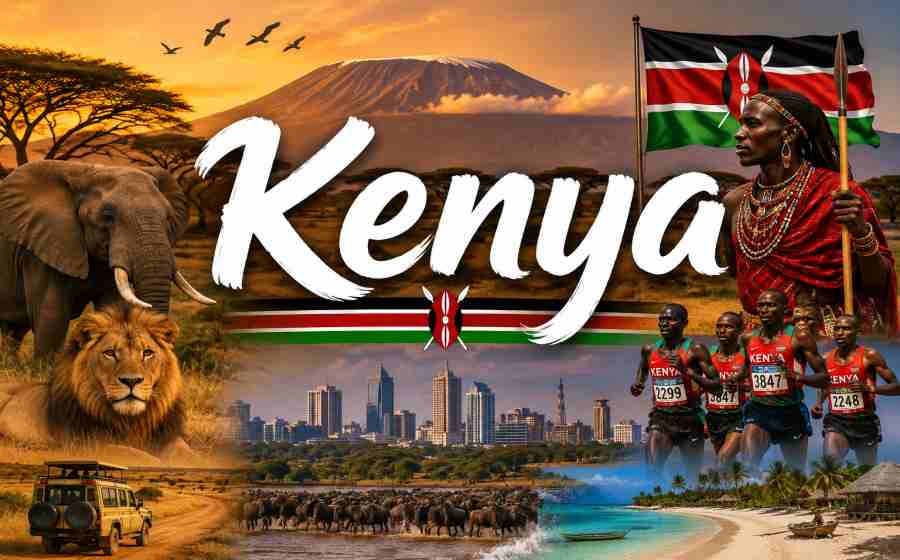
Kenya – A Fascinating Journey Through History, Culture, Sports, Tourism and Key Facts
Kenya is a land of rich history, diverse cultures, wildlife, world-famous athletes and unique traditions that make it one of Africa’s most fascinating nations.
Kenya
Kenya is one of Africa’s most vibrant and influential countries. Known for its breathtaking wildlife, rich cultural heritage, world-class athletes, and stunning landscapes, Kenya has earned a special place on the global stage. Located in East Africa, the country is famous for the Great Rift Valley, the Maasai people, and its dominance in long-distance running. Kenya combines traditional customs with modern development, making it an interesting nation to study and explore.
Table of Contents
History of Kenya
The history of Kenya dates back thousands of years. Archaeological discoveries suggest that some of the earliest human ancestors lived in the region. The area around Lake Turkana has provided important fossils that have helped scientists understand human evolution.
During ancient times, Arab traders established settlements along Kenya’s coast. These settlements became important centers of trade connecting Africa, the Middle East, and Asia. Goods such as ivory, gold, and spices were exchanged through coastal cities.
In the late nineteenth century, Kenya came under British colonial rule. The British established the East Africa Protectorate in 1895, which later became the Colony of Kenya. Colonial rule brought major changes in administration, agriculture, and infrastructure but also led to conflicts over land and political rights.
The struggle for independence gained momentum during the 1950s through movements such as the Mau Mau uprising. After years of resistance and negotiations, Kenya achieved independence on December 12, 1963. The country’s first president was Jomo Kenyatta, who played a significant role in the independence movement. Today, Kenya is a democratic republic and one of Africa’s leading economies.
Geography and Climate
Kenya is located on the eastern coast of Africa and borders Ethiopia, Somalia, South Sudan, Uganda, Tanzania, and the Indian Ocean.
The country covers approximately 580,000 square kilometers and features a wide variety of landscapes, including:
- Savannah grasslands
- Mountains
- Forests
- Lakes
- Coastal beaches
- Semi-arid regions
One of the country’s most famous natural landmarks is Mount Kenya, which is Africa’s second-highest mountain after Kilimanjaro.
Kenya experiences different climate zones due to its varied geography. Coastal areas are generally warm and humid, while highland regions enjoy cooler temperatures.
People and Culture
Kenya is home to more than 50 ethnic groups, each with unique traditions, languages, and customs. Some of the major communities include:
- Kikuyu
- Luo
- Luhya
- Kalenjin
- Maasai
- Kamba
English and Swahili are the official languages of Kenya. Swahili serves as a common language that helps unite the country’s diverse population.
Traditional music, dance, storytelling, and art play important roles in Kenyan culture. Colorful ceremonies and festivals celebrate important events such as marriages, harvests, and community gatherings.
The Maasai people are internationally recognized for their distinctive clothing, beadwork, and traditional lifestyle. Their culture has become one of the most famous symbols of Kenya.
Food of Kenya
Kenyan cuisine reflects the country’s cultural diversity and agricultural richness.
Popular Kenyan foods include:
Ugali
A staple dish made from maize flour and water. It is often served with vegetables, meat, or fish.
Nyama Choma
Roasted meat that is widely enjoyed across Kenya and often served during celebrations.
Sukuma Wiki
A vegetable dish prepared from collard greens and commonly eaten with ugali.
Pilau
A flavorful rice dish cooked with spices and meat.
Tea is one of the most popular beverages in Kenya, and the country is among the world’s leading tea producers.
Wildlife and Tourism
Kenya is one of the world’s premier wildlife destinations. Millions of tourists visit the country each year to experience its national parks and game reserves.
Famous attractions include:
- Maasai Mara National Reserve
- Amboseli National Park
- Lake Nakuru National Park
- Tsavo National Park
The Great Migration, where millions of wildebeests and zebras move between Kenya and Tanzania, is one of the most spectacular wildlife events on Earth.
Kenya is home to the famous “Big Five” animals:
- Lion
- Leopard
- Elephant
- Rhinoceros
- Buffalo
Tourism contributes significantly to the country’s economy.
Sports in Kenya
Sports are an important part of Kenyan society, with athletics being the most successful field.
Kenya has produced some of the greatest long-distance runners in history. Kenyan athletes have won numerous Olympic and World Championship medals.
Famous Kenyan athletes include:
- Eliud Kipchoge
- David Rudisha
- Faith Kipyegon
- Catherine Ndereba
The country is particularly dominant in marathon, steeplechase, and middle-distance running events.
Football is also widely followed, and rugby has grown significantly in popularity. Kenya’s rugby sevens team has achieved notable success in international competitions.
Economy of Kenya
Kenya has one of the largest and most diversified economies in East Africa.
Major sectors include:
- Agriculture
- Tourism
- Manufacturing
- Technology
- Financial services
Agriculture remains a key contributor to employment and exports. Important products include:
- Tea
- Coffee
- Flowers
- Maize
- Fruits
The capital city, Nairobi, is often called the economic hub of East Africa. The city hosts numerous international organizations and businesses.
Kenya has also gained recognition for technological innovation, earning the nickname “Silicon Savannah” due to its growing technology sector.
Education and Development
Kenya has made significant progress in education and literacy over the years. The government continues to invest in schools, universities, and vocational training programs.
Major universities contribute to research and professional development across various fields. Improvements in healthcare, infrastructure, and digital services have also supported national growth.
Key Facts About Kenya
- Official Name: Republic of Kenya
- Capital City: Nairobi
- Continent: Africa
- Official Languages: English and Swahili
- Currency: Kenyan Shilling (KES)
- Independence Day: December 12, 1963
- Highest Mountain: Mount Kenya
- Major Economic Activities: Agriculture, Tourism, Technology, Manufacturing
- National Animal: Lion
- Time Zone: East Africa Time (EAT)
Summary
Kenya is a nation rich in history, cultural diversity, natural beauty, and sporting excellence. From ancient human origins and the struggle for independence to world-famous wildlife reserves and Olympic champions, Kenya offers a remarkable blend of tradition and modern progress. Its vibrant culture, thriving economy, and global achievements continue to make it one of Africa’s most important and fascinating countries. Whether viewed through its history, tourism, sports, or cultural heritage, Kenya remains a country of immense significance and inspiration.
Also Check: General Knowledge