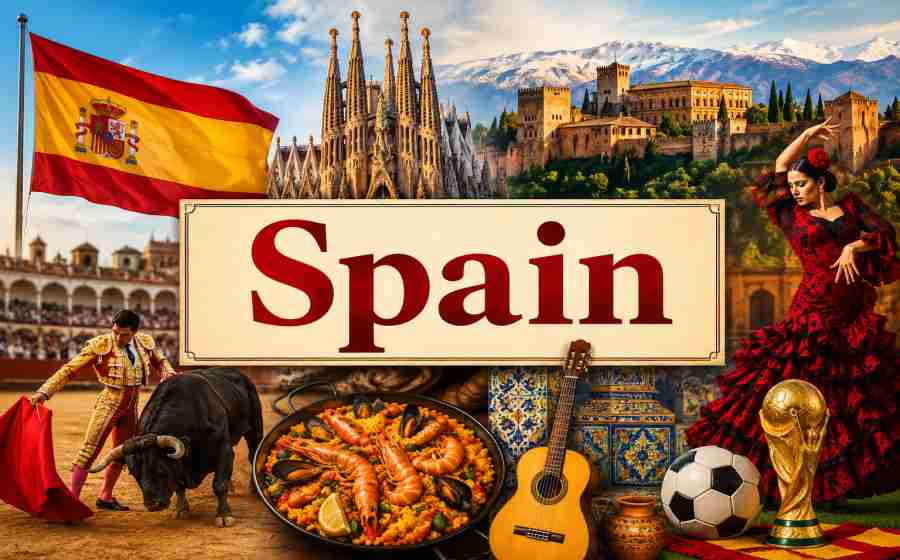
Spain – History, Culture, Sports, Tourist Places and Fascinating Facts About the Nation
Discover Spain’s rich history, vibrant culture, famous sports, iconic landmarks, delicious cuisine and key facts that make Spain a fascinating nation.
Spain
Spain is one of Europe’s most influential and culturally rich countries. Known for its historic cities, beautiful beaches, world-famous football teams, delicious cuisine, and colorful festivals, Spain attracts millions of visitors every year. Located in southwestern Europe on the Iberian Peninsula, Spain shares borders with Portugal, France, and Andorra. It is a nation where ancient traditions blend seamlessly with modern life.
From the grandeur of historic castles to the excitement of football stadiums, Spain offers a unique identity that has shaped world history, art, literature, and sports.
Table of Contents
Basic Facts About Spain
- Official Name: Kingdom of Spain
- Capital: Madrid
- Continent: Europe
- Official Language: Spanish
- Currency: Euro (€)
- Government: Parliamentary Constitutional Monarchy
- Population: Approximately 48 million
- National Day: October 12 (National Day of Spain)
- Time Zone: Central European Time (CET)
Spain also includes several islands, such as the Balearic Islands in the Mediterranean Sea and the Canary Islands in the Atlantic Ocean.
History of Spain
Spain has a long and fascinating history stretching back thousands of years. Ancient civilizations such as the Iberians and Celts inhabited the region before it became part of the Roman Empire around the 2nd century BCE. Roman rule brought roads, cities, and cultural development that still influence Spain today.
After the fall of Rome, various Germanic tribes ruled the area until the Moors from North Africa arrived in 711 CE. Moorish rule lasted for centuries and significantly influenced Spanish architecture, science, and culture.
The Christian kingdoms gradually reclaimed territory during a period known as the Reconquista, which ended in 1492. This same year marked a turning point in world history when Christopher Columbus reached the Americas with support from the Spanish monarchy.
Spain became one of the world’s largest empires during the 16th and 17th centuries, controlling vast territories across the Americas, Asia, and Africa. Although its global influence later declined, Spain remains an important political, economic, and cultural force in Europe.
Geography and Climate
Spain is known for its diverse landscapes. The country features mountain ranges, fertile plains, rivers, forests, and extensive coastlines.
Major geographical features include:
- The Pyrenees Mountains along the French border
- The Meseta Central plateau in central Spain
- The Ebro and Guadalquivir river valleys
- Mediterranean and Atlantic coastlines
Spain enjoys different climate zones:
- Mediterranean climate in coastal regions
- Continental climate in central areas
- Oceanic climate in the north
- Subtropical climate in the Canary Islands
This diversity supports a wide variety of agriculture, wildlife, and tourism activities.
Culture of Spain
Spanish culture is famous worldwide for its passion, creativity, and traditions. Family plays a central role in Spanish society, and social gatherings are highly valued.
Language and Regional Identity
While Spanish is the official language, several regional languages are also spoken, including Catalan, Basque, and Galician. These languages reflect Spain’s rich cultural diversity.
Art and Literature
Spain has produced many renowned artists and writers. Famous figures include:
- Pablo Picasso
- Salvador Dalí
- Miguel de Cervantes
Spanish art and literature have had a lasting influence on global culture.
Festivals
Spain is known for colorful festivals celebrated throughout the year. Popular events include:
- La Tomatina
- Running of the Bulls
- Las Fallas
These celebrations attract visitors from around the world.
Food and Cuisine
Spanish cuisine is diverse and flavorful. Regional specialties vary across the country.
Popular Spanish dishes include:
- Paella
- Tortilla Española
- Gazpacho
- Jamón (cured ham)
- Churros
Spain is also famous for its tapas culture, where small dishes are shared among friends and family.
Olive oil, seafood, rice, and fresh vegetables are important ingredients in Spanish cooking.
Sports in Spain
Sports are an essential part of Spanish life, with football being the most popular sport.
Football
Spain has produced some of the world’s greatest football clubs and players. Notable clubs include:
- Real Madrid
- FC Barcelona
Spain won the:
- FIFA World Cup 2010
- UEFA European Championship in 2008, 2012, and 2024
Tennis
Spain has also excelled in tennis through legendary players such as:
- Rafael Nadal
- Carlos Alcaraz
Other Popular Sports
- Basketball
- Cycling
- Formula One racing
- Handball
- Athletics
Spanish athletes continue to achieve success at international competitions.
Economy of Spain
Spain has one of the largest economies in Europe. Key sectors include:
- Tourism
- Manufacturing
- Agriculture
- Renewable Energy
- Financial Services
Tourism plays a major role, with millions of visitors exploring Spain’s beaches, historical sites, and cultural attractions every year.
Spain is also a leading producer of:
- Olive oil
- Wine
- Citrus fruits
- Vegetables
The country has invested heavily in modern infrastructure, including high-speed rail networks and renewable energy projects.
Famous Places in Spain
Some of Spain’s most visited destinations include:
- Sagrada Família
- Barcelona
- Alhambra
- Seville
- Prado Museum
These landmarks showcase Spain’s architectural, artistic, and historical heritage.
Interesting Facts About Spain
- Spain is one of the world’s leading tourist destinations.
- The country has more than 8,000 kilometers of coastline.
- Spanish is among the most widely spoken languages globally.
- Spain is the world’s largest producer of olive oil.
- The country operates one of Europe’s largest high-speed rail networks.
- The famous novel Don Quixote was written in Spain.
- Spain consists of 17 autonomous communities.
- Flamenco music and dance originated in southern Spain.
- The country has numerous UNESCO World Heritage Sites.
- Spain’s cultural influence extends across Europe, Latin America, and beyond.
Summary
Spain is a nation rich in history, culture, and achievement. From ancient Roman settlements and Moorish architecture to modern sports triumphs and world-famous festivals, Spain offers an extraordinary blend of tradition and innovation. Its vibrant culture, delicious cuisine, stunning landscapes, and global influence make it one of the most fascinating countries in the world. Whether studying geography, history, or sports, Spain remains an important and inspiring subject.
Also Check: General Knowledge