
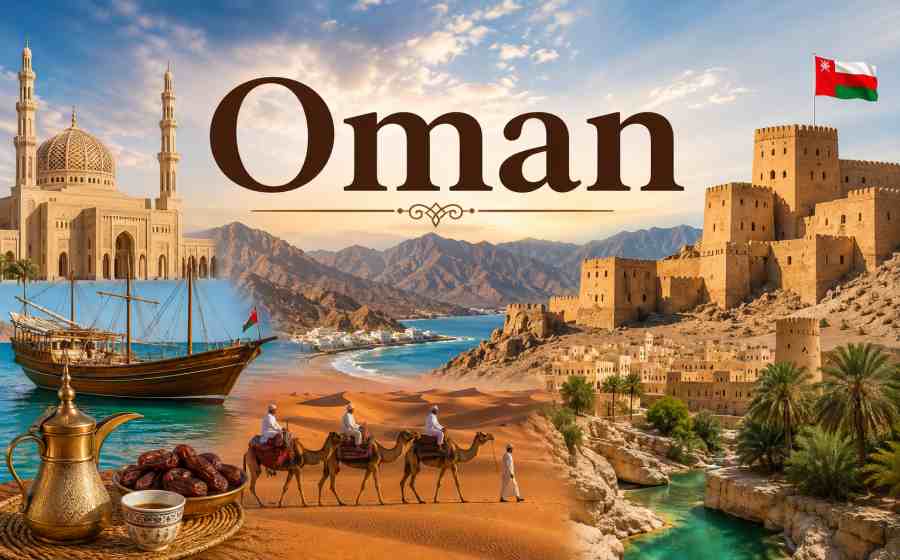
Oman – History, Culture, Sports and Fascinating Facts about this Asian Nation
Discover Oman’s history, culture, sports, geography, economy, traditions and key facts in this overview of one of the Arabian Peninsula’s most peaceful nations.
Oman
Oman is a beautiful country located on the southeastern coast of the Arabian Peninsula. Known for its breathtaking deserts, rugged mountains, pristine beaches, and rich maritime history, Oman has preserved its traditional heritage while embracing modern development. Unlike many neighboring countries, Oman has maintained a unique balance between modernization and cultural preservation, making it one of the most fascinating destinations in the Middle East.
The country is famous for its warm hospitality, historic forts, bustling souqs, frankincense trade, and peaceful society. Oman has also played an important role in regional trade for centuries due to its strategic location along the Arabian Sea and the Gulf of Oman.
Table of Contents
Location and Geography
Oman occupies the southeastern corner of the Arabian Peninsula. It shares borders with Saudi Arabia, the United Arab Emirates, and Yemen, while its coastline stretches for more than 3,000 kilometers along the Arabian Sea and the Gulf of Oman.
The country’s geography is incredibly diverse. It features vast deserts such as the Wahiba Sands, the impressive Al Hajar Mountains, fertile valleys called wadis, and beautiful coastal plains. This variety of landscapes supports different ecosystems and makes Oman a popular destination for nature lovers and adventure seekers.
Capital and Major Cities
Muscat is the capital and largest city of Oman. It serves as the nation’s political, economic, and cultural center. The city is famous for its stunning mosques, traditional markets, and scenic coastline.
Other important cities include:
- Salalah
- Sohar
- Nizwa
- Sur
- Ibri
Each city has its own historical importance and unique cultural identity.
A Brief History of Oman
Oman’s history dates back over 5,000 years. Ancient civilizations traded copper and other valuable goods with Mesopotamia, Persia, and the Indus Valley Civilization. The country’s strategic coastal location helped it become an important maritime trading hub.
Islam arrived in Oman during the 7th century, and the people accepted the religion peacefully. Over the centuries, Omani sailors established trade routes across East Africa, India, and Southeast Asia. During the 17th century, Oman became a powerful maritime empire, controlling parts of East Africa, including Zanzibar.
In the modern era, Sultan Qaboos bin Said transformed Oman after coming to power in 1970. Under his leadership, the country experienced rapid development in education, healthcare, transportation, and infrastructure while preserving its cultural heritage. Today, Oman continues its progress under Sultan Haitham bin Tariq.
Government and Political System
Oman is a constitutional monarchy led by a Sultan, who serves as both the head of state and the head of government.
The government focuses on national development, economic diversification, and maintaining regional stability. Oman is widely respected for its diplomatic approach and peaceful foreign relations.
Population and Language
Oman has a population of around five million people, including both citizens and expatriates. Arabic is the official language, while English is widely used in business, education, and tourism. Several regional languages and dialects are also spoken in different parts of the country.
Religion and Economy
Islam is the official religion of Oman. The majority of Omani citizens follow the Ibadi branch of Islam, which is known for emphasizing moderation, tolerance, and peaceful coexistence.
People of other religions are also free to practice their faith, contributing to the country’s reputation for religious harmony.
Economy
Oman’s economy has traditionally depended on oil and natural gas exports. However, the government has actively worked to diversify the economy through tourism, manufacturing, fisheries, mining, logistics, and renewable energy.
Major industries include:
- Petroleum
- Natural gas
- Tourism
- Fishing
- Agriculture
- Shipping
- Manufacturing
Vision 2040 is Oman’s long-term strategy for sustainable economic growth and reducing dependence on oil.
Culture and Traditions
Omani culture reflects centuries of Arab traditions mixed with influences from Africa, Persia, and South Asia due to extensive maritime trade.
Hospitality is one of the most respected values in Oman. Guests are traditionally welcomed with Arabic coffee (kahwa) and dates.
Traditional clothing includes:
- Men: Dishdasha (long white robe) with a traditional cap called a kumma or a turban.
- Women: Colorful dresses with embroidered designs and elegant headscarves.
Music, storytelling, camel racing, and traditional dances remain important aspects of Omani society.
Festivals and Celebrations
Oman celebrates both religious and national festivals throughout the year.
Popular celebrations include:
- Eid al-Fitr
- Eid al-Adha
- Oman National Day
- Renaissance Day
These occasions feature cultural performances, family gatherings, traditional foods, and fireworks.
Traditional Food
Omani cuisine combines Arabic, Indian, Persian, and East African influences.
Popular dishes include:
- Shuwa (slow-cooked marinated lamb)
- Majboos (spiced rice with meat)
- Mashuai (grilled kingfish with rice)
- Harees
- Dates
- Halwa
- Arabic coffee
Seafood is also an important part of the national diet due to the country’s long coastline.
Sports in Oman
Football is the most popular sport in Oman. The national football team has enjoyed success in regional tournaments, particularly in the Gulf Cup.
Other popular sports include:
- Camel racing
- Horse racing
- Sailing
- Cricket
- Athletics
- Volleyball
- Basketball
Thanks to its coastline, Oman is also famous for sailing, diving, snorkeling, and deep-sea fishing. Adventure sports such as rock climbing, desert trekking, and mountain biking are becoming increasingly popular among tourists.
Education
Education has improved significantly since 1970. Today, Oman offers free public education for citizens and has established numerous universities and colleges.
The country focuses on science, technology, vocational training, and higher education to prepare its young population for future careers.
Tourism Wildlife and Environment
Tourism is one of the fastest-growing sectors of Oman’s economy.
Popular tourist attractions include:
- Sultan Qaboos Grand Mosque
- Nizwa Fort
- Jebel Akhdar
- Jebel Shams
- Wahiba Sands
- Wadi Shab
- Salalah
- Musandam Peninsula
- Bimmah Sinkhole
Visitors enjoy hiking, camping, dolphin watching, desert safaris, and exploring ancient forts and castles.
Wildlife and Environment
Oman has diverse wildlife despite its desert climate.
Native animals include:
- Arabian oryx
- Arabian leopard
- Gazelles
- Desert foxes
- Sea turtles
- Dolphins
The government has established several protected areas to conserve endangered species and preserve natural habitats.
Interesting Facts About Oman
- Oman is one of the oldest independent countries in the Arab world.
- Muscat is among the oldest continuously inhabited cities in the Middle East.
- Oman has over 500 historic forts, castles, and watchtowers.
- Frankincense from Oman has been traded internationally for thousands of years.
- The country has one of the longest coastlines in the Arabian Peninsula.
- Oman is known for its peaceful diplomacy and political stability.
- Arabic coffee and dates are traditional symbols of hospitality.
- The Sultan Qaboos Grand Mosque is one of the largest and most beautiful mosques in the world.
- Sea turtles nest on several Omani beaches every year.
- Oman is considered one of the safest travel destinations in the Middle East.
Summary
Oman is a remarkable nation where ancient traditions blend harmoniously with modern progress. From its rich maritime history and magnificent forts to its stunning deserts, mountains, and coastline, the country offers an exceptional combination of natural beauty and cultural heritage. Its welcoming people, stable governance, diverse economy, and commitment to preserving tradition make Oman one of the most unique countries in the Arabian Peninsula. Whether explored for its history, landscapes, cuisine, or sporting culture, Oman continues to leave a lasting impression on visitors and learners alike.
Also Check: General Knowledge