Colombia – History, Culture, Sports and Fascinating Facts
Discover Colombia’s history, culture, sports, geography, economy and key facts. Explore what makes Colombia one of South America’s most vibrant nations.
Colombia
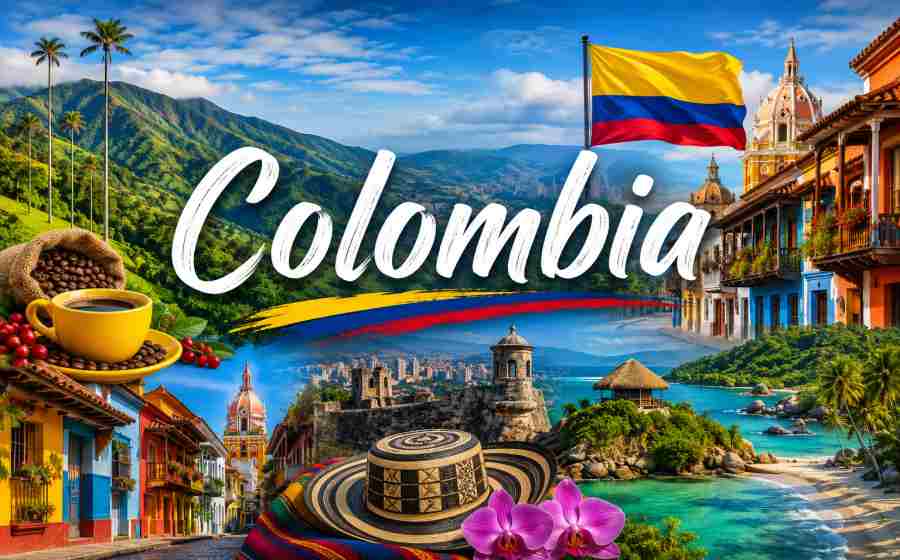
Colombia is one of the most diverse and fascinating countries in South America. Known for its breathtaking landscapes, rich cultural heritage, coffee production, and vibrant festivals, Colombia has transformed itself into a modern and dynamic nation. Located in the northwestern part of South America, it is the only country on the continent with coastlines on both the Caribbean Sea and the Pacific Ocean.
From ancient indigenous civilizations to Spanish colonial rule and modern economic growth, Colombia’s story is filled with resilience, diversity, and cultural richness. Today, it is recognized for its music, literature, sports achievements, and natural beauty.
Table of Contents
Basic Information About Colombia
- Official Name: Republic of Colombia
- Capital: Bogotá
- Continent: South America
- Population: Approximately 53 million
- Official Language: Spanish
- Currency: Colombian Peso (COP)
- Government: Presidential Republic
- National Bird: Andean Condor
- National Flower: Cattleya Orchid
- Time Zone: Colombia Standard Time (UTC -5)
Colombia shares borders with Venezuela, Brazil, Peru, Ecuador, and Panama, making it an important gateway between South and Central America.
History of Colombia
The history of Colombia dates back thousands of years before European arrival. Indigenous groups such as the Muisca, Quimbaya, and Tairona developed advanced societies with unique cultures, trade systems, and artistic traditions.
In 1499, Spanish explorers arrived on Colombia’s Caribbean coast. During the 16th century, Spain established colonies and integrated the region into its empire. Bogotá became an important administrative center under Spanish rule.
The struggle for independence began in the early 19th century. Under the leadership of revolutionary figures such as Simón Bolívar, Colombia gained independence from Spain in 1819. The country became part of Gran Colombia, a large republic that also included present-day Venezuela, Ecuador, and Panama.
Over time, political changes and territorial divisions led to the formation of modern Colombia. Despite facing periods of political conflict, Colombia has made significant progress in democracy, infrastructure, education, and economic development.
Geography and Natural Beauty
Colombia is among the most geographically diverse countries in the world. Its landscape includes mountains, rainforests, deserts, rivers, and coastlines.
Major geographical features include:
- The Andes Mountains
- Amazon Rainforest region
- Caribbean coastline
- Pacific coastline
- Orinoco grasslands
- Magdalena River
The country is considered one of the world’s most biodiverse nations. Thousands of plant and animal species can be found within its borders, many of which are unique to Colombia.
Popular natural attractions include:
- Caño Cristales (“River of Five Colors”)
- Tayrona National Natural Park
- Cocora Valley
- Amazon rainforest regions
- Rosario Islands
Culture of Colombia
Colombian culture reflects a blend of Indigenous, Spanish, African, and immigrant influences. This cultural diversity is visible in the country’s traditions, music, food, clothing, and celebrations.
Family values play a central role in Colombian society. Hospitality, respect, and community connections are highly valued.
Music and Dance
Music is deeply embedded in Colombian identity. Popular traditional styles include:
- Cumbia
- Vallenato
- Salsa
- Champeta
- Bambuco
Colombia has also produced internationally famous artists such as Shakira, whose music has brought global attention to Colombian culture.
Festivals
Colombia hosts numerous colorful festivals throughout the year, including:
- Barranquilla Carnival
- Flower Festival (Feria de las Flores)
- Black and White Carnival
- Vallenato Legend Festival
These celebrations showcase traditional costumes, music, dance, and local customs.
Colombian Cuisine
Colombian food varies significantly by region due to differences in climate and geography.
Popular dishes include:
Arepas
Corn-based cakes served with cheese, meat, eggs, or vegetables.
Bandeja Paisa
A traditional meal featuring rice, beans, beef, pork, plantains, avocado, and egg.
Ajiaco
A hearty chicken and potato soup popular in Bogotá.
Empanadas
Fried pastries filled with meat, potatoes, or cheese.
Coffee
Colombia is famous worldwide for producing high-quality coffee. Colombian coffee is known for its smooth flavor and premium quality, making it one of the country’s most important exports.
Sports in Colombia
Sports are an important part of Colombian life, with football being the most popular sport.
Football (Soccer)
The Colombian national football team has enjoyed success in international competitions and has produced many talented players.
Some famous Colombian footballers include:
- James Rodríguez
- Radamel Falcao
- Carlos Valderrama
Football stadiums across the country attract passionate fans who support their local clubs and national team.
Cycling
Colombia is also a global powerhouse in cycling. The country’s mountainous terrain helps develop elite cyclists capable of competing in major international races.
Notable Colombian cyclists include:
- Egan Bernal
- Nairo Quintana
- Rigoberto Urán
Other Sports
Other popular sports include:
- Athletics
- Boxing
- Tennis
- Basketball
- Weightlifting
Colombian athletes have earned medals and recognition in numerous international competitions.
Economy of Colombia
Colombia has one of the largest economies in Latin America. Key sectors include:
- Agriculture
- Manufacturing
- Mining
- Tourism
- Technology
- Energy
Major exports include:
- Coffee
- Petroleum
- Coal
- Flowers
- Bananas
Tourism has grown rapidly as visitors discover Colombia’s historic cities, beaches, mountains, and cultural attractions.
Interesting Facts About Colombia
- Colombia is the only South American country with coastlines on both the Pacific Ocean and Caribbean Sea.
- It is one of the world’s most biodiverse nations.
- Colombia produces some of the finest coffee globally.
- Bogotá is one of the highest capital cities in the world.
- The country has more bird species than any other nation.
- Colombia is one of the largest flower exporters worldwide.
- The famous Caño Cristales river displays vibrant colors due to unique aquatic plants.
- Emerald mining is a major industry, and Colombia is a leading producer of high-quality emeralds.
- The Barranquilla Carnival is among the largest cultural festivals in Latin America.
- Colombia’s climate varies greatly due to differences in altitude rather than seasons.
Summary
Colombia is a country of extraordinary diversity, rich history, and vibrant culture. From its indigenous heritage and independence movement to its world-famous coffee, colorful festivals, and sporting achievements, Colombia offers a unique blend of tradition and modernity. Its stunning landscapes, welcoming people, and growing economy continue to attract global attention. Whether explored through its history, cuisine, music, or natural wonders, Colombia remains one of South America’s most captivating nations.
Also Check: General Knowledge