Benin – History, Culture, Sports, Tourism, Geography and Key Facts
Discover Benin through its history, culture, geography, sports, economy, traditions and key facts. Learn about this unique and vibrant West African nation.
Benin
Benin is a beautiful country located in West Africa, known for its rich history, vibrant culture, traditional kingdoms, and diverse landscapes. Although it is one of Africa’s smaller nations, Benin has played an important role in African history. It is widely recognized as the birthplace of the Vodun (Voodoo) religion and was once home to the powerful Kingdom of Dahomey.
Today, Benin is a peaceful democratic nation with growing tourism, agriculture, and cultural heritage. From colorful festivals and historic palaces to wildlife reserves and Atlantic beaches, Benin offers a unique blend of history and modern development.
Table of Contents
Location and Geography
Benin lies on the western coast of Africa along the Gulf of Guinea.
- Continent: Africa
- Region: West Africa
- Capital: Porto-Novo
- Largest City: Cotonou
- Official Language: French
- Currency: West African CFA Franc (XOF)
- Area: Approximately 114,763 square kilometers
- Population: Around 14 million (estimated)
Benin shares borders with:
- Togo (west)
- Nigeria (east)
- Burkina Faso (northwest)
- Niger (north)
The southern region has sandy beaches and lagoons, while the northern region features forests, savannas, and national parks rich in wildlife.
History of Benin
Benin has a fascinating historical background dating back several centuries. Before European colonization, the region was dominated by the Kingdom of Dahomey, founded in the 17th century. The kingdom became one of the most powerful states in West Africa because of its strong military and organized administration.
The Dahomey Kingdom became famous for its elite female warriors, often called the Dahomey Amazons, who served as highly trained soldiers. During the 18th and 19th centuries, the kingdom participated in the Atlantic slave trade, supplying enslaved people to European traders along the coast.
In 1894, France conquered the kingdom and established the colony known as French Dahomey. Benin gained independence from France on 1 August 1960. Initially named the Republic of Dahomey, the country experienced several military governments before adopting the name Republic of Benin in 1975.
Since the early 1990s, Benin has become one of Africa’s more stable democracies with regular elections and peaceful transfers of power.
Government and Economy
Benin is a democratic republic with a president serving as both head of state and government.
The country’s economy mainly depends on:
- Agriculture
- Cotton production
- Palm oil
- Cashew nuts
- Trade with neighboring countries
- Small industries
- Tourism
Cotton is often called Benin’s “white gold” because it is the country’s most valuable export. Economic reforms and improvements in infrastructure continue to support national development.
Culture and Traditions
Benin has one of the richest cultural traditions in Africa. More than 40 ethnic groups live peacefully across the country. Some of the largest include:
- Fon
- Yoruba
- Bariba
- Adja
- Dendi
Each community has its own language, customs, music, and festivals. Traditional storytelling, music, dance, and crafts remain important parts of daily life.
Wood carving, bronze artwork, woven fabrics, and colorful masks are famous examples of Beninese craftsmanship. Family values and respect for elders continue to play a central role in society.
Religion
Benin is known worldwide as the birthplace of Vodun (Voodoo). Vodun is an ancient traditional religion that emphasizes harmony between humans, nature, and ancestral spirits.
Alongside traditional beliefs, many citizens also follow:
- Christianity
- Islam
People from different religious backgrounds generally coexist peacefully, making Benin an example of religious tolerance. Every year on 10 January, Benin celebrates National Vodun Day, attracting visitors from around the world.
Food of Benin
Beninese cuisine is simple, nutritious, and full of local flavors.
Popular foods include:
- Maize
- Rice
- Cassava
- Yam
- Beans
- Fish
- Chicken
- Goat meat
Common dishes include:
- Pounded yam
- Grilled fish
- Peanut sauce
- Fried plantains
- Akassa (fermented corn dough)
Fresh tropical fruits such as mangoes, pineapples, bananas, and papayas are widely enjoyed.
Sports in Benin
Football is the most popular sport in Benin. The national football team is known as The Cheetahs.
Other popular sports include:
- Basketball
- Athletics
- Handball
- Martial arts
- Cycling
Young athletes increasingly participate in international competitions, helping raise Benin’s sporting profile. Sports continue to promote unity, youth development, and healthy lifestyles across the country.
Tourism in Benin
Benin offers numerous attractions for travelers interested in history, wildlife, and culture. Popular tourist destinations include:
- Royal Palaces of Abomey
- Ouidah
- Pendjari National Park
- Ganvié (the famous lake village)
- Atlantic Ocean beaches
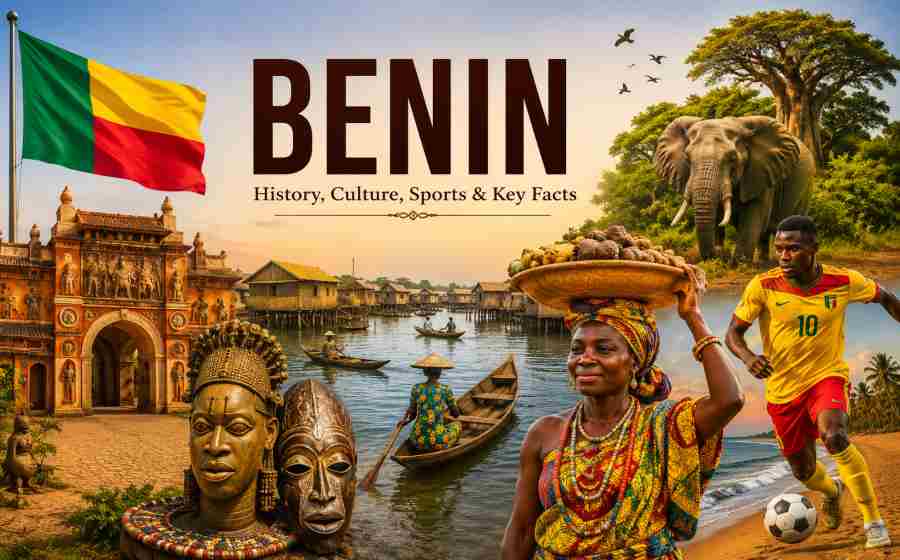
Pendjari National Park is one of West Africa’s best wildlife reserves, home to elephants, lions, leopards, buffaloes, and many bird species. Ganvié, often called the “Venice of Africa,” is a village built entirely on stilts over Lake Nokoué.
Education
Education is steadily improving in Benin. French is the primary language used in schools, while many local languages are spoken at home.
The government continues to invest in:
- Primary education
- Secondary schools
- Universities
- Vocational training
International organizations also support literacy and educational development throughout the country.
Climate
Benin has a tropical climate. The south experiences:
- High humidity
- Two rainy seasons
- Warm temperatures throughout the year
The northern region is generally drier with one rainy season and a longer dry period. Agriculture depends heavily on seasonal rainfall.
Wildlife
Benin is home to a wide variety of wildlife. Animals found in the country include:
- African elephants
- Lions
- Leopards
- Hippopotamuses
- Crocodiles
- Antelopes
- Monkeys
Its national parks also protect hundreds of bird species, making Benin a popular destination for wildlife enthusiasts.
Interesting Facts About Benin
- Benin was formerly known as Dahomey.
- Porto-Novo is the official capital, while Cotonou is the economic center.
- Benin is considered the birthplace of Vodun (Voodoo).
- The Kingdom of Dahomey was famous for its female warrior army.
- Cotton is the country’s leading export.
- French is the official language.
- Ganvié is one of Africa’s largest stilt villages.
- Benin celebrates National Vodun Day every year on 10 January.
- The country enjoys a stable democratic political system.
- Benin is known for its hospitality, colorful festivals, and traditional arts.
Summary
Benin is a nation where ancient traditions and modern progress exist side by side. From the legendary Kingdom of Dahomey and the origins of Vodun to its vibrant festivals, wildlife parks, and growing economy, the country offers valuable lessons in history, culture, and resilience. Despite its modest size, Benin holds a significant place in West African heritage and continues to preserve its unique identity while moving toward a brighter future. Learning about Benin provides a deeper understanding of Africa’s rich cultural diversity and historical importance.
Also Check: General Knowledge