
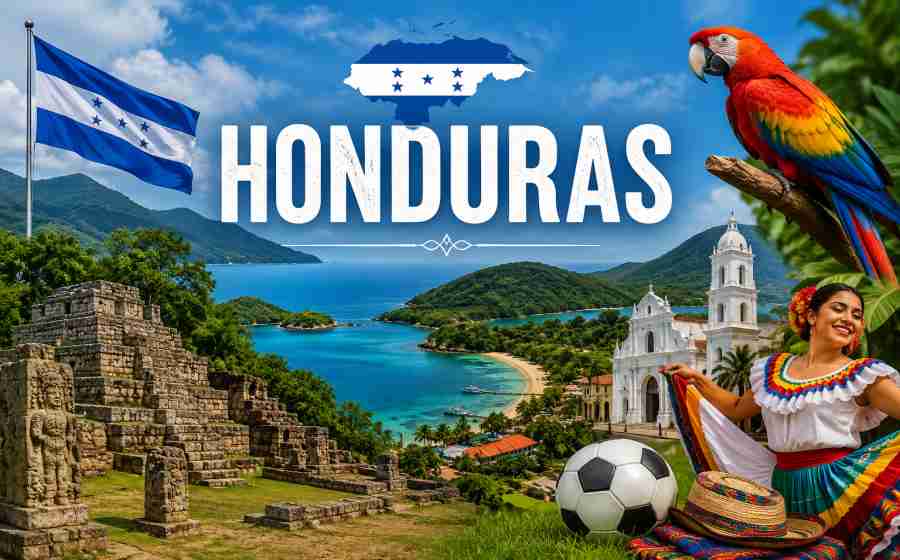
Honduras – History, Culture, Wildlife, Natural Beauty, Sports and Fascinating Key Facts
Discover Honduras through its rich history, vibrant culture, popular sports, geography, economy and fascinating facts in this informative overview.
Honduras
Honduras is a beautiful country located in Central America, known for its rich history, colorful traditions, tropical landscapes, and ancient civilizations. It is bordered by Guatemala, El Salvador, and Nicaragua, while its northern coast touches the Caribbean Sea and its southern coast meets the Pacific Ocean through the Gulf of Fonseca. Although Honduras is one of the smaller countries in the Americas, it is blessed with lush rainforests, white-sand beaches, diverse wildlife, and a fascinating cultural heritage.
The country is famous for the ancient Mayan city of Copán, vibrant festivals, delicious cuisine, and growing passion for football (soccer). Honduras also plays an important role in preserving biodiversity due to its extensive national parks and protected forests.
Table of Contents
History of Honduras
The history of Honduras dates back thousands of years. Long before European explorers arrived, the region was home to several indigenous groups, including the Maya civilization, which flourished in the western part of the country.
One of the greatest archaeological treasures of Honduras is Copán, a major Mayan city known for its magnificent temples, sculptures, and hieroglyphic inscriptions. Copán reached its peak between the 5th and 9th centuries before gradually declining.
In 1502, Christopher Columbus reached the Honduran coast during his fourth voyage to the Americas. Soon after, Spanish explorers colonized the region, making it part of the Spanish Empire for nearly three centuries.
Honduras gained independence from Spain on 15 September 1821, along with several other Central American nations. After briefly joining the Mexican Empire, it became part of the Federal Republic of Central America before becoming an independent republic in 1838.
Throughout the 19th and 20th centuries, Honduras experienced political instability, economic challenges, and foreign influence, especially from banana-exporting companies. Today, the country continues to strengthen its democratic institutions while promoting tourism and sustainable development.
Geography and Climate
Honduras covers an area of approximately 112,492 square kilometres, making it the second-largest country in Central America.
The country’s geography includes:
- Mountain ranges
- Tropical rainforests
- Fertile valleys
- Caribbean islands
- Pacific coastline
The climate is generally tropical, with warm temperatures throughout the year. Coastal areas remain hot and humid, while mountainous regions enjoy cooler weather. Honduras is vulnerable to hurricanes and tropical storms, particularly during the Atlantic hurricane season.
People and Culture
Honduras has a population of around 10 million people. The majority are Mestizos, while indigenous communities such as the Lenca, Miskito, Garifuna, Pech, Tolupan, and Chortí preserve their unique traditions and languages.
Spanish is the official language, although several indigenous languages and Garifuna are also spoken. Family values, hospitality, music, and community celebrations play a central role in Honduran society. Traditional clothing is often worn during festivals and cultural events, reflecting the country’s rich heritage.
Festivals and Traditions
Honduras celebrates many colorful festivals throughout the year. Some popular celebrations include:
- Independence Day (15 September)
- Holy Week (Semana Santa)
- Carnival of La Ceiba
- Garifuna Settlement Day
- Christmas and New Year celebrations
These festivals feature parades, traditional dances, live music, fireworks, and delicious local foods.
Honduran Cuisine
Honduran food combines indigenous, Spanish, African, and Caribbean influences. Popular dishes include:
- Baleadas (flour tortillas filled with beans, cheese, and cream)
- Tamales
- Sopa de Caracol (conch soup)
- Fried fish
- Rice and beans
- Grilled meats
- Plantains
- Fresh tropical fruits
Coffee is one of Honduras’ most famous agricultural products and is exported worldwide.
Economy of Honduras
The Honduran economy depends on agriculture, manufacturing, tourism, fishing, and services. Major agricultural products include:
- Coffee
- Bananas
- Palm oil
- Sugarcane
- Cocoa
- Melons
The country is one of the world’s leading coffee exporters. Tourism is also becoming increasingly important because of its beaches, coral reefs, rainforests, and archaeological sites.
Despite economic progress, Honduras continues to address challenges such as poverty, unemployment, and infrastructure development.
Sports in Honduras
Football (soccer) is by far the most popular sport in Honduras. The national football team has represented the country in several FIFA World Cup tournaments and enjoys passionate support from fans.
Other popular sports include:
- Baseball
- Basketball
- Athletics
- Boxing
- Volleyball
- Swimming
Young athletes continue to gain international recognition in regional competitions.
Wildlife and Natural Beauty
Honduras is one of the most biologically diverse countries in Central America. Its forests and national parks are home to:
- Jaguars
- Tapirs
- Howler monkeys
- Scarlet macaws
- Toucans
- Sea turtles
- Crocodiles
The Mesoamerican Barrier Reef, located along the Caribbean coast, is the second-largest coral reef system in the world and attracts divers from across the globe.
Protected areas such as Pico Bonito National Park and Río Plátano Biosphere Reserve help conserve rare species and ecosystems.
Education and Tourism
Education continues to improve through government initiatives and international support. Tourism has become an important contributor to the economy. Visitors enjoy:
- Ancient Mayan ruins
- Caribbean islands
- Coral reefs
- Rainforests
- National parks
- Adventure sports
- Cultural festivals
The Bay Islands, especially Roatán, are famous for scuba diving and snorkeling.
Interesting Facts About Honduras
- Honduras is located in Central America.
- The capital city is Tegucigalpa.
- Spanish is the official language.
- The national currency is the Honduran Lempira.
- Independence Day is celebrated on 15 September.
- Copán is one of the most famous Mayan archaeological sites.
- Coffee is one of the country’s leading exports.
- Football is the most popular sport.
- Honduras has coastlines on both the Caribbean Sea and the Pacific Ocean.
- The country is rich in biodiversity and protected natural reserves.
Summary
Honduras is a nation filled with history, cultural diversity, breathtaking landscapes, and remarkable natural resources. From the magnificent Mayan ruins of Copán to the stunning coral reefs of the Caribbean, the country offers countless attractions for history lovers, nature enthusiasts, and adventure seekers alike. Its traditions, warm hospitality, vibrant festivals, and growing tourism industry make Honduras an important and fascinating country in Central America. Learning about Honduras helps us appreciate its unique heritage, resilient people, and valuable contribution to the world’s cultural and natural diversity.
Also Check: General Knowledge