Environmental Challenges For Developing Countries – Causes, Impacts and Sustainable Solutions
Environmental Challenges For Developing Countries explores key environmental issues, their impacts and sustainable solutions for a greener future.
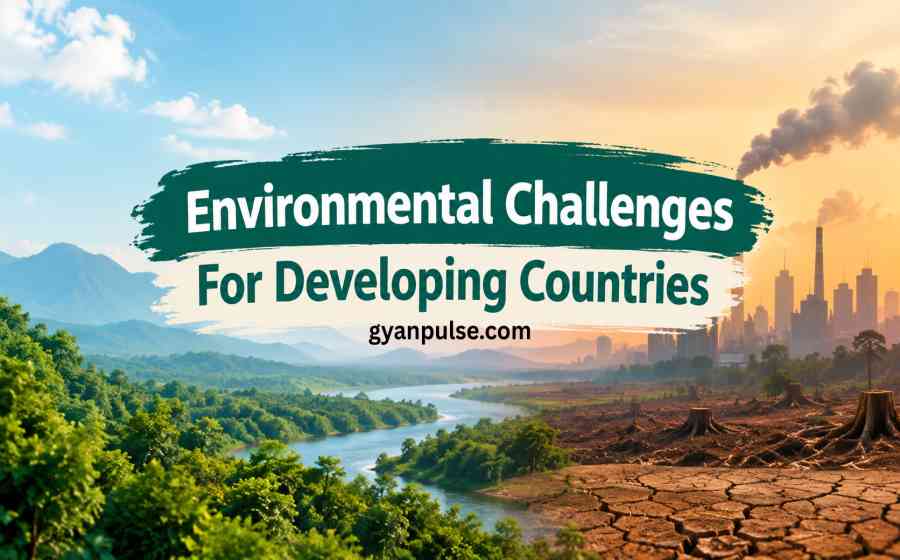
Environmental Challenges For Developing Countries
Developing countries around the world are experiencing rapid economic growth, urbanization, and population expansion. While these changes bring opportunities for development and improved living standards, they also create significant environmental challenges. Limited resources, weak regulatory frameworks, and high dependence on natural ecosystems make these nations particularly vulnerable to environmental degradation. Understanding these challenges is crucial for building sustainable and resilient societies.
Table of Contents
1. Rapid Population Growth and Urbanization
One of the primary environmental challenges in developing countries is rapid population growth. As populations increase, the demand for food, water, housing, and energy rises significantly. This puts immense pressure on natural resources.
Urbanization compounds the problem. Cities in developing nations often expand without proper planning, leading to overcrowded slums, inadequate sanitation, and poor waste management systems. As a result, air and water pollution levels increase, and natural habitats are destroyed to make room for infrastructure.
2. Deforestation and Loss of Biodiversity
Forests play a critical role in maintaining ecological balance, yet many developing countries face high rates of deforestation. Trees are cut down for agriculture, fuelwood, and urban expansion. In many rural areas, people rely heavily on wood for cooking and heating, accelerating forest depletion.
This deforestation leads to the loss of biodiversity, as countless plant and animal species lose their natural habitats. The decline in biodiversity disrupts ecosystems and reduces their ability to provide essential services such as pollination, soil fertility, and climate regulation.
3. Air and Water Pollution
Industrialization, though essential for economic growth, often occurs without strict environmental regulations in developing countries. Factories release harmful gases and pollutants into the air, contributing to poor air quality and respiratory diseases.
Water pollution is equally concerning. Untreated industrial waste, agricultural runoff, and sewage are frequently discharged into rivers and lakes. This contaminates drinking water sources and poses serious health risks, including waterborne diseases such as cholera and dysentery.
4. Climate Change Vulnerability
Developing countries are among the most vulnerable to the impacts of climate change, despite contributing less to global greenhouse gas emissions. Rising temperatures, unpredictable rainfall patterns, and extreme weather events such as floods, droughts, and cyclones disproportionately affect these regions.
Agriculture, which is a major source of livelihood in many developing nations, is particularly sensitive to climate change. Crop failures, reduced yields, and water scarcity threaten food security and increase poverty levels.
5. Poor Waste Management Systems
Waste management remains a major challenge in developing countries. Rapid urban growth leads to an increase in solid waste, including plastic, electronic waste, and hazardous materials. However, many cities lack efficient systems for waste collection, recycling, and disposal.
Improper waste disposal results in land pollution, clogged drainage systems, and increased risk of flooding. Open dumping and burning of waste release toxic chemicals into the environment, further degrading air quality.
6. Water Scarcity
Access to clean and safe water is a critical issue in many developing countries. Overuse of water resources, pollution, and climate change have led to severe water shortages in several regions.
Agriculture consumes a large portion of available water, often through inefficient irrigation methods. Additionally, lack of infrastructure prevents proper distribution and storage of water, leaving many communities without reliable access.
7. Soil Degradation and Desertification
Unsustainable agricultural practices, such as overgrazing, excessive use of chemical fertilizers, and deforestation, lead to soil degradation. Fertile land becomes less productive, forcing farmers to clear more land for cultivation.
In extreme cases, this results in desertification, where once-productive land turns into barren desert. This not only affects food production but also leads to displacement of communities and increased poverty.
8. Limited Environmental Awareness and Policy Enforcement
Another significant challenge is the lack of environmental awareness among the population. In many developing countries, people prioritize immediate economic needs over environmental protection due to poverty and lack of education.
Moreover, even when environmental laws exist, weak enforcement and corruption hinder their effectiveness. Industries and individuals may ignore regulations without facing consequences, leading to continued environmental damage.
Sustainable Solutions and the Way Forward
Addressing environmental challenges in developing countries requires a multi-faceted approach:
- Strengthening Environmental Policies: Governments must implement and enforce stricter environmental regulations to control pollution and resource exploitation.
- Promoting Renewable Energy: Transitioning to solar, wind, and other renewable energy sources can reduce dependence on fossil fuels.
- Improving Waste Management: Investing in recycling systems and sustainable waste disposal methods can significantly reduce pollution.
- Raising Awareness: Education and community engagement can encourage environmentally responsible behavior.
- Sustainable Agriculture: Promoting eco-friendly farming techniques can prevent soil degradation and conserve water.
- International Support: Developed countries can assist through funding, technology transfer, and climate adaptation programs.
Why Sustainable Development Matters
Sustainable development is essential for developing countries because environmental protection and economic progress must move forward together. By using natural resources responsibly, improving infrastructure, supporting clean technologies, and involving local communities, these nations can reduce environmental damage while creating better living conditions. Long-term planning can also strengthen resilience against climate change, protect biodiversity, and ensure that vital resources remain available for future generations.
Summary
Environmental challenges faced by developing countries are complex and deeply interconnected with economic and social factors. While these nations strive for growth and development, it is essential to adopt sustainable practices that protect natural resources for future generations. By combining policy reforms, technological innovation, and public awareness, developing countries can overcome these challenges and move toward a greener and more sustainable future.
Also Check: Environment