South Africa – History, Culture, Sports & Key Facts
Discover an in-depth about South Africa covering its area, population, history, culture, sports, geography, and neighbouring countries, perfect for general knowledge learners.
South Africa Introduction
South Africa, located at the southern tip of the African continent, is one of the world’s most diverse countries-geographically, culturally, and historically. Known as the “Rainbow Nation,” it beautifully blends indigenous traditions, colonial influences, and modern aspirations. From majestic wildlife and iconic mountains to a complex political past and vibrant multicultural society, SouthAfrica remains one of the most significant global destinations for study, tourism, and history.
Table of Contents
Geographical Overview
Area of South Africa
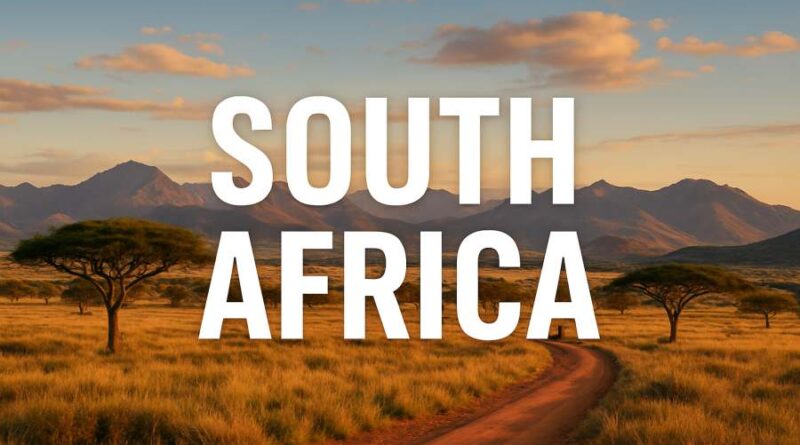
South Africa covers a total area of 1,221,037 square kilometres, making it one of the largest countries in Africa. Its vast geography includes dramatic coastlines, deserts, mountain ranges, fertile plains, and forests.
Location & Landscape
- Situated at the southernmost point of Africa
- Has 2,800+ km long coastline along the Atlantic and Indian Oceans
- Features the world-famous Drakensberg Mountains
- The Kalahari Desert spreads across the northern region
- Known for rich biodiversity and national parks like Kruger National Park
Population of South Africa
SouthAfrica has a population of around 60 million people, representing multiple ethnic groups, languages, and cultures. The society is a blend of:
- Black Africans
- Coloured communities
- Whites
- Indians and Asians
Official Languages
SouthAfrica has 11 official languages, the most in any country after India. These include:
- Zulu
- Xhosa
- Afrikaans
- English
- Tswana
- Sotho
- Tsonga
- Venda
- Ndebele
- Northern Sotho
- Swati
This linguistic diversity strengthens its identity as the “Rainbow Nation.”
Major Cities
- Pretoria – Administrative capital
- Cape Town – Legislative capital, famous for Table Mountain
- Bloemfontein – Judicial capital
- Johannesburg – Largest city and economic hub
- Durban – Known for beaches and port activities
History of South Africa
SouthAfrica has a long, complex, and influential history.
Ancient and Pre-colonial Period
Before Europeans arrived, the region was inhabited by:
- Khoisan hunter-gatherers
- Bantu-speaking tribes, including Zulu and Xhosa groups
These communities contributed deeply to SouthAfrica’s cultural development.
Colonial Era
- 1652: Dutch established the first European settlement at Cape Town.
- 1806: British took control, leading to Anglo-Dutch rivalry.
- Conflicts such as the Boer Wars (1880–1902) shaped modern boundaries.
Apartheid Era (1948–1994)
SouthAfrica’s dark chapter began when the Apartheid system enforced:
- racial segregation
- discrimination
- restrictions on movement and rights
End of Apartheid
- Nelson Mandela, a global icon of peace and justice, played a key role.
- 1994: South Africa held its first democratic elections.
- Mandela became the first black President of South Africa.
This transition made SouthAfrica a symbol of freedom and unity worldwide.
Culture of SouthAfrica
SouthAfrican culture is a beautiful mixture of ethnic traditions, languages, and lifestyles.
Music & Dance
SouthAfrica is known for:
- Kwaito
- Zulu dance forms
- Gospel music
- African drumming rhythms
Artists like Hugh Masekela and Miriam Makeba are globally respected.
Cuisine
Popular dishes include:
- Biltong (dried meat)
- Bobotie (Cape Malay dish)
- Pap (cornmeal)
- Bunny chow
Art & Craft
Tribal beadwork, wood carvings, and traditional paintings reflect cultural beauty.
Festivals
- Cape Town International Jazz Festival
- National Arts Festival
- Heritage Day
Sports in South Africa
SouthAfrica is known around the world for being excellent in many major sports.
Cricket
The SouthAfrican national cricket team, known as the Proteas, is respected globally. Legendary players include:
- Jacques Kallis
- Hashim Amla
- Dale Steyn
- AB de Villiers
Rugby
Rugby is like a religion in the country.
The Springboks, SouthAfrica’s national rugby team, have won multiple Rugby World Cup titles, making them one of the strongest rugby teams ever.
Football
SouthAfrica hosted the 2010 FIFA World Cup, the first World Cup held in Africa.
Neighbouring Countries
SouthAfrica shares borders with:
- Namibia
- Botswana
- Zimbabwe
- Mozambique
- Eswatini (Swaziland)
Additionally, it surrounds the Kingdom of Lesotho, making it an enclave nation.
Also Read: New Zealand – Geography, History, Culture & Global Identity
Economy of South Africa
SouthAfrica has one of Africa’s most developed economies.
Major contributors include:
- Mining (gold, diamonds, platinum)
- Tourism
- Agriculture
- Manufacturing
- Finance and services
It’s the world’s leading producer of platinum and one of the top producers of gold.
Wildlife & National Parks
SouthAfrica is home to the “Big Five”:
- Lion
- Elephant
- Leopard
- Rhinoceros
- Buffalo
Famous reserves:
- Kruger National Park
- Pilanesberg National Park
- Hluhluwe–Imfolozi Park
These make it one of the best safari destinations in the world.
Interesting Facts about South Africa
- It has three capital cities, a unique feature globally.
- The Vredefort Dome, the world’s largest meteor impact site, is in SouthAfrica.
- Table Mountain is known for being extremely ancient, older than most mountains on the planet.
- South Africa has the world’s deepest gold mines.
Summary
SouthAfrica is a country of contrasts, ancient and modern, mountainous and coastal, diverse and united. With its rich history, multicultural society, booming sports culture, and breathtaking landscapes, it stands as one of the most important and fascinating nations in the world. Whether you are preparing for exams or improving general knowledge, SouthAfrica offers endless insights and learning opportunities.
Also Check: General Knowledge