South Sudan – History, Culture, Sports, Geography and Important Facts About the World’s Youngest Nation
Explore South Sudan, the world’s youngest nation, known for its rich culture, diverse tribes, unique wildlife, history, sports and key facts.
South Sudan
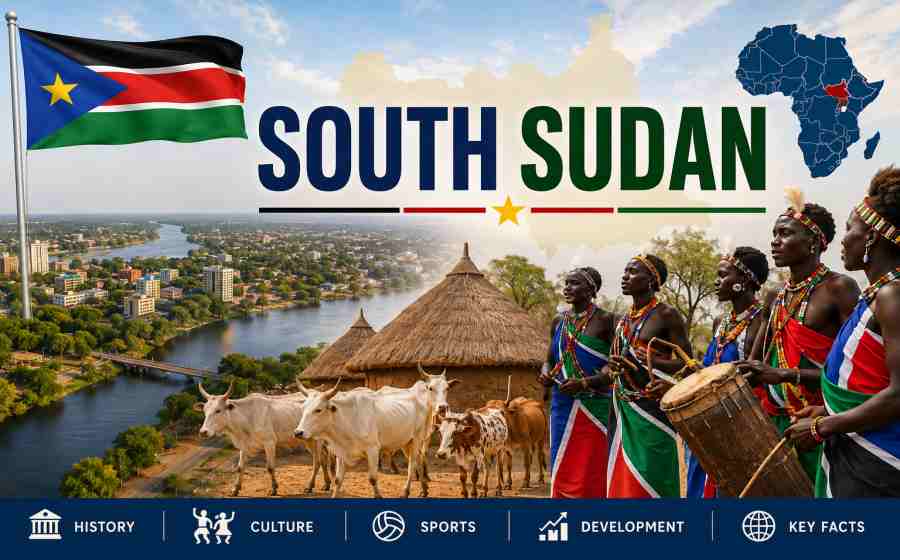
South Sudan is the youngest independent country in the world. Located in East-Central Africa, it gained independence from Sudan on 9 July 2011 after decades of conflict and struggle. Despite facing political and economic challenges, South Sudan is known for its rich cultural diversity, natural resources, and resilient people.
The country is home to numerous ethnic groups, unique traditions, vast grasslands, and abundant wildlife. Its strategic location and natural wealth make it an important nation in Africa. Understanding South Sudan helps us appreciate its journey, achievements, and future potential.
Table of Contents
History of South Sudan
The history of South Sudan is closely linked with that of Sudan. During the colonial period, the region was administered by the British and Egyptians as part of Anglo-Egyptian Sudan. After Sudan gained independence in 1956, tensions arose between the northern and southern regions due to differences in religion, culture, and political representation. These tensions led to two major civil wars.
The First Sudanese Civil War lasted from 1955 to 1972 and ended with a peace agreement that granted limited autonomy to the south. However, conflict resumed in 1983, leading to the Second Sudanese Civil War, which lasted until 2005.
The Comprehensive Peace Agreement signed in 2005 paved the way for a referendum on independence. In January 2011, the people of South Sudan voted overwhelmingly in favor of independence. On 9 July 2011, South Sudan officially became an independent nation and joined the United Nations shortly afterward.
Geography and Climate
South Sudan covers an area of approximately 644,000 square kilometers, making it one of Africa’s larger countries.
Key Geographical Features
- Capital City: Juba
- Largest City: Juba
- Continent: Africa
- Major River: White Nile
- Neighboring Countries: Sudan, Ethiopia, Kenya, Uganda, Democratic Republic of the Congo and Central African Republic
The White Nile River flows through the country and plays a vital role in transportation, agriculture, and daily life.
South Sudan experiences a tropical climate with distinct wet and dry seasons. The rainy season usually lasts from April to October, while the dry season occurs from November to March.
People and Culture
South Sudan is one of Africa’s most culturally diverse nations. More than 60 ethnic groups live within its borders.
Some of the major ethnic communities include:
- Dinka
- Nuer
- Shilluk
- Bari
- Zande
- Murle
Each community has its own language, traditions, music, dances, and cultural practices.
Languages
English is the official language of South Sudan. However, many indigenous languages are widely spoken throughout the country, including Dinka, Nuer, Bari, and Zande.
Traditional Lifestyle
Many communities traditionally rely on cattle herding. Cattle are considered symbols of wealth, social status, and cultural identity. Traditional ceremonies often include music, dancing, and colorful attire.
Festivals and Traditions
South Sudanese culture places great importance on community celebrations and family gatherings.
Traditional festivals feature:
- Folk music
- Storytelling
- Cultural dances
- Traditional foods
- Community ceremonies
Music is often accompanied by drums and local instruments. Oral storytelling remains an important method of preserving history and passing knowledge to younger generations.
Economy of South Sudan
The economy of South Sudan depends heavily on oil production. Oil exports contribute a large portion of government revenue.
Major economic sectors include:
1. Oil Industry
South Sudan possesses significant petroleum reserves, making oil its most important export.
2. Agriculture
Agriculture employs a large percentage of the population. Farmers grow crops such as:
- Sorghum
- Maize
- Millet
- Groundnuts
- Cassava
3. Livestock
Cattle, goats, and sheep play a crucial role in rural livelihoods and cultural traditions.
Despite its natural resources, the country faces challenges related to infrastructure, transportation, and economic development.
Sports in South Sudan
Sports are becoming increasingly popular across South Sudan, especially among young people.
Basketball
Basketball is the country’s most successful international sport. South Sudan has gained global recognition through its national basketball team.
Many South Sudanese athletes have achieved success internationally, including players who have competed in major professional leagues and international tournaments.
Football
Football (soccer) is the most widely followed sport in South Sudan. Local clubs and national competitions attract enthusiastic supporters.
Athletics
Running and track events are also growing in popularity, with young athletes representing the country in regional competitions.
Wildlife and Natural Attractions
South Sudan possesses remarkable biodiversity and some of Africa’s most significant wildlife migration routes.
Notable wildlife includes:
- Elephants
- Giraffes
- Lions
- Antelopes
- Buffaloes
- Hippopotamuses
The country’s wetlands, grasslands, and forests provide habitats for numerous animal species.
The Sudd Wetland
The Sudd is one of the world’s largest wetlands and an important ecological region. It supports wildlife, fishing communities, and unique plant species.
Education and Development
Since independence, South Sudan has worked to improve access to education.
Key priorities include:
- Expanding schools
- Increasing literacy rates
- Improving teacher training
- Encouraging girls’ education
International organizations and local authorities continue to support educational development throughout the country.
Government and Political System
South Sudan operates as a republic with a president serving as the head of state and government. The country has made efforts to strengthen democratic institutions, improve governance, and promote national unity. Peacebuilding and development remain important national priorities.
Interesting Facts About South Sudan
- South Sudan became independent on 9 July 2011.
- It is the world’s youngest sovereign nation.
- Juba is both the capital and largest city.
- The White Nile River flows through the country.
- More than 60 ethnic groups live in South Sudan.
- English is the official language.
- The Sudd is among the largest wetlands on Earth.
- Oil is the country’s main export.
- Cattle hold great cultural significance.
- Basketball has brought South Sudan international sporting recognition.
Summary
South Sudan is a nation with a remarkable story of resilience, independence, and cultural richness. As the world’s youngest country, it continues to build its identity while preserving its diverse traditions and heritage. From the vast wetlands of the Sudd and the flowing White Nile to its vibrant cultures and growing sporting achievements, South Sudan offers a fascinating example of a nation striving toward progress and stability. Understanding South Sudan provides valuable insight into Africa’s diversity, history, and future development.
Also Check: General Knowledge