
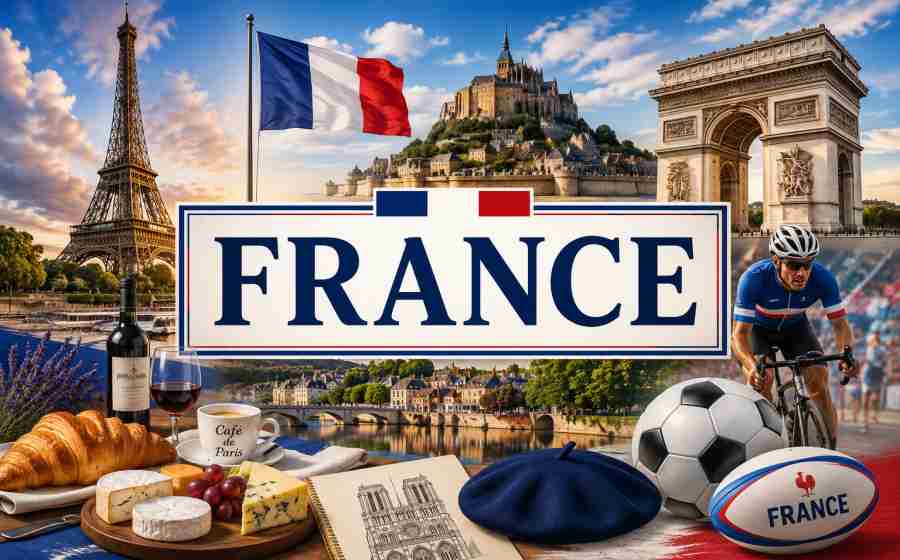
France – History, Culture, Sports, Tourist Places and Fascinating Facts
Explore France’s rich history, unique culture, famous sports, iconic landmarks and fascinating facts about one of the world’s most influential nations.
France
France is one of the most influential countries in the world, known for its rich history, remarkable culture, artistic heritage, world-famous cuisine, and significant contributions to science, literature, and politics. Located in Western Europe, France has played a major role in shaping global civilization for centuries. From the majestic Eiffel Tower to the beautiful French countryside, the country attracts millions of visitors every year.
Today, France is recognized as a leading nation in Europe and a prominent member of international organizations. Its blend of tradition and modernity makes it one of the most fascinating countries in the world.
Table of Contents
Location and Geography
France is situated in Western Europe and shares borders with Belgium, Luxembourg, Germany, Switzerland, Italy, Monaco, Spain, and Andorra. It also has coastlines along the Atlantic Ocean, the English Channel, and the Mediterranean Sea.
The country covers an area of approximately 551,695 square kilometers, making it one of the largest countries in Europe. France features diverse landscapes, including mountains, rivers, forests, plains, and coastal regions. The Alps in southeastern France contain Mont Blanc, the highest peak in Western Europe.
The capital city is Paris, which is often called the “City of Light” and is famous for its art, architecture, and cultural significance.
History of France
The history of France dates back thousands of years. Ancient Celtic tribes known as the Gauls inhabited the region before it became part of the Roman Empire under Julius Caesar in the 1st century BCE. During the Middle Ages, France emerged as a powerful kingdom. It played a central role in European politics and warfare, including the Hundred Years’ War between France and England.
One of the most significant events in French history was the French Revolution of 1789. This revolution ended the monarchy’s absolute power and introduced ideas of liberty, equality, and fraternity. These principles continue to influence democratic movements worldwide.
In the 19th century, France experienced the rise of Napoleon Bonaparte, who expanded French influence across Europe. The country later became a republic and participated in both World Wars during the 20th century. Today, France is a stable democratic republic and one of the founding members of the European Union.
Culture and Traditions
French culture is admired globally for its elegance, creativity, and intellectual achievements. France has produced some of the world’s greatest artists, writers, philosophers, and musicians.
Family gatherings, festivals, and social interactions are important aspects of French life. Respect for art, education, and cultural heritage is deeply rooted in society.
French people celebrate various national and religious festivals throughout the year. Bastille Day, celebrated on July 14, commemorates the French Revolution and is one of the country’s most important national holidays.
Traditional French customs emphasize politeness, appreciation for fine food, and maintaining a balanced lifestyle.
Language and Religion
The official language of France is French, one of the most widely spoken languages in the world. French is also an official language in several international organizations.
France is a secular country, meaning the government remains separate from religious institutions. Christianity has historically been the dominant religion, but modern France is home to people of many faiths and beliefs.
French Cuisine
French cuisine is considered among the finest in the world. It is famous for its quality ingredients, sophisticated cooking techniques, and regional specialties.
Popular French foods include:
- Croissants
- Baguettes
- Cheese varieties
- Crêpes
- Ratatouille
- Quiche
- Macarons
France is also renowned for its wine industry, producing some of the world’s most celebrated wines. French gastronomy has significantly influenced global culinary traditions.
Arts and Literature
France has been a center of artistic and intellectual achievement for centuries. Many famous painters, writers, and philosophers came from France.
Notable figures include:
- Victor Hugo
- Voltaire
- Jean-Jacques Rousseau
- Claude Monet
- Edgar Degas
French museums, especially the Louvre in Paris, house some of the world’s most valuable artworks. France’s contributions to literature, philosophy, and visual arts continue to inspire people globally.
Sports in France
Sports play an important role in French society. Football (soccer) is the most popular sport in the country. The French national football team has achieved international success, winning major tournaments and producing world-class players. Rugby is also highly popular, particularly in southern France.
Other popular sports include:
- Tennis
- Cycling
- Basketball
- Handball
- Athletics
- Swimming
France hosts several prestigious sporting events. The Tour de France is the world’s most famous cycling race, attracting competitors and spectators from across the globe. The French Open, one of tennis’s four Grand Slam tournaments, is held annually in Paris.
Economy of France
France has one of the largest economies in the world. It is a leader in industries such as:
- Aerospace
- Tourism
- Fashion
- Agriculture
- Automotive manufacturing
- Luxury goods
Tourism is a major contributor to the French economy. Millions of visitors travel to France each year to experience its landmarks, museums, cuisine, and natural beauty. French companies are recognized globally for innovation, quality, and excellence in various sectors.
Education and Science
France has a strong educational system and is home to many prestigious universities and research institutions. The country has made significant contributions to science, medicine, engineering, and mathematics.
French scientists have received numerous international awards for their discoveries and innovations. Advances in transportation, medicine, and technology continue to strengthen France’s global reputation.
Famous Landmarks
France is home to many iconic landmarks that attract visitors from around the world.
Some of the most famous include:
- Eiffel Tower
- Louvre Museum
- Palace of Versailles
- Mont Saint-Michel
- Arc de Triomphe
These landmarks showcase France’s architectural brilliance and historical importance.
Interesting Facts About France
- France is the most visited country in the world.
- The Eiffel Tower was completed in 1889.
- French is spoken on every inhabited continent.
- France has over 40,000 castles and historic monuments.
- The country is famous for its fashion industry.
- France was one of the founding members of the European Union.
- The Tour de France began in 1903.
- Paris is known as one of the world’s leading cultural capitals.
- France produces hundreds of varieties of cheese.
- The French Revolution greatly influenced modern democracy.
Summary
France is a nation with a remarkable blend of history, culture, innovation, and natural beauty. From its revolutionary past and artistic achievements to its world-famous cuisine and sporting traditions, France continues to leave a lasting impact on the world. Its commitment to culture, education, and progress makes it one of the most admired and influential countries on the global stage. Whether exploring its historic landmarks, enjoying its culinary delights, or learning about its rich heritage, France offers endless opportunities for discovery and inspiration.
Also Check: General Knowledge