
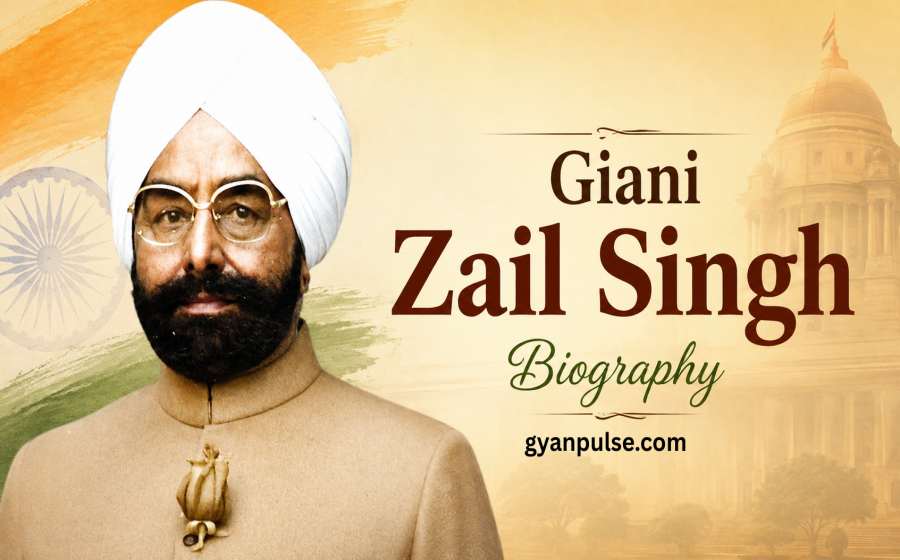
Giani Zail Singh Biography – From Freedom Fighter to India’s Seventh President
Giani Zail Singh Biography covers his early life, freedom struggle, political journey, presidency, achievements and lasting legacy in Indian history.
Giani Zail Singh Biography
Giani Zail Singh was one of India’s most prominent political leaders and the seventh President of India, remembered for his humble beginnings, deep commitment to public service, and lifelong dedication to the nation. Rising from a modest rural background, he played a significant role in India’s freedom struggle, post-independence politics, and the democratic framework of the country. His life journey is a powerful example of perseverance, leadership, and patriotism.
Table of Contents
Early Life and Background
Zail Singh was born on 5 May 1916 in Sandhwan village, located in present-day Punjab. His original name was Jarnail Singh, but he later adopted the name “Zail Singh” due to his role as a Zaildar (a revenue officer) during British rule. He belonged to a simple agrarian family and experienced poverty from an early age, which shaped his understanding of the struggles faced by common people.
Despite limited formal education, Zail Singh developed a strong interest in social reform and politics. Influenced by nationalist leaders and the growing freedom movement, he became actively involved in India’s struggle for independence while still young.
Role in India’s Freedom Struggle
Zail Singh joined the freedom movement during the 1930s and participated in various anti-British activities. He was associated with the Indian National Congress and remained committed to Gandhian principles of non-violence and mass participation. Due to his political activism, he was imprisoned several times by the British authorities.
His experiences in jail strengthened his resolve to fight for an independent and socially just India. These years laid the foundation for his later political career and established him as a leader with grassroots support.
Political Career After Independence
After India gained independence in 1947, Zail Singh emerged as a key political figure in Punjab. He held several important positions in the state government and worked extensively for rural development, land reforms, and social welfare.
In 1972, he became the Chief Minister of Punjab. His tenure focused on improving agriculture, strengthening infrastructure, and promoting social harmony in a politically sensitive state. Zail Singh was known for his administrative skills and close connection with the masses.
Union Minister and National Leadership
Zail Singh’s influence soon extended to national politics. In 1980, he was appointed the Union Home Minister of India under Prime Minister Indira Gandhi. As Home Minister, he handled complex internal security issues and played a key role in shaping domestic policies.
His loyalty to the Congress leadership and his reputation as a mass leader made him a prominent figure at the national level. He was widely regarded as a politician who understood both rural India and the functioning of the central government.
President of India
In 1982, Zail Singh was elected as the President of India, becoming the first Sikh to hold the highest constitutional office of the country. His presidency marked an important moment in India’s inclusive democratic history.
His term as President coincided with challenging political events, including internal conflicts and changes in leadership. Zail Singh believed strongly in constitutional values and emphasized unity, secularism, and democratic integrity. Despite political differences, he upheld the dignity of the presidential office and remained committed to the Constitution of India.
Later Years and Death
After completing his presidential term in 1987, Zail Singh gradually withdrew from active politics. He continued to be respected as a senior statesman and remained an influential voice in public life.
Zail Singh passed away on 25 December 1994 in New Delhi. His death marked the end of an era, but his contributions to Indian politics and democracy continue to be remembered.
5 Life Inspirations from Zail Singh
- Humble Beginnings Can Lead to Great Heights
Zail Singh’s rise from a poor village background to the Presidency shows that determination can overcome any limitation. - Service Before Power
Throughout his career, he prioritized public welfare over personal ambition. - Commitment to Democracy
He respected constitutional values even during politically difficult times. - Resilience Through Struggles
His repeated imprisonments during the freedom movement strengthened his character. - Unity in Diversity
As the first Sikh President, he symbolized India’s secular and inclusive spirit.
Legacy and Significance
Zail Singh’s life story represents the journey of a common man rising to the highest office of the nation. He symbolized the strength of Indian democracy, where dedication and service matter more than privilege or background. His commitment to social justice, national unity, and constitutional values has left a lasting impact on Indian political history.
A Lasting Symbol of Indian Democracy
Giani Zail Singh’s journey from a modest rural background to the highest constitutional office in India reflects the strength of determination and public service. His participation in the freedom movement, long political career, and historic presidency made him an important figure in Indian history. His life continues to inspire people to value resilience, democratic principles, national unity, and dedicated service to society.
Summary
Giani Zail Singh’s life reflects a remarkable journey from humble beginnings to becoming the seventh President of India. His contribution to the freedom struggle, political leadership, and commitment to public service earned him a respected place in Indian history. As the first Sikh President, he also represented India’s democratic values, diversity, unity, and constitutional spirit.
Also Check: Biography