Environmental Impact Assessment (EIA) – Process, Importance and Examples
Learn Environmental Impact Assessment (EIA), its process, importance and role in sustainable development in a clear and easy to understand guide.
Environmental Impact Assessment
In an era where rapid industrialization and urban expansion are reshaping the planet, balancing development with environmental protection has become crucial. One of the most effective tools used globally to achieve this balance is the Environmental Impact Assessment (EIA). It ensures that before any major project begins, whether it’s a highway, dam, factory, or mining activity, its environmental consequences are carefully studied and addressed.
Organizations like the United Nations Environment Programme and governments worldwide promote EIA as a critical process for sustainable development. But what exactly is EIA, and why is it so important? Let’s explore in detail.
Table of Contents
What is EIA?
Environmental Impact Assessment (EIA) is a systematic process used to evaluate the potential environmental effects of a proposed project before it is approved or carried out. It helps decision-makers understand how a project might impact air, water, land, wildlife, and human health.
The goal of EIA is not to stop development but to ensure that it happens responsibly, with minimal harm to the environment.
Objectives of EIA
The main objectives of Environmental Impact Assessment include:
- Identifying environmental impacts before project implementation
- Promoting sustainable development by balancing economic growth and environmental protection
- Ensuring informed decision-making by authorities
- Encouraging public participation in environmental decisions
- Reducing risks and long-term costs caused by environmental damage
Key Stages of the EIA Process
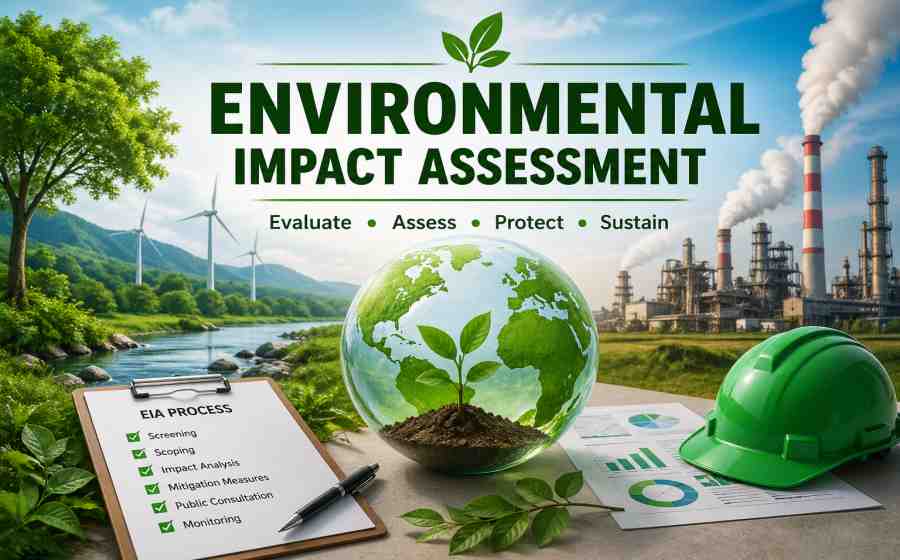
EIA follows a structured process that includes several stages:
1. Screening
This step determines whether a project requires an EIA. Not all projects need detailed assessment—only those likely to have significant environmental effects.
2. Scoping
In this stage, key environmental issues and impacts are identified. It sets the boundaries for the study.
3. Impact Analysis
Experts analyze potential effects on the environment, including pollution, biodiversity loss, and social impacts.
4. Mitigation Measures
Strategies are proposed to reduce or eliminate negative environmental impacts.
5. Public Consultation
Local communities and stakeholders are invited to share their opinions and concerns.
6. Reporting (EIA Report)
A detailed report is prepared summarizing findings, impacts, and mitigation plans.
7. Decision-Making
Authorities review the report and decide whether to approve, modify, or reject the project.
8. Monitoring and Compliance
After approval, the project is monitored to ensure it follows environmental guidelines.
Importance of EIA
Environmental Impact Assessment plays a vital role in protecting the environment. Its importance can be understood through the following points:
1. Environmental Protection
EIA helps prevent pollution, deforestation, and destruction of ecosystems before they occur
2. Sustainable Development
It ensures that development projects do not compromise the needs of future generations.
3. Cost Efficiency
Addressing environmental issues early reduces long-term costs related to damage control and restoration.
4. Legal Compliance
Many countries, including India, have made EIA mandatory for certain types of projects under environmental laws.
5. Public Awareness and Participation
EIA encourages transparency and allows citizens to participate in decision-making processes.
EIA in India
In India, Environmental Impact Assessment is governed by the Ministry of Environment, Forest and Climate Change (MoEFCC). The EIA Notification of 2006 outlines the rules and procedures for environmental clearance.
Projects are categorized into different groups based on their potential impact, and clearance is granted only after thorough evaluation. This system ensures that industrial and infrastructure development aligns with environmental protection goals.
Challenges of EIA
Despite its importance, EIA faces several challenges:
- Lack of proper implementation in some regions
- Insufficient data and expertise for accurate assessment
- Political and economic pressures influencing decisions
- Limited public awareness and participation
- Delays in project approvals due to complex procedures
Addressing these challenges is essential to make EIA more effective and reliable.
Global Perspective
EIA is not limited to one country, it is a globally accepted practice. International organizations like the World Bank and International Association for Impact Assessment promote its use in development projects worldwide.
Many developed countries have advanced EIA systems that incorporate technology, data analysis, and strict monitoring to ensure environmental safety.
Future of EIA
The future of Environmental Impact Assessment lies in integrating modern technologies such as:
- Geographic Information Systems (GIS)
- Artificial Intelligence (AI)
- Remote sensing
These tools can improve accuracy, speed, and transparency in environmental assessments.
Additionally, stronger policies, better enforcement, and increased public awareness will enhance the effectiveness of EIA in the coming years.
Summary
Environmental Impact Assessment (EIA) is a powerful tool that bridges the gap between development and environmental conservation. It ensures that progress does not come at the cost of nature.
As the world faces increasing environmental challenges like climate change and biodiversity loss, the role of EIA becomes even more critical. By promoting responsible decision-making and sustainable practices, EIA helps create a future where economic growth and environmental protection go hand in hand.
Also Check: Environment