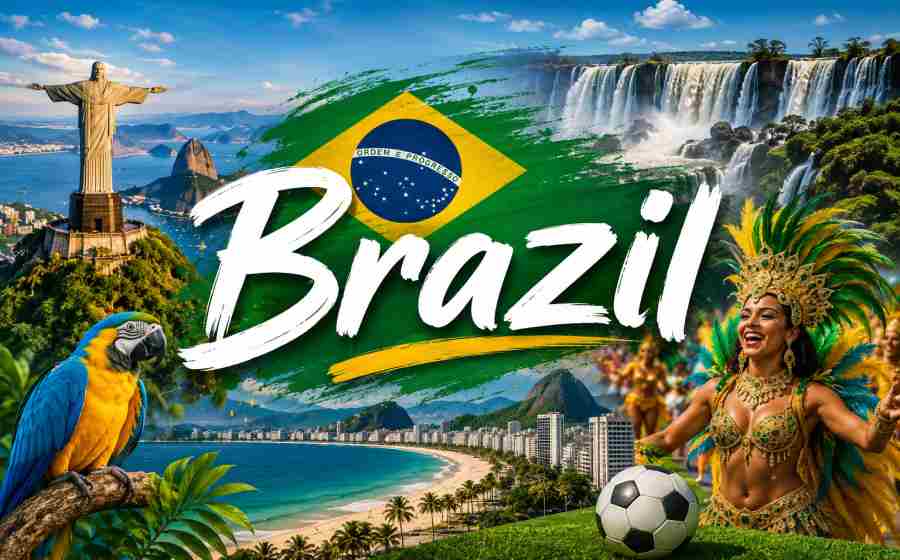
Brazil – History, Culture, Sports and Facts About the Giant of South America
Explore Brazil’s history, culture, sports, geography, economy and key facts. Learn what makes Brazil one of the world’s most vibrant and influential nations.
Brazil
Brazil is the largest country in South America and one of the most diverse nations in the world. Known for its breathtaking landscapes, vibrant festivals, rich cultural traditions, and sporting excellence, Brazil plays an important role in global affairs. From the Amazon rainforest to the famous beaches of Rio de Janeiro, Brazil attracts millions of visitors and fascinates people with its unique blend of history, nature, and culture.
Table of Contents
Introduction to Brazil
Brazil covers nearly half of South America’s land area and is the fifth-largest country in the world by both area and population. The country shares borders with almost every South American nation except Chile and Ecuador. Its capital city is Brasília, while São Paulo is the largest city and economic center.
Portuguese is the official language of Brazil, making it unique among South American countries, where Spanish is the dominant language. Brazil is also known for its multicultural society shaped by Indigenous peoples, Europeans, Africans, and immigrants from around the world.
History of Brazil
The region now known as Brazil was originally inhabited by numerous Indigenous communities for thousands of years before European arrival. In 1500, Portuguese explorer Pedro Álvares Cabral reached the Brazilian coast, claiming the territory for Portugal. During the colonial period, Brazil became a major producer of sugar and later coffee. Millions of Africans were brought to Brazil through the transatlantic slave trade, significantly influencing the country’s culture, music, and traditions.
Brazil declared independence from Portugal in 1822 and became the Empire of Brazil under Dom Pedro I. In 1889, the monarchy was abolished, and Brazil became a republic. Throughout the twentieth century, the country experienced political changes, economic growth, and periods of military rule before returning to democracy in the 1980s. Today, Brazil is one of the world’s largest democracies and an influential member of international organizations.
Geography and Natural Wonders
Brazil is famous for its incredible natural diversity. The country features rainforests, wetlands, mountains, rivers, and long coastlines along the Atlantic Ocean.
One of Brazil’s most significant natural treasures is the Amazon Rainforest, often called the “lungs of the Earth” because of its importance to global biodiversity. The Amazon River, one of the world’s largest rivers, flows through northern Brazil and supports countless plant and animal species.
Other notable geographical features include:
- Iguazu Falls, one of the world’s most spectacular waterfall systems
- The Pantanal, the largest tropical wetland on Earth
- The Atlantic Forest, rich in biodiversity
- Extensive beaches stretching thousands of kilometers along the coast
Brazil’s climate varies from tropical in the north to subtropical in the south, supporting diverse ecosystems.
Culture of Brazil
Brazilian culture is a vibrant mixture of Indigenous, African, European, and immigrant influences. This cultural diversity is reflected in the country’s music, dance, food, art, and celebrations.
Music and Dance
Brazil has produced many famous musical styles, including:
- Samba
- Bossa Nova
- Forró
- Funk Carioca
Samba is perhaps the most internationally recognized Brazilian music genre and plays a central role in Carnival celebrations.
Festivals
Brazil’s Carnival is one of the largest and most famous festivals in the world. Held annually before Lent, Carnival features colorful parades, elaborate costumes, music, and dancing.
Cities such as Rio de Janeiro, Salvador, and Recife host spectacular celebrations that attract millions of visitors each year.
Cuisine
Brazilian cuisine varies by region but often includes:
- Rice and beans
- Grilled meats
- Seafood
- Tropical fruits
Popular dishes include feijoada, pão de queijo, moqueca, and brigadeiro. Brazilian coffee is also renowned worldwide.
Sports in Brazil
Sports are deeply embedded in Brazilian society, with football (soccer) being the nation’s most beloved sport.
Football
Brazil is widely regarded as one of the greatest football nations in history. The country has won the FIFA World Cup five times, more than any other nation.
Brazil has produced legendary footballers such as:
- Pelé
- Zico
- Ronaldo Nazário
- Ronaldinho
- Neymar
Football stadiums and local clubs are an essential part of Brazilian culture.
Other Popular Sports
Besides football, Brazilians enjoy:
- Volleyball
- Basketball
- Mixed Martial Arts (MMA)
- Surfing
- Athletics
Brazil has also achieved international success in Olympic competitions and various global sporting events.
Economy of Brazil
Brazil has one of the largest economies in the world and is considered an important emerging market. The country is rich in natural resources and has strong agricultural, industrial, and service sectors.
Major exports include:
- Soybeans
- Coffee
- Iron ore
- Sugar
- Beef
- Petroleum products
Brazil is among the world’s leading producers of coffee and agricultural commodities. The country’s economic influence extends throughout Latin America and beyond.
Wildlife and Biodiversity
Brazil is one of the most biologically diverse countries on Earth. Its forests, rivers, and wetlands provide habitats for thousands of species.
Notable animals found in Brazil include:
- Jaguar
- Capybara
- Giant Anteater
- Toucan
- Anaconda
Protecting biodiversity remains a major environmental priority for Brazil and the global community.
Interesting Facts About Brazil
- Brazil is the largest country in South America.
- Portuguese is the official language.
- The Amazon Rainforest covers a significant portion of the country.
- Brazil has won more FIFA World Cups than any other nation.
- The capital city, Brasília, was purpose-built and inaugurated in 1960.
- Brazil hosts one of the world’s biggest Carnival celebrations.
- The country is a leading producer of coffee.
- Brazil has over 7,000 kilometers of Atlantic coastline.
- It is home to extraordinary biodiversity and unique ecosystems.
- Brazil is one of the founding members of the BRICS group of emerging economies.
Summary
Brazil stands out as a nation of immense natural beauty, cultural richness, and sporting achievement. Its fascinating history, diverse population, world-famous festivals, and global influence make it one of the most remarkable countries on Earth. Whether admired for the Amazon rainforest, celebrated for football excellence, or appreciated for its vibrant traditions, Brazil continues to capture the imagination of people around the world and remains a key player on the global stage.
Also Check: General Knowledge