Saint Kitts and Nevis – History, Culture, Sports, Geography and Key Facts
Explore Saint Kitts and Nevis history, culture, geography, sports, traditions, economy and key facts about this beautiful Caribbean nation.
Saint Kitts and Nevis
Saint Kitts and Nevis is a beautiful two-island country located in the eastern Caribbean Sea. Known for its volcanic landscapes, beaches, historic sites and vibrant island traditions, it is one of the smallest sovereign countries in the Americas. The country consists of Saint Kitts, the larger island, and Nevis, a smaller island located southeast of Saint Kitts. Its capital and largest city is Basseterre, situated on Saint Kitts. The islands have a fascinating history shaped by Indigenous peoples, European colonization, African heritage and the development of the Caribbean plantation economy.
Table of Contents
Geography of Saint Kitts and Nevis
Saint Kitts and Nevis covers a total area of about 261 square kilometres, making it geographically small but rich in natural beauty. Saint Kitts is characterized by mountainous terrain and volcanic landscapes, while Nevis is dominated by the distinctive Nevis Peak.
The islands have a tropical climate moderated by sea breezes. There is relatively little seasonal variation in temperature, although the rainy season generally occurs from May to November. The combination of mountains, forests, beaches and warm Caribbean waters makes the country an attractive destination for visitors.
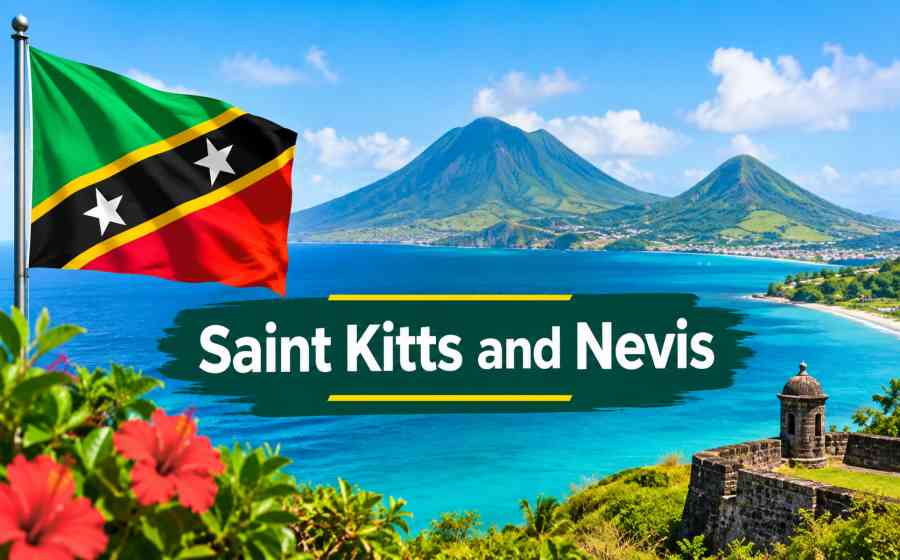
Saint Kitts is particularly famous for Mount Liamuiga, a volcanic mountain and one of the island’s major natural attractions. Historic plantations, coastal scenery and protected natural areas add to the country’s geographical appeal.
History of Saint Kitts and Nevis
The history of Saint Kitts and Nevis stretches back long before European settlement. Indigenous Caribbean peoples lived on the islands for centuries before Europeans arrived. English and French settlers established colonies in the early 17th century, with settlement beginning in 1623.
Saint Kitts became an important location in the development of the Caribbean plantation economy. Sugar production became a major part of the colonial economy, and enslaved Africans were brought to the islands to work on plantations. Their descendants form the majority of the population today, and African heritage remains deeply influential in the country’s music, food, festivals and traditions.
Over time, British control became dominant. Saint Kitts and Nevis later participated in various political arrangements with other Caribbean territories. The islands were eventually granted independence on 19 September 1983, becoming the independent nation of Saint Kitts and Nevis. The country remains a member of the Commonwealth and is a constitutional monarchy with a parliamentary system.
Culture and Traditions
The culture of Saint Kitts and Nevis reflects a mixture of African, European and Caribbean influences. English is the official language, and Christianity has traditionally played an important role in community life.
Music and dance are central elements of cultural expression. Traditional Caribbean rhythms, calypso and soca can be heard during festivals and celebrations. Local cultural events provide opportunities for communities to celebrate their history and identity.
One of the country’s most important celebrations is National Carnival, commonly associated with Christmas and New Year festivities. It features colorful costumes, music, dancing, parades and competitions. The celebration is an important expression of local creativity and Caribbean heritage.
Food is another important part of the culture. Traditional dishes make extensive use of seafood, vegetables, tropical fruits and locally available ingredients. A traditional dish highlighted by the U.S. travel information is stewed saltfish served with spicy plantains and coconut dumplings.
Sports in Saint Kitts and Nevis
Sports occupy an important place in the country’s social life, with cricket, football, rugby, netball and cue sports among the sports played across the islands.
Cricket has a particularly strong connection with Caribbean culture. Saint Kitts and Nevis was among the Caribbean nations involved in hosting the 2007 Cricket World Cup, demonstrating the islands’ connection to international cricket.
Athletics has also brought international recognition to the country. Saint Kitts and Nevis has produced successful track-and-field athletes, most notably sprinter Kim Collins, who became a major figure in international athletics. His achievements helped raise the country’s profile in global sport.
Football is also popular, while sports such as table tennis have developed among younger athletes. An Olympic profile of Saint Kitts and Nevis table-tennis player T’Anje Johnson described the country as one with a strong cricket and football culture.
Economy and Tourism
Tourism is an important part of the economy of Saint Kitts and Nevis. The country’s beaches, historic buildings, volcanic scenery and tropical climate attract visitors from different parts of the world. Tourism is supported by hotels, restaurants, transportation services and recreational activities.
Important attractions include Brimstone Hill Fortress National Park, the National Museum, Mount Liamuiga, Romney Manor and historic plantation properties. Brimstone Hill Fortress is especially significant because it represents the military and colonial history of the Caribbean.
Agriculture historically played a major role in the economy, particularly through sugar production. Although the economic structure has changed significantly, agriculture and locally produced foods continue to have cultural importance.
Government and National Identity
Saint Kitts and Nevis is a federal parliamentary democracy under a constitutional monarchy. The country has a unicameral National Assembly, and Basseterre serves as the national capital.
The national flag has a distinctive design featuring green and red sections separated by a black diagonal band bordered in yellow, with two white stars. The stars are commonly associated with the country’s hope and liberty.
The East Caribbean dollar (XCD) is the country’s official currency.
Important Facts About Saint Kitts and Nevis
- Official Name: Federation of Saint Christopher and Nevis
- Capital: Basseterre
- Location: Caribbean Sea
- Main Islands: Saint Kitts and Nevis
- Independence: 19 September 1983
- Official Language: English
- Currency: East Caribbean dollar (XCD)
- Government: Federal parliamentary democracy under a constitutional monarchy
- Major Sports: Cricket, football, rugby, netball and athletics
- Climate: Tropical maritime climate
- Major Natural Feature: Mount Liamuiga
- Famous Historic Site: Brimstone Hill Fortress National Park
- Telephone Code: +1-869
Summary
Saint Kitts and Nevis may be one of the world’s smallest countries, but its history and cultural identity are remarkably rich. From Indigenous settlement and European colonization to independence in 1983, the islands have experienced major historical changes while preserving a distinctive Caribbean character. Its African heritage, colorful festivals, traditional cuisine, cricket culture, athletics achievements and spectacular volcanic landscapes make Saint Kitts and Nevis an interesting country for students and general knowledge enthusiasts to explore. Today, tourism and cultural heritage continue to play an important role in presenting this small Caribbean nation to the world.
Also Check: General Knowledge