Namibia – History, Culture, Sports and Key Facts About this African Nation
Explore Namibia’s history, culture, sports, geography, wildlife and key facts. Discover what makes this beautiful African nation truly unique.
Namibia
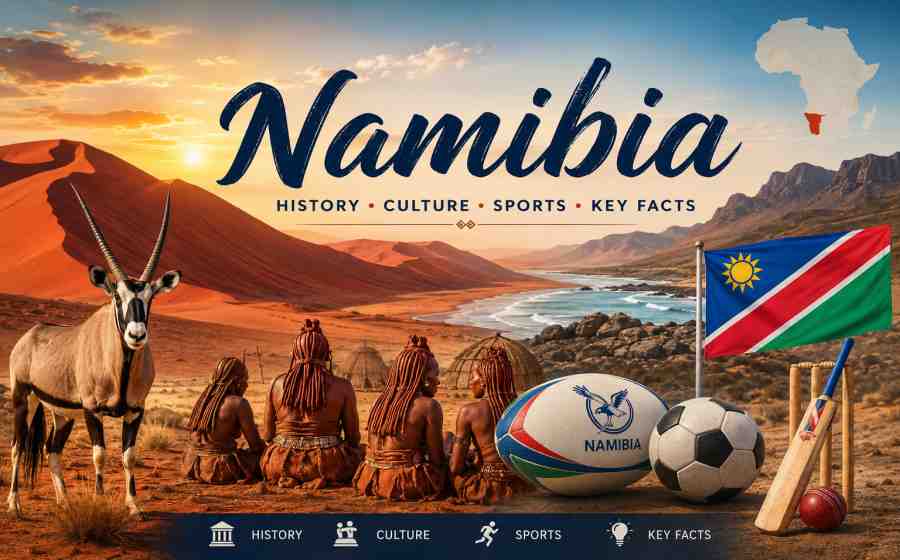
Namibia is one of Africa’s most fascinating countries, known for its breathtaking deserts, diverse wildlife, rich cultural heritage, and peaceful democratic system. Located on the southwestern coast of Africa, Namibia attracts attention for its natural beauty and unique history. From the world’s oldest desert to its multicultural society, the country offers countless interesting facts for general knowledge enthusiasts.
Table of Contents
Introduction to Namibia
Namibia is a sovereign nation situated in Southern Africa. It shares borders with Angola to the north, Zambia to the northeast, Botswana to the east, South Africa to the south, and the Atlantic Ocean to the west. The country’s capital and largest city is Windhoek.
Namibia gained independence in 1990 and has since emerged as one of Africa’s most stable democracies. Despite its vast land area, it has a relatively small population, making it one of the least densely populated countries in the world.
Historical Background
Namibia’s history dates back thousands of years. Indigenous communities such as the San people were among the earliest inhabitants of the region. Later, groups including the Nama, Damara, and Herero settled in different parts of the country.
During the late nineteenth century, Germany colonized the territory, naming it German South West Africa. German rule was marked by conflict and hardship, including the tragic Herero and Nama genocide between 1904 and 1908.
After Germany’s defeat in World War I, South Africa administered the territory under a League of Nations mandate. However, many Namibians sought self-rule. The South West Africa People’s Organization (SWAPO) led a long struggle for independence.
Finally, on 21 March 1990, Namibia became an independent nation. Sam Nujoma became its first president and played a major role in nation-building.
Geography and Climate
Namibia covers approximately 824,000 square kilometres, making it one of Africa’s largest countries by area. One of Namibia’s most famous geographical features is the Namib Desert, often considered the world’s oldest desert. The country is also home to the Kalahari Desert in the east.
The climate is generally dry and sunny, with low rainfall. Due to its arid conditions, Namibia faces challenges related to water scarcity. However, these same conditions have helped preserve unique ecosystems and spectacular landscapes.
Culture and Traditions
Namibia is a multicultural nation with several ethnic groups contributing to its rich cultural identity.
Some of the major communities include:
- Ovambo
- Herero
- Nama
- Damara
- San
- Kavango
- Himba
Each group maintains its own traditions, languages, clothing styles, and customs. The Himba people, for example, are internationally recognized for their distinctive appearance and traditional lifestyle.
English is the official language of Namibia. However, Afrikaans, German, Oshiwambo, Nama, and several indigenous languages are also widely spoken.
Music and dance hold great importance in Namibian society. Traditional ceremonies often feature singing, drumming, and storytelling, helping preserve cultural values and historical memories.
Economy of Namibia
Namibia’s economy depends heavily on natural resources and mining activities. The country is rich in valuable minerals such as:
- Diamonds
- Uranium
- Gold
- Zinc
- Copper
Fishing also contributes significantly to national income due to Namibia’s productive Atlantic coastline.
Tourism has become another important sector. Visitors from around the world travel to Namibia to experience its deserts, wildlife reserves, and adventure activities.
Agriculture supports many rural communities, although farming remains challenging because of limited rainfall.
Wildlife and Tourism
Namibia is famous for its remarkable biodiversity and conservation efforts. It was among the first countries to include environmental protection in its constitution.
Popular attractions include:
- Etosha National Park
- Sossusvlei sand dunes
- Skeleton Coast
- Fish River Canyon
- Namib-Naukluft National Park
Visitors can observe elephants, lions, rhinos, giraffes, zebras, and cheetahs in their natural habitats. Community-based conservation programs have also helped protect endangered species while benefiting local populations.
Sports in Namibia
Sports play an important role in promoting national pride and unity.
Rugby
Rugby is one of Namibia’s most popular sports. The national rugby team, known as the Welwitschias, has represented the country in multiple Rugby World Cup tournaments.
Football
Football enjoys widespread popularity across the nation. Domestic leagues and youth competitions help nurture local talent, and many young Namibians aspire to represent their country internationally.
Cricket
Cricket has gained increasing recognition in recent years. Namibia has participated successfully in international competitions and continues to improve its standing in the sport.
Athletics
Namibia has produced world-class athletes. The country’s most celebrated athlete is Frankie Fredericks, who won several Olympic silver medals and inspired future generations of sports enthusiasts.
Government and Political System
Namibia operates as a democratic republic with a multi-party political system. The President serves as both Head of State and Head of Government.
The country is often praised for maintaining political stability, respecting constitutional principles, and conducting regular elections. Since independence, Namibia has focused on national reconciliation and development.
Key Facts About Namibia
- Capital City: Windhoek
- Official Language: English
- Currency: Namibian Dollar (NAD)
- Independence Day: 21 March 1990
- Continent: Africa
- Population: Approximately 3 million people
- Major Industries: Mining, fishing, tourism, and agriculture
- Famous Desert: Namib Desert
- National Animal: Oryx (Gemsbok)
- Time Zone: Central Africa Time (CAT)
Summary
Namibia is a nation of contrasts, where ancient deserts meet modern democracy and traditional cultures coexist with contemporary development. Its inspiring journey to independence, commitment to conservation, vibrant cultural diversity, and achievements in sports make it an important country to study in general knowledge.
Understanding Namibia not only broadens our knowledge of Africa but also highlights how resilience, unity, and respect for heritage can shape a nation’s identity. Whether admired for its wildlife, history, or sporting spirit, Namibia continues to leave a lasting impression on people around the world.
Also Check: General Knowledge