Zambia – History, Culture, Natural Landscapes, Sports and Key Facts
Discover Zambia’s rich history, vibrant culture, popular sports, geography and key facts that make Zambia a fascinating nation in Africa.
Zambia
Zambia is a beautiful landlocked country located in Southern Africa. Known for its breathtaking natural landscapes, rich cultural heritage, and peaceful people, Zambia holds an important place in African history. It is home to the magnificent Victoria Falls, diverse wildlife, and more than seventy ethnic communities that contribute to its unique identity.
Table of Contents
Introduction to Zambia
Zambia gained international recognition for its peaceful transition from colonial rule to independence and its efforts to maintain political stability in the region.
Basic Facts About Zambia
- Official Name: Republic of Zambia
- Capital City: Lusaka
- Largest City: Lusaka
- Continent: Africa
- Region: Southern Africa
- Official Language: English
- Currency: Zambian Kwacha (ZMW)
- Population: Approximately 21 million people
- Government: Presidential Republic
- Independence Day: 24 October 1964
- National Motto: “One Zambia, One Nation”
Zambia shares borders with eight countries: Angola, the Democratic Republic of Congo, Tanzania, Malawi, Mozambique, Zimbabwe, Botswana, and Namibia.
Historical Background of Zambia
The history of Zambia dates back thousands of years. Early inhabitants included hunter-gatherer communities, followed by Bantu-speaking groups who migrated into the region and established settlements. During the nineteenth century, trade routes expanded across the area. European explorers, missionaries, and traders gradually entered the territory. The famous Scottish missionary and explorer David Livingstone visited the region and introduced Victoria Falls to the wider world.
In the late nineteenth century, the territory came under British control and was known as Northern Rhodesia. Nationalist movements grew stronger during the twentieth century, demanding self-rule and independence.
On 24 October 1964, Zambia achieved independence from British colonial rule. Kenneth Kaunda became the country’s first President and played a major role in promoting national unity and African liberation movements. Since independence, Zambia has experienced periods of economic challenges and political reforms but remains one of Africa’s relatively stable democracies.
Culture and Traditions of Zambia
Zambia is culturally diverse, with more than 70 ethnic groups living harmoniously. Some major ethnic communities include the Bemba, Tonga, Lozi, Ngoni, and Chewa.
Languages
Although English serves as the official language used in government and education, many indigenous languages are spoken across the country. Bemba, Nyanja, Tonga, and Lozi are among the most widely used local languages.
Traditional Ceremonies
Traditional ceremonies play an important role in preserving Zambia’s heritage. These celebrations showcase music, dance, storytelling, and community values.
Some well-known ceremonies include:
- Kuomboka Ceremony of the Lozi people
- Nc’wala Ceremony of the Ngoni people
- Likumbi Lya Mize Ceremony
- Mutomboko Ceremony
These events attract both local and international visitors.
Food Culture
Zambian cuisine reflects local agricultural practices and traditions.
Popular foods include:
- Nshima: A thick maize-based staple food.
- Grilled meat and fish.
- Vegetables such as pumpkin leaves and cassava leaves.
- Groundnut-based dishes.
- Beans and sweet potatoes.
Meals are often shared among family members, emphasizing hospitality and togetherness.
Geography and Natural Beauty
Zambia is blessed with diverse landscapes consisting of plateaus, rivers, forests, and national parks.
Victoria Falls
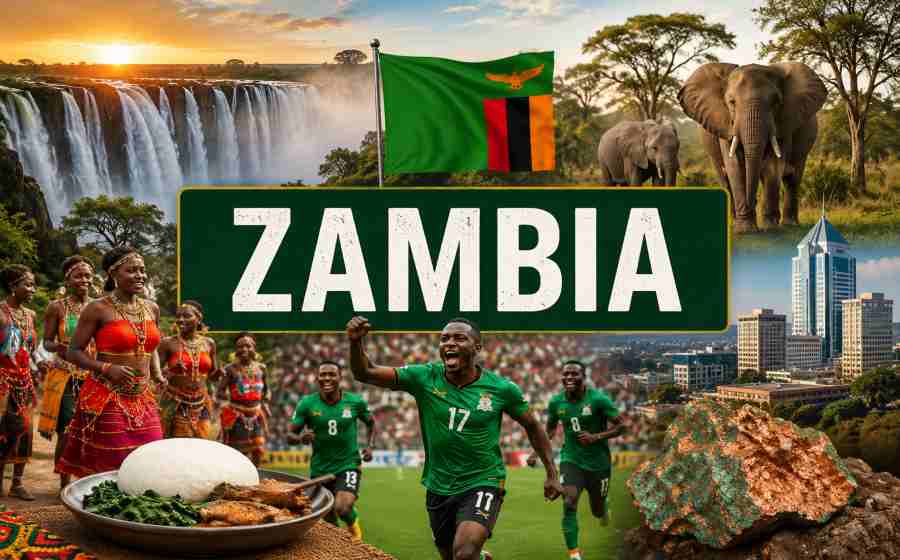
One of Zambia’s greatest attractions is Victoria Falls, located on the Zambezi River. It is among the largest waterfalls in the world and is locally known as “Mosi-oa-Tunya,” meaning “The Smoke That Thunders.”
The waterfall attracts tourists from around the globe and contributes significantly to Zambia’s tourism industry.
Wildlife
Zambia possesses abundant biodiversity.
Wild animals commonly found include:
- Elephants
- Lions
- Leopards
- Buffaloes
- Zebras
- Giraffes
- Hippos
National parks and conservation areas support wildlife protection and eco-tourism.
Sports in Zambia
Sports unite people across Zambia and inspire national pride.
Football – The Most Popular Sport
Football is by far the country’s favourite sport. Children and adults enthusiastically support local clubs and the national team.
A historic moment came in 2012, when Zambia won the Africa Cup of Nations, defeating Ivory Coast in the final. The victory remains one of the proudest achievements in the nation’s sporting history.
Other Popular Sports
Besides football, Zambians also participate in:
- Boxing
- Athletics
- Rugby
- Basketball
- Netball
- Volleyball
Schools and community organizations actively promote sporting activities among young people.
Economy of Zambia
Zambia’s economy largely depends on natural resources and agriculture.
Major Economic Activities
- Copper mining
- Agriculture
- Tourism
- Manufacturing
- Trade
Copper is Zambia’s most significant export product, earning the country the nickname “The Copper Nation.” Agricultural products include maize, tobacco, cotton, sugarcane, and soybeans.
Education in Zambia
Education has expanded considerably since independence. The government continues to invest in schools and literacy programs to improve educational opportunities.
Primary education has become increasingly accessible, while universities and vocational institutions provide higher learning opportunities for students across the nation. Education is considered a vital tool for national development and poverty reduction.
Interesting Facts About Zambia
- Zambia was formerly called Northern Rhodesia.
- It became independent in 1964.
- The country has no coastline because it is landlocked.
- Victoria Falls is one of the Seven Natural Wonders of the World.
- English is the official language.
- Zambia recognizes numerous local languages and cultural traditions.
- Copper mining plays a major role in the national economy.
- The national bird of Zambia is the African Fish Eagle.
- The Zambezi River is one of Africa’s major rivers.
- Zambia is widely regarded as one of the more peaceful countries in the region.
Summary
Zambia is a nation rich in history, cultural diversity, natural beauty, and sporting passion. From its journey from Northern Rhodesia to an independent republic, the country has demonstrated resilience and unity. Its traditional ceremonies preserve ancient customs, while achievements in football and economic contributions through copper mining continue to shape its modern identity.
Also Check: General Knowledge