
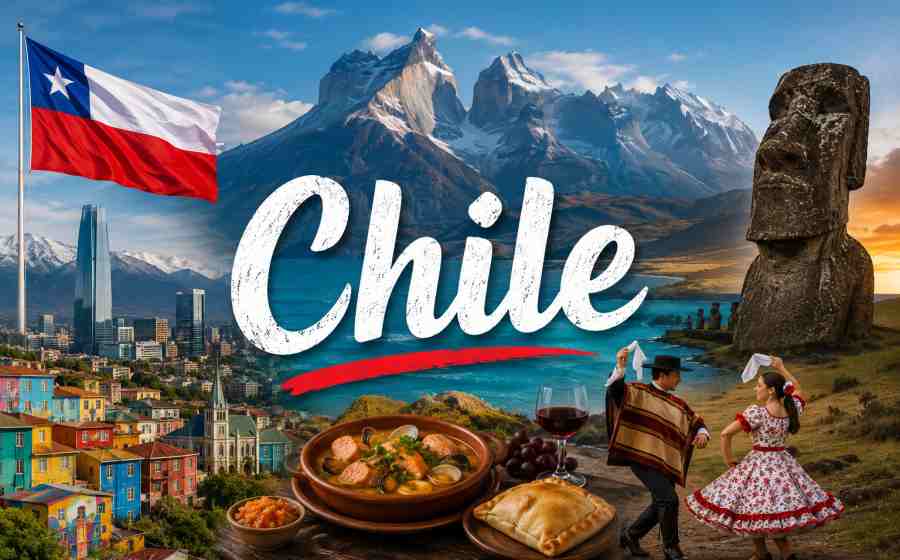
Chile – History, Culture, Sports and Fascinating Facts About the Longest Country in the World
Explore Chile’s history, vibrant culture, famous sports, geography and key facts. Learn what makes Chile one of South America’s most unique nations.
Chile
Located along the western edge of South America, Chile is one of the world’s most fascinating countries. Known for its extraordinary geography, rich traditions, and sporting spirit, Chile stretches over 4,300 kilometers from north to south, making it one of the longest countries on Earth. From the dry deserts of the north to the icy landscapes of Patagonia in the south, Chile offers incredible diversity in nature, culture, and history.
Table of Contents
History of Chile
The history of Chile dates back thousands of years before European exploration. Indigenous communities such as the Mapuche, Aymara, and Rapa Nui inhabited the region and developed unique cultural traditions.
In the 16th century, Spanish explorers arrived in the territory. In 1541, Spanish conquistador Pedro de Valdivia founded Santiago, which later became the capital city. Spanish colonial rule continued for nearly three centuries.
Chile began its struggle for independence in the early 19th century. Inspired by independence movements across Latin America, Chile declared independence from Spain on September 18, 1810. After years of conflict, Chile secured full independence in 1818 under the leadership of national heroes such as Bernardo O’Higgins and José de San Martín.
The country later experienced periods of economic growth, political changes, and social reforms. During the late 20th century, Chile underwent military rule before returning to democracy in 1990. Today, Chile is regarded as one of South America’s most stable and economically developed nations.
Geography and Natural Wonders
Chile’s geography is unlike any other country.
Some remarkable features include:
- Atacama Desert – The driest non-polar desert in the world.
- Andes Mountains – Forming Chile’s eastern border with Argentina.
- Patagonia – Famous for glaciers, mountains, and breathtaking scenery.
- Pacific Coastline – Stretching thousands of kilometers.
- Easter Island – Home to the mysterious Moai statues.
Due to its length, Chile experiences a wide range of climates, from desert conditions in the north to cold and rainy weather in the south.
Basic Facts About Chile
- Official Name: Republic of Chile
- Capital: Santiago
- Continent: South America
- Official Language: Spanish
- Currency: Chilean Peso (CLP)
- National Day: September 18
- Population: More than 19 million people
- Government: Democratic Republic
- Major Religion: Christianity
- Highest Peak: Ojos del Salado (6,893 meters)
Culture of Chile
Chile’s culture reflects a blend of indigenous traditions and Spanish influences. Family values, hospitality, and community celebrations play important roles in daily life.
Traditional Music and Dance
The Cueca is Chile’s national dance. It symbolizes a courtship ritual between partners and is often performed during national celebrations.
Traditional instruments include guitars, accordions, and drums. Folk music remains an essential part of Chilean identity, especially during festivals.
Festivals and Celebrations
Chile hosts numerous cultural festivals throughout the year. Some of the most popular include:
- National Independence Day celebrations in September.
- Religious festivals honoring patron saints.
- Local harvest festivals featuring music and dance.
- Cultural events showcasing indigenous traditions.
These celebrations bring communities together and preserve Chile’s rich heritage.
Chilean Cuisine
Chilean food is influenced by indigenous ingredients and Spanish cooking techniques.
Popular dishes include:
- Empanadas – Pastries filled with meat, cheese, or seafood.
- Pastel de Choclo – A corn pie made with meat and vegetables.
- Curanto – A traditional seafood and meat dish.
- Completo – A Chilean-style hot dog loaded with toppings.
Seafood is especially important due to Chile’s long Pacific coastline.
Sports in Chile
Sports occupy a special place in Chilean society, with football being the most popular.
Football (Soccer)
Football is considered the national passion. Chile has produced many talented players and achieved notable success on the international stage.
The Chilean national team won the Copa América championship twice, in 2015 and 2016. These victories remain proud moments in the country’s sporting history.
Famous Chilean footballers include:
- Alexis Sánchez
- Arturo Vidal
- Claudio Bravo
- Iván Zamorano
Local football clubs also enjoy strong support from fans across the country.
Tennis
Chile has a proud tennis tradition. Players such as Marcelo Ríos, Fernando González, and Nicolás Massú have represented the country successfully in international competitions.
Marcelo Ríos became the first Latin American male player to achieve the world number one ranking in professional tennis.
Rodeo
Unlike the American version, Chilean rodeo is recognized as the country’s national sport. Participants demonstrate exceptional riding skills while working with cattle in specially designed arenas called “medialunas.” Rodeo competitions are deeply connected to rural traditions and Chilean identity.
Economy and Important Industries
Chile possesses one of the strongest economies in South America.
Major industries include:
- Copper mining
- Agriculture
- Fishing
- Forestry
- Tourism
- Wine production
Chile is among the world’s leading producers of copper, a mineral that contributes significantly to its economy. The country is also internationally recognized for producing high-quality wines.
Interesting Facts About Chile
Here are some fascinating facts about Chile:
- Chile is often called the world’s longest country because of its narrow shape and extraordinary length.
- The Atacama Desert has regions where rainfall is extremely rare.
- Easter Island, famous for its giant stone statues, belongs to Chile.
- Chile stretches across several climatic zones.
- It has more than 6,000 kilometers of coastline.
- The national bird of Chile is the Andean condor.
- Chile is one of South America’s most urbanized countries.
- Santiago serves as the country’s political, cultural, and economic center.
Summary
Chile is a nation of contrasts and diversity. Its remarkable history, vibrant culture, sporting achievements, and stunning landscapes make it one of the most unique countries in the world. From the ancient traditions of indigenous peoples to modern economic success, Chile offers countless lessons in resilience, heritage, and national pride.
Understanding Chile’s history, customs, and key facts not only enriches general knowledge but also highlights the incredible diversity found across our world. Whether admired for its deserts, mountains, football achievements, or cultural celebrations, Chile continues to capture the interest and imagination of people everywhere.
Also Check: General Knowledge