Guinea Bissau – History, Culture, Tourism, Sports and Key Facts
Discover Guinea Bissau through its history, culture, sports, geography, economy, traditions, wildlife and important facts about the country.
Guinea Bissau
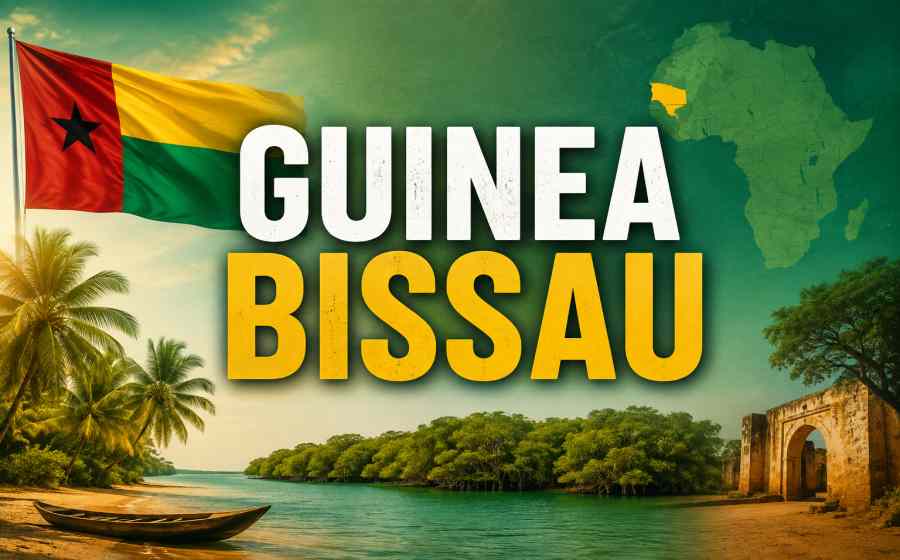
Guinea Bissau is a small but culturally rich country located on the west coast of Africa. Despite its modest size, it is known for its diverse ethnic communities, vibrant traditions, tropical landscapes, and historical struggle for independence. The country also includes the beautiful Bijagós Archipelago, a UNESCO Biosphere Reserve famous for its biodiversity and marine life. Guinea-Bissau offers an interesting mix of African traditions, Portuguese colonial influence, and unique local customs, making it an important country to study in world geography and general knowledge.
Table of Contents
Location and Geography
Guinea Bissau lies in West Africa along the Atlantic Ocean. It shares borders with Senegal to the north and Guinea to the south and east. The country’s coastline features mangrove forests, estuaries, and numerous islands.
- Capital: Bissau
- Continent: Africa
- Area: Approximately 36,125 square kilometers
- Official Language: Portuguese
- Recognized National Language: Crioulo (Guinea-Bissau Creole)
- Currency: West African CFA Franc (XOF)
- Time Zone: Greenwich Mean Time (GMT)
The country has a tropical climate with two distinct seasons: a rainy season from June to October and a dry season from November to May.
Brief History
The region of present-day Guinea-Bissau was originally inhabited by several African kingdoms and ethnic groups, including the Balanta, Fula, Mandinka, Papel, and Manjaco peoples.
Portuguese explorers arrived during the 15th century and gradually established trading posts. Guinea-Bissau became an important center in the transatlantic slave trade, which significantly affected the local population and economy.
In the 20th century, resistance against colonial rule intensified. Under the leadership of Amílcar Cabral, one of Africa’s most respected independence leaders, the African Party for the Independence of Guinea and Cape Verde (PAIGC) launched a liberation movement.
After years of struggle, Guinea-Bissau declared independence in 1973, which Portugal officially recognized in 1974 following the Carnation Revolution.
Since independence, the country has experienced periods of political instability, military coups, and economic challenges. Nevertheless, democratic institutions continue to develop, and efforts toward national progress remain ongoing.
People and Culture
Guinea Bissau is home to more than twenty ethnic groups, each preserving its own customs, music, clothing, and traditions.
Major ethnic communities include:
- Balanta
- Fula
- Mandinka
- Papel
- Manjaco
- Bijagó
Traditional values emphasize community cooperation, respect for elders, storytelling, music, and dance. Portuguese remains the official language used in government and education, while Crioulo serves as the most widely spoken language in everyday communication.
Religion is diverse, with Islam, Christianity, and traditional African beliefs peacefully practiced across the country.
Traditional Food
The cuisine of Guinea Bissau reflects its coastal geography and agricultural lifestyle. Popular dishes include:
- Rice with fish
- Peanut-based stews
- Grilled seafood
- Cassava dishes
- Palm oil recipes
- Tropical fruits like mangoes, bananas, papayas, and coconuts
Fresh fish is a staple food because of the country’s long Atlantic coastline.
Festivals and Traditions
Traditional ceremonies remain an important part of social life.
Common celebrations include:
- Harvest festivals
- Traditional initiation ceremonies
- Community dances
- Religious festivals such as Eid and Christmas
- Local music festivals
Colorful costumes, masks, drumming, and dancing are central features of many celebrations.
Music and Dance
Music plays an important role in everyday life.
One of the country’s best-known musical styles is Gumbe, which combines African rhythms with Portuguese influences.
Traditional instruments include:
- Drums
- Balafons
- String instruments
- Percussion instruments
Songs often tell stories about history, family, and community life.
Economy
Guinea Bissau has one of the smallest economies in West Africa. The main economic activities include:
- Agriculture
- Fishing
- Cashew nut production
- Forestry
- Small-scale trade
Cashew nuts are the country’s leading export and contribute significantly to national income. Fishing also supports thousands of local families due to the country’s rich coastal waters.
Wildlife and Nature
Guinea Bissau possesses remarkable natural diversity.
Important natural attractions include:
- Mangrove forests
- Tropical wetlands
- Bijagós Islands
- Sea turtle nesting beaches
- Rich birdlife
- Dolphins and marine species
The Bijagós Archipelago is internationally recognized for its ecological importance and attracts researchers and eco-tourists.
Education
Education has gradually improved since independence, although rural areas still face challenges related to school access and educational resources.
Portuguese is the primary language of instruction in schools. International organizations continue supporting literacy, teacher training, and school development projects.
Sports in Guinea-Bissau
Football is the most popular sport in Guinea Bissau. Children and adults play football in schools, villages, and cities throughout the country.
The national football team has steadily improved in recent years and has participated in major African football competitions.
Other sports played include:
- Basketball
- Athletics
- Volleyball
- Handball
Sports help promote youth participation, teamwork, and national pride.
Government
Guinea Bissau is a republic with a president serving as head of state and a prime minister heading the government.
The country follows a multi-party political system, although political instability has affected governance over the years. Strengthening democratic institutions remains an important national objective.
Tourism
Although tourism is still developing, Guinea-Bissau offers several unique attractions. Popular destinations include:
- Bissau city
- Bijagós Archipelago
- Orango National Park
- Coastal beaches
- Wildlife reserves
- Traditional villages
Visitors enjoy birdwatching, island exploration, fishing, and learning about local cultures.
Interesting Facts About Guinea-Bissau
- Guinea Bissau is one of Africa’s smallest countries.
- Portuguese is the official language despite being spoken as a first language by only a small part of the population.
- Crioulo is the country’s most widely spoken everyday language.
- Cashew nuts are the country’s most valuable export.
- The Bijagós Archipelago consists of around 88 islands and is internationally recognized for its biodiversity.
- The country became independent from Portugal in 1974.
- Amílcar Cabral is regarded as one of Africa’s greatest independence leaders.
- Mangrove forests cover large portions of the coastline.
- Traditional music and dance remain an important part of daily life.
- Football is the nation’s favorite sport.
Summary
Guinea-Bissau is a fascinating West African nation with a rich cultural heritage, diverse ethnic traditions, beautiful coastal landscapes, and an inspiring history of independence. While the country continues to face economic and political challenges, it remains known for its resilient people, unique biodiversity, thriving cashew industry, and vibrant cultural identity. Learning about Guinea-Bissau helps students better understand Africa’s history, geography, and cultural diversity, making it an excellent topic for general knowledge and educational studies.
Also Check: General Knowledge