Netherlands – History, Culture, Tourism, Sports and Fascinating Facts
Explore the Netherlands through its history, culture, sports, geography, economy and fascinating facts. Learn what makes the Netherlands unique.
Netherlands
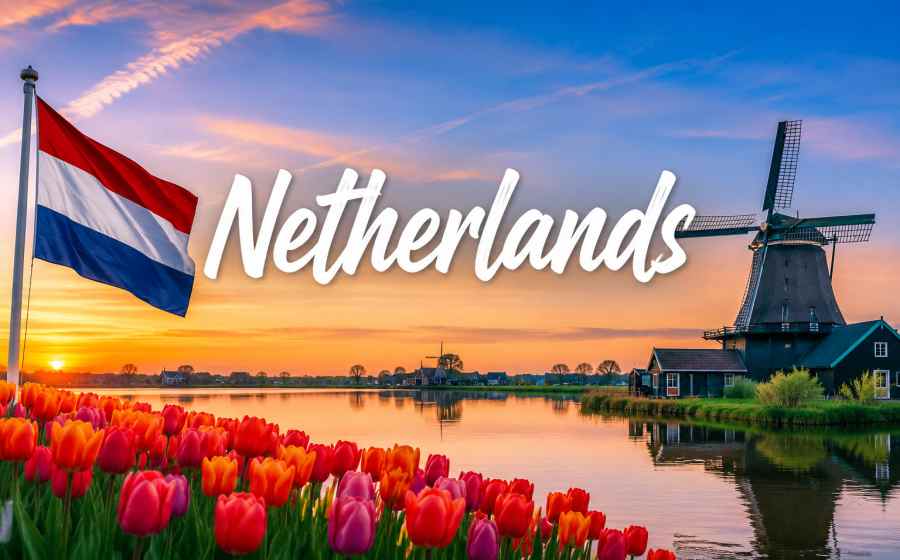
The Netherlands, often called Holland (although Holland technically refers to only two provinces), is one of Europe’s most developed and influential countries. Known for its picturesque canals, colorful tulip fields, iconic windmills, cycling culture, and innovative water management systems, the Netherlands has earned worldwide recognition despite its relatively small size.
Located in Northwestern Europe, the country borders Germany to the east, Belgium to the south, and the North Sea to the north and west. The Netherlands has a rich history of trade, exploration, art, and scientific achievement. Today, it is famous for its high quality of life, strong economy, progressive values, and cultural heritage.
Table of Contents
Geography of the Netherlands
The Netherlands covers an area of approximately 41,850 square kilometers, making it one of Europe’s smaller countries. A significant portion of its land lies below sea level, earning it the nickname “The Low Countries.”
The country’s landscape consists of flat plains, rivers, canals, lakes, and reclaimed land called polders, which have been created through advanced engineering techniques.
Capital: Amsterdam
Government Seat: The Hague
Largest City: Amsterdam
Official Language: Dutch
Currency: Euro (€)
Population: Around 18 million (approx.)
History of the Netherlands
The history of the Netherlands dates back to ancient Germanic and Celtic tribes. During the Roman era, the southern regions became part of the Roman Empire.
In the Middle Ages, Dutch cities flourished through trade and commerce. During the 16th century, the Dutch people revolted against Spanish rule in what became known as the Eighty Years’ War. This struggle led to the establishment of the independent Dutch Republic in 1648.
The 17th century, often called the Dutch Golden Age, marked a period of extraordinary prosperity. Dutch merchants dominated international trade, while artists such as Rembrandt, Johannes Vermeer, and Frans Hals created masterpieces that continue to inspire the world.
The Netherlands was occupied during World War II by Nazi Germany before being liberated in 1945. After the war, it became one of the founding members of organizations such as NATO and the European Union.
Government and Political System
The Netherlands is a constitutional monarchy with a parliamentary democracy. The monarch serves as the ceremonial head of state, while the Prime Minister leads the government. Dutch politics emphasizes consensus, cooperation, and democratic participation. The country consistently ranks among the world’s most transparent and stable democracies.
Economy of the Netherlands
The Netherlands has one of the strongest economies in Europe. Major sectors include:
- Agriculture
- International trade
- Logistics
- Technology
- Banking
- Manufacturing
- Renewable energy
- Tourism
Despite its small size, the Netherlands is one of the world’s largest exporters of agricultural products thanks to modern farming techniques and innovation. The Port of Rotterdam is Europe’s largest seaport and serves as a major gateway for international trade.
Dutch Culture
Dutch culture reflects openness, creativity, equality, and practicality. Family life and community involvement are highly valued. The Dutch are known for being direct in communication while also respecting individual freedom and diversity.
Cycling plays a major role in daily life. Cities are designed with extensive bicycle infrastructure, making cycling one of the most popular forms of transportation.
The Netherlands is also internationally recognized for its support of environmental sustainability and innovation.
Traditional Food
Dutch cuisine includes many delicious dishes such as:
- Stroopwafels
- Gouda cheese
- Edam cheese
- Herring
- Bitterballen
- Poffertjes
- Erwtensoep (pea soup)
- Dutch pancakes
Cheese markets in cities like Alkmaar and Gouda attract visitors from around the world.
Festivals and Celebrations
Some of the Netherlands’ most famous festivals include:
- King’s Day (Koningsdag)
- Sinterklaas Festival
- Amsterdam Light Festival
- Tulip Festival
- Liberation Day
- Carnival (mainly in southern provinces)
King’s Day is celebrated nationwide with orange clothing, street markets, music, and cultural events.
Art and Architecture
The Netherlands has produced many world-famous artists. Notable painters include:
- Rembrandt van Rijn
- Vincent van Gogh
- Johannes Vermeer
- Piet Mondrian
Dutch architecture combines historic canal houses with modern sustainable buildings. Amsterdam’s canal system is recognized as a UNESCO World Heritage Site.
Sports in the Netherlands
Sports play an important role in Dutch society.
Popular sports include:
- Football (Soccer)
- Cycling
- Field Hockey
- Speed Skating
- Tennis
- Volleyball
- Athletics
The Dutch national football team has produced legendary players such as Johan Cruyff, Marco van Basten, Ruud Gullit, and Dennis Bergkamp. The Netherlands has also achieved tremendous success in Olympic speed skating and cycling competitions.
Education System
The Dutch education system is regarded as one of the best in Europe.
Universities in cities such as Amsterdam, Delft, Utrecht, and Leiden attract thousands of international students every year.
English is widely spoken, making higher education accessible to students from around the world.
Tourism
Millions of tourists visit the Netherlands annually.
Top attractions include:
- Amsterdam canals
- Keukenhof Gardens
- Rijksmuseum
- Anne Frank House
- Kinderdijk Windmills
- Zaanse Schans
- Rotterdam
- Utrecht
- Giethoorn
Spring is especially popular because of the blooming tulip fields.
Climate
The Netherlands experiences a temperate maritime climate.
Characteristics include:
- Mild summers
- Cool winters
- Frequent rainfall
- Moderate temperatures throughout the year
The North Sea has a significant influence on the country’s weather.
Wildlife and Nature
Although highly urbanized, the Netherlands protects many natural areas. Nature reserves include:
- Hoge Veluwe National Park
- Wadden Sea
- Biesbosch National Park
- Oostvaardersplassen
These areas provide habitats for birds, deer, seals, and diverse plant species.
Interesting Facts About the Netherlands
- Around one-third of the country lies below sea level.
- The Netherlands has more bicycles than people.
- It is one of the world’s largest exporters of flowers.
- Amsterdam has over 100 kilometers of canals.
- The country is famous for its advanced flood protection systems.
- Orange is the national color due to the Dutch royal family, the House of Orange.
- The Netherlands consistently ranks among the happiest countries in the world.
- Rotterdam hosts Europe’s busiest seaport.
- Dutch people are among the tallest populations globally.
- The country is a global leader in sustainable agriculture and water management.
Summary
The Netherlands is a remarkable country where centuries-old traditions blend seamlessly with modern innovation. From its inspiring history and artistic legacy to its efficient cities, thriving economy, sporting achievements, and environmental leadership, the Netherlands continues to influence the world far beyond its borders. Whether admired for its tulips, windmills, canals, or progressive society, the Netherlands remains a fascinating destination and an important nation in global history and culture.
Also Check: General Knowledge