
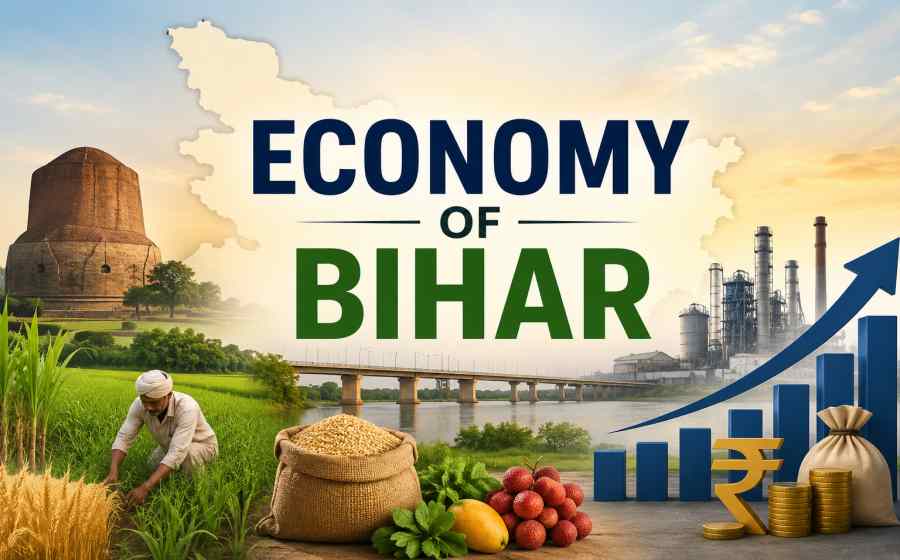
Economy of Bihar – Key Sectors, Growth Drivers and Future Opportunities
Explore the Economy of Bihar: Key Sectors and Growth including agriculture, industry, infrastructure, employment trends and future development opportunities.
Economy of Bihar
Bihar is one of the most historically significant states of India and has been an important center of trade, agriculture, and culture since ancient times. In recent decades, the state has made notable progress in economic development, infrastructure expansion, and social welfare. Although Bihar still faces challenges such as poverty, unemployment, and lower industrialization compared to some other Indian states, it has shown steady economic growth and increasing investment in key sectors.
The economy of Bihar is primarily driven by agriculture, services, small-scale industries, trade, and infrastructure development. Government initiatives, improved road connectivity, electrification, and rural development programs have also contributed to the state’s economic transformation.
Table of Contents
Agriculture: The Backbone of Bihar’s Economy
Agriculture remains the largest contributor to Bihar’s economy and provides employment to a significant portion of the population. The fertile alluvial soil of the Gangetic plains and the availability of water resources make Bihar highly suitable for farming.
Major agricultural products
- Rice
- Wheat
- Maize
- Pulses
- Sugarcane
- Fruits such as litchi, mango, banana, and guava
- Vegetables including potatoes, onions, and tomatoes
Bihar is one of India’s leading producers of maize and litchi. The famous litchi from Muzaffarpur has gained national and international recognition. The state is also promoting horticulture, organic farming, and food processing to increase farmers’ income.
Government schemes related to irrigation, crop insurance, and agricultural mechanization are helping improve productivity and reduce farming risks.
Industry and Manufacturing
Industrial development in Bihar has historically lagged behind many other states. However, the state government has been encouraging investment through industrial policies and infrastructure projects.
Key industrial sectors
- Food processing
- Sugar industry
- Textiles and garments
- Leather products
- Cement manufacturing
- Small and medium enterprises (SMEs)
Food processing has emerged as a promising sector because of Bihar’s strong agricultural base. Processing of fruits, vegetables, and maize-based products can generate employment and reduce post-harvest losses.
The revival of sugar mills and the development of industrial corridors are expected to strengthen the manufacturing sector in the coming years.
Service Sector: A Growing Economic Engine
The service sector has become an increasingly important contributor to Bihar’s Gross State Domestic Product (GSDP). This sector includes:
- Trade and commerce
- Transport and logistics
- Banking and financial services
- Education
- Healthcare
- Telecommunications
- Public administration
With rapid urbanization and improved digital connectivity, service-related businesses have expanded significantly. Cities such as Patna, Gaya, Muzaffarpur, Bhagalpur, and Darbhanga are emerging as regional centers for education, healthcare, and commercial activities.
Infrastructure Development
Infrastructure has played a crucial role in Bihar’s recent economic growth. The state has invested heavily in roads, bridges, electricity, and urban development.
Major improvements include
- Expansion of national and state highways
- Construction of new bridges across rivers
- Rural road connectivity under various government schemes
- Increased household electrification
- Improved railway connectivity
- Development of airports and regional air services
Better infrastructure reduces transportation costs, encourages investment, and improves access to markets for farmers and businesses.
Tourism and Cultural Economy
Bihar possesses immense tourism potential because of its rich historical and religious heritage.
Important tourism destinations
- Bodh Gaya – a major Buddhist pilgrimage center
- Nalanda – site of the ancient university
- Rajgir
- Vaishali
- Patna Sahib
- Vikramshila
Religious and heritage tourism generates revenue through hotels, transportation, local handicrafts, and other services. The growth of tourism can create substantial employment opportunities, especially for local communities.
Employment and Migration
One of the major economic challenges facing Bihar is limited employment opportunities within the state. Many workers migrate to other states for jobs in construction, manufacturing, and services.
To address this issue, Bihar is focusing on:
- Skill development programs
- Promotion of micro and small enterprises
- Startup support initiatives
- Industrial investment
- Rural livelihood programs
Increasing local employment remains essential for achieving balanced and inclusive economic growth.
Recent Growth Trends
In recent years, Bihar has recorded periods of strong economic growth. Factors contributing to this growth include:
- Higher public expenditure on infrastructure
- Expansion of the service sector
- Improved agricultural output
- Better governance and digital administration
- Increased financial inclusion
While per capita income remains below the national average, the state has shown improvement in several development indicators, including road connectivity, electricity access, and school enrollment.
Future Opportunities
Bihar has significant untapped potential that can support long-term economic growth.
Promising areas for development
- Agro-processing: Value addition to agricultural products.
- Textile and apparel manufacturing: Leveraging abundant labor availability.
- Renewable energy: Solar and biomass projects.
- Logistics and warehousing: Due to Bihar’s strategic location in eastern India.
- Education and healthcare services: Expansion of private and public institutions.
- Tourism infrastructure: Hotels, transport, and cultural circuits.
If investments continue in infrastructure, industry, and human capital, Bihar can become a major economic hub in eastern India.
Summary
The economy of Bihar is undergoing a gradual but meaningful transformation. Agriculture remains the foundation of the state’s economy, while the service sector is emerging as a strong driver of growth. Industrial development, infrastructure expansion, tourism, and skill development programs are creating new opportunities for employment and investment.
Although challenges such as unemployment, migration, and lower industrialization still exist, Bihar’s improving connectivity, growing markets, and abundant human resources provide a strong base for future development. With sustained policy support and investment in key sectors, Bihar has the potential to achieve faster and more inclusive economic growth in the coming decades.
Also Check: Bihar GK