Nicaragua – History, Culture, Sports, Wildlife, Natural Beauty and Amazing Key Facts
Discover Nicaragua’s history, culture, sports, geography, economy, wildlife, traditions and key facts in this informative overview of Nicaragua.
Nicaragua
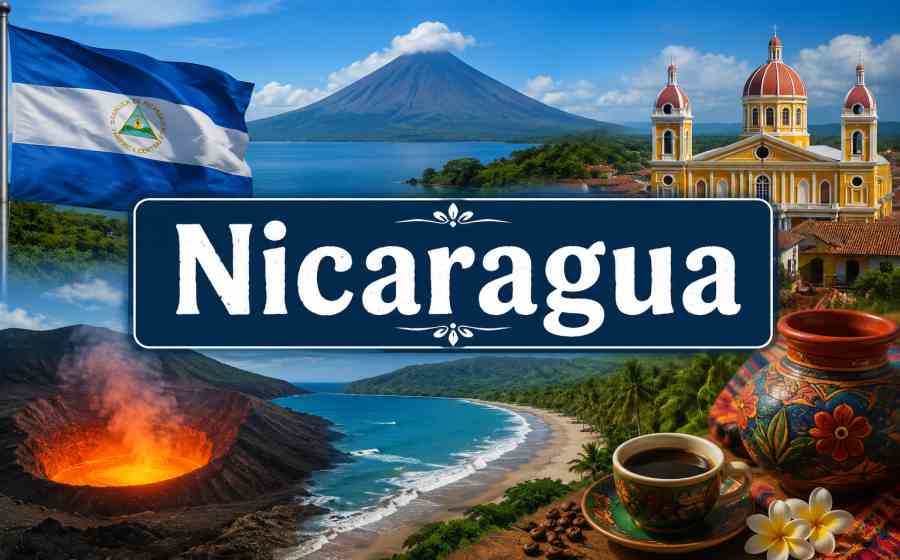
Nicaragua is the largest country in Central America and is known for its stunning volcanoes, beautiful lakes, rich cultural traditions, and fascinating history. Often called the “Land of Lakes and Volcanoes,” Nicaragua offers a unique blend of natural beauty, colonial heritage, and indigenous culture. Despite facing political and economic challenges over the years, the country continues to attract travelers and researchers interested in its biodiversity, history, and vibrant traditions. From ancient civilizations to modern-day developments, Nicaragua holds an important place in Central America’s cultural and historical landscape.
Table of Contents
Location and Geography
Nicaragua is located in Central America, bordered by Honduras to the north, Costa Rica to the south, the Pacific Ocean to the west, and the Caribbean Sea to the east.
The country covers an area of approximately 130,373 square kilometers, making it the largest nation in Central America.
One of Nicaragua’s most remarkable geographical features is Lake Nicaragua, the largest freshwater lake in Central America. The country is also home to more than 40 volcanoes, many of which remain active or dormant.
Its varied landscapes include:
- Active volcanoes
- Tropical rainforests
- Mountain ranges
- Lakes and rivers
- Pacific and Caribbean coastlines
This diversity makes Nicaragua one of the region’s richest countries in terms of biodiversity.
Capital and Major Cities
The capital city is Managua, which serves as the country’s political, economic, and cultural center.
Other important cities include:
- León
- Granada
- Masaya
- Matagalpa
- Estelí
Granada and León are especially famous for their well-preserved colonial architecture and historical significance.
A Brief History of Nicaragua
The region was originally inhabited by indigenous groups such as the Nicarao, Chorotega, and Miskito peoples long before European explorers arrived.
In 1502, Christopher Columbus reached Nicaragua’s Caribbean coast during his fourth voyage to the Americas.
Spanish colonization began in the early 16th century, leading to the establishment of colonial cities and major social changes. Nicaragua remained under Spanish rule for nearly three centuries.
The country gained independence from Spain in 1821, becoming part of the Federal Republic of Central America before emerging as an independent republic.
Throughout the 20th century, Nicaragua experienced political instability, revolutions, and civil conflicts. One of the most significant events was the Sandinista Revolution in 1979, which ended the Somoza dictatorship.
Today, Nicaragua continues to develop while balancing economic growth, social progress, and political challenges.
Culture and Traditions
Nicaraguan culture reflects a blend of indigenous, Spanish, and African influences. Family values play a central role in society, and festivals are celebrated with music, dancing, colorful costumes, and traditional food.
Popular cultural traditions include:
- Religious festivals
- Folk dances
- Handcrafted pottery
- Indigenous art
- Traditional storytelling
The city of Masaya is widely known for its handicrafts, especially pottery, woven products, and wood carvings.
Language and Religion
The official language is Spanish, spoken by the vast majority of the population.
On the Caribbean coast, several indigenous and Afro-descendant communities also speak languages such as:
- Miskito
- English Creole
- Garifuna
- Rama
Christianity is the dominant religion, with Roman Catholicism and Protestantism being the largest faith communities.
Traditional Food
Nicaraguan cuisine is simple, nutritious, and flavorful.
Popular dishes include:
- Gallo Pinto (rice and beans)
- Nacatamal
- Vigorón
- Indio Viejo
- Quesillo
- Fresh tropical fruits
Corn, beans, rice, plantains, cassava, and fresh seafood are commonly used ingredients. Coffee is also one of Nicaragua’s most famous agricultural products and is exported worldwide.
Sports in Nicaragua
Baseball is the most popular sport in Nicaragua and is considered the national pastime.
The country has produced several internationally recognized baseball players who have competed in professional leagues around the world.
Other popular sports include:
- Football (Soccer)
- Boxing
- Volleyball
- Basketball
- Athletics
Nicaraguan boxers have earned international recognition through world championship victories and Olympic participation. Sports continue to play an important role in promoting youth development and national pride.
Economy
Nicaragua’s economy depends largely on:
- Agriculture
- Tourism
- Manufacturing
- Fisheries
- Mining
Major agricultural exports include:
- Coffee
- Beef
- Sugar
- Peanuts
- Tobacco
- Bananas
Tourism has become an increasingly important source of income thanks to the country’s natural beauty, colonial cities, volcanoes, beaches, and eco-tourism opportunities.
Wildlife and Natural Beauty
Nicaragua is one of the most biodiverse countries in Central America. Its protected national parks and reserves are home to:
- Jaguars
- Sloths
- Howler monkeys
- Sea turtles
- Scarlet macaws
- Toucans
- Crocodiles
The country also contains mangrove forests, cloud forests, tropical rainforests, and volcanic ecosystems. Nature lovers visit Nicaragua for hiking, volcano trekking, birdwatching, surfing, and wildlife photography.
Education and Literacy
Education is an important priority for the government. Primary education is free in public schools, and literacy rates have improved significantly over the past few decades through national education campaigns.
Universities in Managua, León, and other cities provide higher education in medicine, engineering, agriculture, business, and science.
Tourism Attractions
Nicaragua offers many attractions for visitors seeking history, adventure, and nature.
Popular destinations include:
- Granada’s colonial streets
- León Cathedral
- Lake Nicaragua
- Ometepe Island
- Masaya Volcano National Park
- San Juan del Sur beaches
- Corn Islands
Adventure tourism activities include volcano boarding, kayaking, surfing, hiking, and scuba diving.
Interesting Facts About Nicaragua
- Nicaragua is the largest country in Central America.
- It is often called the “Land of Lakes and Volcanoes.”
- Lake Nicaragua contains freshwater sharks, a rare natural phenomenon.
- Ometepe Island was formed by two volcanoes rising from Lake Nicaragua.
- Baseball is the country’s most popular sport.
- Coffee is one of Nicaragua’s leading exports.
- The country has coastlines on both the Pacific Ocean and the Caribbean Sea.
- Granada is one of the oldest European-founded cities in the Americas.
- Nicaragua has more than 40 volcanoes.
- Eco-tourism continues to grow due to the country’s rich biodiversity and scenic landscapes.
Summary
Nicaragua is a nation of remarkable natural beauty, rich traditions, and historical significance. From its indigenous heritage and Spanish colonial architecture to its volcanoes, lakes, and vibrant cultural festivals, the country offers countless opportunities for learning and exploration. Baseball, coffee production, eco-tourism, and diverse wildlife further contribute to Nicaragua’s unique identity. Understanding Nicaragua’s history, geography, culture, and achievements provides valuable insight into one of Central America’s most fascinating country.
Also Check: General Knowledge