
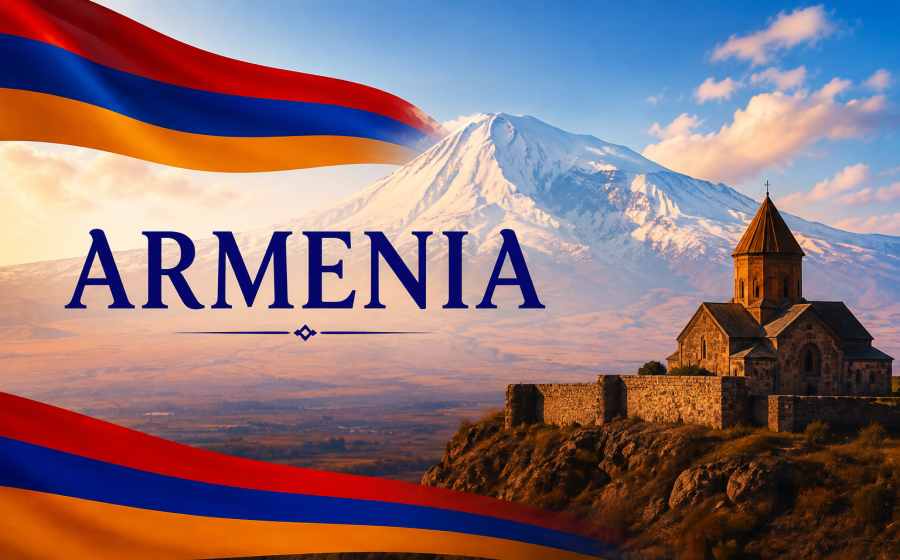
Armenia – History, Culture, Sports, Tourism and Fascinating Key Facts
Explore Armenia through its ancient history, vibrant culture, famous landmarks, traditional cuisine, popular sports and fascinating facts about the nation.
Armenia
Armenia is one of the world’s oldest civilizations and a country known for its ancient heritage, breathtaking mountains, historic monasteries, and rich cultural traditions. Located in the South Caucasus region between Europe and Asia, Armenia has played an important role in history despite its relatively small size. The country is famous for being the first nation to adopt Christianity as its official religion, preserving centuries-old traditions, and producing remarkable achievements in literature, science, and sports.
Today, Armenia is a modern republic that proudly protects its cultural identity while embracing development and international cooperation. From its beautiful landscapes to its warm hospitality, Armenia offers visitors a unique blend of history and natural beauty.
Table of Contents
Location and Geography
Armenia is a landlocked country situated in the South Caucasus. It shares borders with Georgia to the north, Azerbaijan to the east, Iran to the south, and Turkey to the west. The country covers an area of approximately 29,743 square kilometers, making it one of the smaller nations in the region.
Armenia’s landscape consists mainly of mountains, valleys, rivers, and volcanic plateaus. The average elevation is among the highest in Europe and Western Asia, giving the country spectacular scenery throughout the year.
One of Armenia’s most famous natural attractions is Lake Sevan, one of the largest high-altitude freshwater lakes in the world. The lake plays a vital role in the country’s environment, economy, and tourism.
Capital and Major Cities
The capital city is Yerevan, one of the world’s oldest continuously inhabited cities, founded in 782 BCE. It serves as Armenia’s political, economic, educational, and cultural center.
Other important cities include:
- Gyumri
- Vanadzor
- Hrazdan
- Vagharshapat (Etchmiadzin)
Yerevan is known for its pink volcanic stone buildings, lively public squares, museums, and vibrant cafés.
Brief History
Armenia has a history stretching back thousands of years.
Ancient Armenia
The Armenian Highlands have been inhabited since prehistoric times. The ancient Kingdom of Urartu flourished here between the 9th and 6th centuries BCE. Later, the Kingdom of Armenia became a powerful regional state.
First Christian Nation
A historic milestone occurred in 301 CE, when Armenia became the first country in the world to officially adopt Christianity as its state religion. This decision greatly influenced Armenian culture, architecture, literature, and identity.
Medieval Period
During the Middle Ages, Armenia became known for its magnificent monasteries, churches, scholars, and flourishing trade routes connecting East and West.
Foreign Rule
Over many centuries, Armenia came under the influence of various empires, including Persian, Byzantine, Ottoman, and Russian rule. Despite political challenges, Armenians preserved their language, religion, and traditions.
Modern Independence
Following the dissolution of the Soviet Union, Armenia declared independence in 1991. Since then, the nation has developed democratic institutions while facing regional and economic challenges.
Government
Armenia is a parliamentary democratic republic.
Key features include:
- President as Head of State
- Prime Minister as Head of Government
- National Assembly as the legislative body
- Independent judiciary
The country’s constitution provides democratic governance and protection of citizens’ rights.
Population and Language
Armenia has a population of around 3 million people.
The official language is Armenian, one of the oldest living languages in the world with its own unique alphabet.
Russian and English are also understood by many people, particularly in urban areas.
Armenian Alphabet
One of Armenia’s greatest cultural achievements is its alphabet. The Armenian alphabet was created by Mesrop Mashtots in 405 CE. It contains 39 letters and remains one of the symbols of Armenian national identity.
The invention of the alphabet helped preserve Armenian literature, education, and religious texts for over sixteen centuries.
Religion
Christianity plays a central role in Armenian society.
Most Armenians belong to the Armenian Apostolic Church, one of the oldest Christian churches in the world.
Ancient monasteries and churches remain among the country’s most treasured historical landmarks.
Culture and Traditions
Armenian culture reflects thousands of years of history and artistic achievement.
Important cultural elements include:
- Traditional folk music
- Colorful dance performances
- Handwoven carpets
- Stone carvings
- Religious festivals
- Family-centered celebrations
Hospitality is highly valued, and guests are often welcomed with generous meals and warm respect.
Traditional Food
Armenian cuisine combines fresh vegetables, herbs, grilled meats, bread, and dairy products.
Popular dishes include:
- Lavash (traditional flatbread)
- Khorovats (barbecue)
- Dolma
- Harissa
- Gata (sweet pastry)
- Basturma
- Armenian cheese
Lavash is recognized by UNESCO as an important element of Armenia’s cultural heritage.
Famous Tourist Attractions
Armenia offers many remarkable historical and natural attractions.
Popular places include:
- Lake Sevan
- Mount Ararat (symbolically associated with Armenia)
- Geghard Monastery
- Tatev Monastery
- Garni Temple
- Cascade Complex
- Republic Square
- Dilijan National Park
Many monasteries are located in scenic mountain valleys, attracting visitors from around the world.
Economy
Armenia’s economy is based on several important sectors:
- Information Technology
- Agriculture
- Tourism
- Mining
- Manufacturing
- Renewable Energy
The country’s growing technology industry has earned it recognition as an emerging innovation hub in the region.
Education
Education has long been a priority in Armenian society.
The country has:
- High literacy rates
- Well-established universities
- Strong emphasis on mathematics and science
- Expanding digital education
Students from Armenia frequently perform well in international academic competitions.
Sports in Armenia
Sports are an important part of Armenian national life.
Chess
Armenia is internationally famous for chess. The game is taught in many schools, and Armenian players have achieved major international successes.
Wrestling
Wrestling has a long tradition and continues to produce world-class athletes.
Weightlifting
Armenian weightlifters have won numerous medals in European, World, and Olympic competitions.
Football
Football is the country’s most popular team sport. Armenian clubs compete in domestic and European tournaments.
Boxing
Boxing also enjoys strong public support, with several Armenian athletes earning international recognition.
Interesting Facts About Armenia
- Armenia was the first country to adopt Christianity as its official religion.
- Yerevan is one of the world’s oldest continuously inhabited cities.
- The Armenian alphabet has existed for over 1,600 years.
- Lake Sevan is one of the world’s largest high-altitude freshwater lakes.
- Armenia is famous for its ancient monasteries and stone architecture.
- Chess is taught as a compulsory subject in many Armenian schools.
- Mount Ararat is Armenia’s national symbol, although it lies within present-day Turkey.
- Armenia has a strong global diaspora that contributes to its culture and economy.
- The country is known for its hospitality and traditional cuisine.
- Armenia has numerous UNESCO-recognized cultural heritage elements.
National Symbols
- Capital: Yerevan
- Official Language: Armenian
- Currency: Armenian Dram (AMD)
- National Bird: Golden Eagle
- National Animal: Armenian Mouflon
- National Flower: Forget-me-not
- National Day: Independence Day (21 September)
Summary
Armenia is a nation where ancient history meets modern progress. Its remarkable heritage, unique alphabet, early Christian traditions, breathtaking landscapes, and vibrant cultural identity make it one of the most fascinating countries in the world. Whether exploring centuries-old monasteries, enjoying traditional Armenian cuisine, or learning about its contributions to art, science, and sports, Armenia offers a rich and inspiring story that continues to captivate people across the globe.
Also Check: General Knowledge