Solomon Islands – History, Culture, Tourist Places, Sports and Important Facts
Discover Solomon Islands through its history, culture, sports, geography, economy and key facts that highlight this unique Pacific island nation.
Solomon Islands
The Solomon Islands is a beautiful island nation located in the southwestern Pacific Ocean. It is known for its breathtaking tropical landscapes, rich cultural diversity, historic significance during World War II, and abundant marine biodiversity. Although relatively small in population, the Solomon Islands consists of hundreds of islands that are home to unique traditions, languages, and customs that have survived for centuries.
Today, the country continues to preserve its cultural heritage while gradually developing its economy through agriculture, fisheries, tourism, and forestry. The Solomon Islands remains an important member of the Pacific community and attracts visitors with its coral reefs, rainforests, and fascinating history.
Table of Contents
Location and Geography
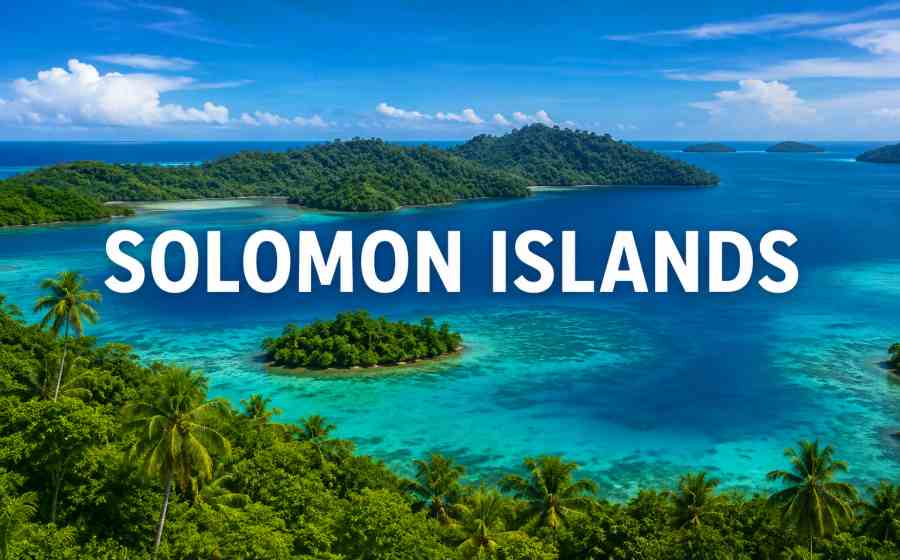
The Solomon Islands lies east of Papua New Guinea and northwest of Vanuatu. The country consists of nearly 1,000 islands, including six major islands and hundreds of smaller ones spread across the Pacific Ocean.
The islands feature:
- Dense tropical rainforests
- Mountainous landscapes
- White sandy beaches
- Coral reefs
- Crystal-clear lagoons
- Rich marine ecosystems
The capital city is Honiara, located on Guadalcanal Island, which is also the country’s largest urban center.
Quick Facts
- Capital: Honiara
- Continent: Oceania
- Official Language: English
- Common Languages: Solomon Islands Pijin and many indigenous languages
- Currency: Solomon Islands Dollar (SBD)
- Government: Parliamentary Constitutional Monarchy
- Population: Around 800,000
- Time Zone: UTC +11
Historical Background
The Solomon Islands have been inhabited by Melanesian peoples for thousands of years. Early communities developed unique customs, navigation skills, and traditional governance systems long before European contact.
Spanish explorer Álvaro de Mendaña reached the islands in 1568 and believed he had discovered the legendary mines of King Solomon, giving the islands their present name.
During the late nineteenth century, Britain established a protectorate over much of the archipelago. British colonial administration continued until the country gained independence.
One of the most significant periods in the islands’ history occurred during World War II. The Battle of Guadalcanal (1942–43) became one of the Pacific War’s most decisive campaigns between Allied and Japanese forces. Today, many battlefields, shipwrecks, and historical sites remain important attractions.
The Solomon Islands achieved independence on 7 July 1978 while remaining a member of the Commonwealth.
Government and Political System
The Solomon Islands follows a parliamentary democracy under a constitutional monarchy. The British monarch serves as the ceremonial Head of State, represented locally by the Governor-General. Executive authority is exercised by the Prime Minister and Cabinet, while the National Parliament is responsible for legislation.
Local provincial governments also play an important role in administration across the country’s many islands.
Culture and Traditions
The Solomon Islands possesses one of the richest cultural landscapes in Oceania. More than 70 indigenous languages are spoken alongside Solomon Islands Pijin and English. Every island has distinctive customs, dances, songs, traditional clothing, and artistic styles.
Traditional village life remains central to many communities, where family relationships and respect for elders are highly valued.
Traditional Arts
The islands are famous for:
- Wood carving
- Shell jewelry
- Woven baskets
- Canoe building
- Traditional masks
- Decorative shields
These crafts often represent ancestral stories, spiritual beliefs, and local identity.
Festivals and Celebrations
Many cultural festivals celebrate traditional music, dance, and local customs.
Popular celebrations include:
- Independence Day (7 July)
- Provincial cultural festivals
- Canoe festivals
- Traditional dance performances
- Church celebrations
- Local harvest festivals
Music featuring bamboo instruments, drums, and group singing plays an important role in community gatherings.
Food and Cuisine
The cuisine reflects the islands’ tropical environment and abundant seafood.
Common foods include:
- Fish
- Tuna
- Coconut
- Sweet potato
- Cassava
- Yam
- Taro
- Rice
- Tropical fruits
- Banana
Fresh coconut milk is widely used in cooking, while seafood forms an essential part of the daily diet.
Economy
The economy mainly depends on natural resources. Major sectors include:
- Agriculture
- Fishing
- Forestry
- Tourism
- Small-scale manufacturing
Key exports include:
- Timber
- Fish
- Palm oil
- Copra
- Cocoa
Tourism has been steadily growing due to the country’s diving locations, pristine beaches, and World War II historical sites.
Wildlife and Natural Beauty
The Solomon Islands is one of the world’s biodiversity hotspots.
Its natural attractions include:
- Tropical rainforests
- Coral reefs
- Mangrove forests
- Rare bird species
- Sea turtles
- Dolphins
- Colorful reef fish
Divers from around the world visit the islands to explore coral reefs and numerous World War II shipwrecks beneath the sea.
Sports in Solomon Islands
Sport plays an increasingly important role in national life.
Popular Sports
- Football (Soccer)
- Rugby
- Basketball
- Volleyball
- Athletics
- Canoeing
- Cricket
Football is the country’s most popular sport. The national football team has gained recognition within Oceania and regularly competes in regional tournaments.
Beach sports are also widely enjoyed because of the nation’s extensive coastline.
Education
Education continues to improve through government initiatives and international support.
Primary education is widely available, while secondary and higher education opportunities continue to expand. English serves as the primary language of instruction in schools.
Educational programs increasingly focus on environmental conservation, marine science, agriculture, and sustainable development.
Tourism
The Solomon Islands remains one of the Pacific’s lesser-known travel destinations, offering visitors unspoiled natural beauty and authentic cultural experiences.
Popular attractions include:
- Guadalcanal battle sites
- Coral reefs
- Scuba diving
- Snorkeling
- Island hopping
- Traditional villages
- Rainforest trekking
- Waterfalls
The country is especially popular among divers interested in exploring World War II wrecks.
Interesting Facts About Solomon Islands
- The Solomon Islands consists of nearly 1,000 islands.
- More than 70 indigenous languages are spoken across the country.
- Honiara is located on Guadalcanal Island.
- The Battle of Guadalcanal was one of World War II’s most significant Pacific battles.
- The country became independent in 1978.
- English is the official language, but Solomon Islands Pijin is widely spoken.
- The islands contain some of the richest marine biodiversity in the Pacific.
- Traditional canoe building remains an important cultural practice.
- Coral reefs support thousands of marine species.
- Tourism continues to grow because of diving, history, and natural beauty.
Summary
The Solomon Islands is a remarkable Pacific nation where ancient traditions, spectacular natural landscapes, and significant historical events come together. From its diverse indigenous cultures and vibrant festivals to its coral reefs, tropical forests, and famous World War II sites, the country offers a unique blend of heritage and natural beauty. As it continues to develop while preserving its rich cultural identity and environment, the Solomon Islands remains one of Oceania’s most fascinating and distinctive island nations.
Also Check: General Knowledge